
This piece was prompted by reports circulating this week of a rattlesnake found among children's toys in a Los Angeles County backyard. We were not able to independently verify that incident, so we are not describing it. What follows is the part that is worth having regardless, and it is verified.
If someone is bitten
Poison Control's instructions are short and specific.
Do seek immediate medical attention. Do keep the person quiet and still. Do keep the bitten arm or leg at the level of the heart. Do remove jewelry, watches or tight clothing near the bite. Do wash the area gently with soap and water.
Do not use a tourniquet. Do not apply ice. Do not cut the wound and try to suck out the venom. Poison Control is blunt about these: "None of these 'treatments' help and most of them make things worse."
Do not try to capture or kill the snake, which is how people get bitten a second time.
Poison Control's number is 1-800-222-1222, staffed 24 hours a day, free and confidential.
The treatment is antivenom, which a hospital administers. Poison Control notes it "slows or halts the swelling but does not reverse it," which is a reason to move quickly rather than wait and see.
One more line from that page is worth quoting because panic is itself a hazard: "Don't panic. Snakebites can be treated and are generally less dangerous than many people assume."
Which snake this is
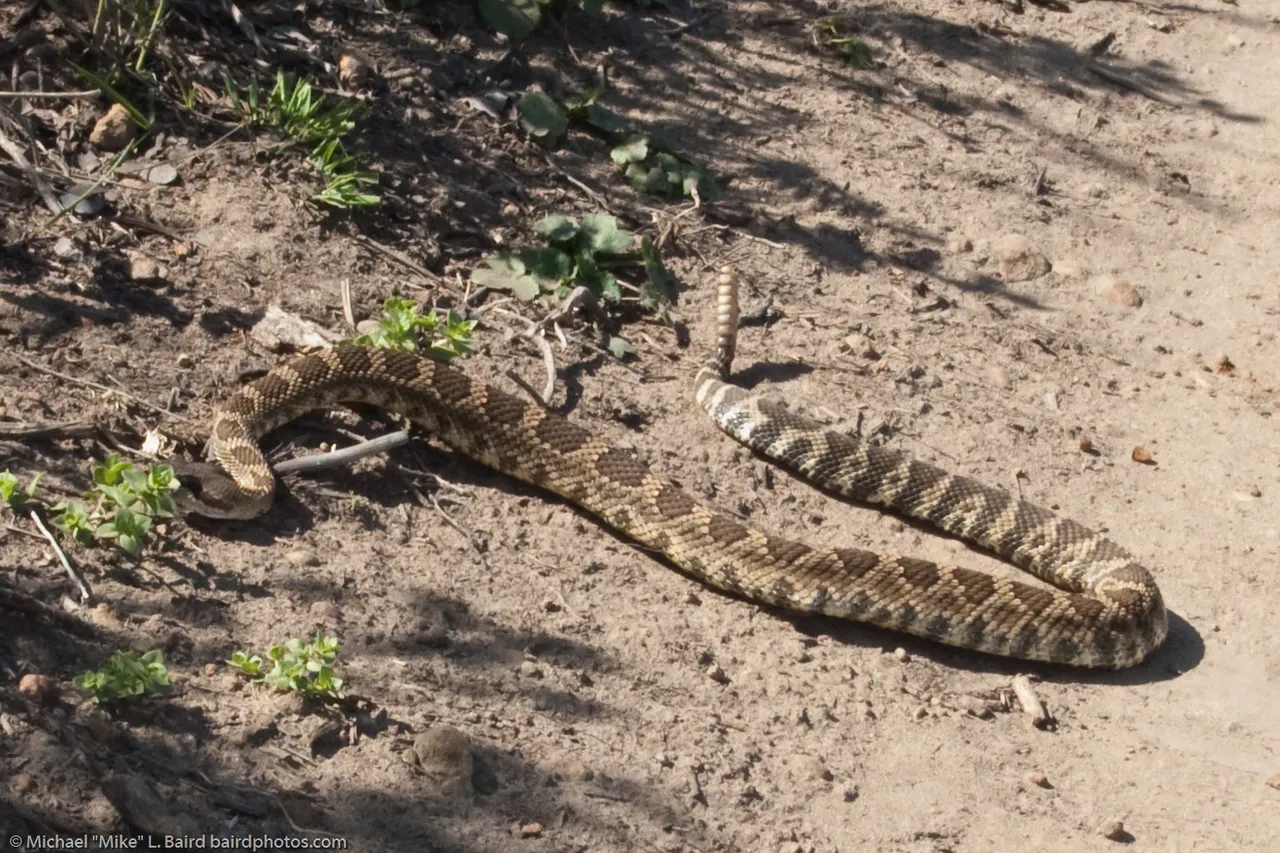
Nine rattlesnake species live in California, according to UC's Integrated Pest Management program. The one most likely to be in a coastal Los Angeles County yard is the Southern Pacific rattlesnake, Crotalus helleri.
Southern California also has the sidewinder in sandy desert, the Mohave and speckled rattlesnakes, the red diamond rattlesnake south of Los Angeles, and the Panamint rattlesnake inland. The western rattlesnake ranges from the north of the state down to about Santa Barbara County.
Why it is in your yard
Because something it eats is in your yard.
UC IPM is direct about this: "eliminating rodent populations, especially ground squirrels, meadow voles, deer mice, rats, and house mice, is an important step." A yard with a rodent problem is a yard advertising for snakes, and the rodents are usually the fixable half of the equation.
What actually reduces the risk
Seal gaps. UC IPM says closing "all cracks and other openings greater than 1/4 inch can prevent them from entering," which is a smaller gap than most people picture.
Cut the cover. Keep weeds mowed to the ground or removed, and keep vegetation and debris from piling up along fences. Woodpiles, rock piles and heaps of yard waste are exactly the shaded structure a snake is looking for in August.
Snake-proof fencing works, UC IPM says, but it is expensive, and gates have to fit tightly and be checked.
If one is in the yard right now
Call a professional. UC IPM's advice is that "it is best to call a professional pest or wildlife control operator who specializes in snake removal" rather than handling it yourself.
Give the snake a way out and stay away from it while you wait. Most bites happen to people who decided to deal with the problem personally.
The one that surprises people
Do not touch a dead one.
"Even a dead rattlesnake can have a bite reflex and is capable of delivering venom," UC IPM warns. "Never handle freshly killed snakes. You may still be bitten."
That is the single most useful sentence in this article, because the impulse after killing a snake is to pick it up.