Betye Saar was born in Los Angeles on July 30, 1926, and died here on July 26, 2026, LAist reported, four days before she would have turned 100. LACMA's memorial gives her age as 100; on the dates reported she was 99. Either way, she spent essentially the entire century in this city and made her work out of what the city threw away.
Where the method came from
After her father died, she moved as a child to her grandmother's house in Watts, and watched Simon Rodia building the Watts Towers out of broken dishes, sea shells, rusted tools and cement. She described them as magical and started collecting her own materials, hunting the backyard for bottle caps, feathers, buttons.
That is the whole method, in miniature, arrived at before she was ten: take the discarded thing, keep it, put it next to another discarded thing until the two of them mean something.
She took a design degree at UCLA in 1949, LACMA notes, and later an MFA at Cal State Long Beach. For years the work stayed relatively private. It was the 1965 Watts Rebellion, LACMA's memorial says, that pushed her to address racism in her work directly.
The work that changed things
"The Liberation of Aunt Jemima," made in 1972, is the piece almost everyone knows even if they do not know her name. It takes a mammy figurine, the grinning caricature that sold pancake mix for generations, and arms her: a broom in one hand, a rifle in the other, a Black power fist in front, the background papered in Aunt Jemima labels.
The move is not to destroy the stereotype but to reload it. The object that was made to humiliate is left intact and handed a weapon, and it is the viewer who has to work out what changed.
LACMA also names "Black Girl's Window" (1969), "Mojo Bag #1 Hand" (1970), "Essence of Egypt" (1972) and "I'll Bend But I Will Not Break" (1998) among her key works. The last of those is in LACMA's permanent collection and does the same thing to domestic labor that the 1972 piece did to advertising: an ironing board carrying the packing diagram of the slave ship Brookes, a sheet marked with Klan lettering, a flat iron chained to it.
Where to see it this month
Five venues are confirmed, with one caveat noted below.
The Huntington, San Marino, has "Drifting Toward Twilight", a site-specific installation built around a vintage wooden canoe holding antlers, birdcages and salvaged fragments, in a room of oceanic blues. It was commissioned by the Huntington, debuted in 2023 and is now in the permanent collection, so there is no closing date to race.
LACMA holds "I'll Bend But I Will Not Break" in the permanent collection.
Roberts Projects, 442 South La Brea Avenue, has "Let's Get It On: The Wearable Art of Betye Saar" through August 22.
Hauser and Wirth, downtown, includes her in "Destiny Is a Rose: The Eileen Harris Norton Collection" through August 16.
Karma, West Hollywood, includes her in "Dictation from the Other Side" through September 12.
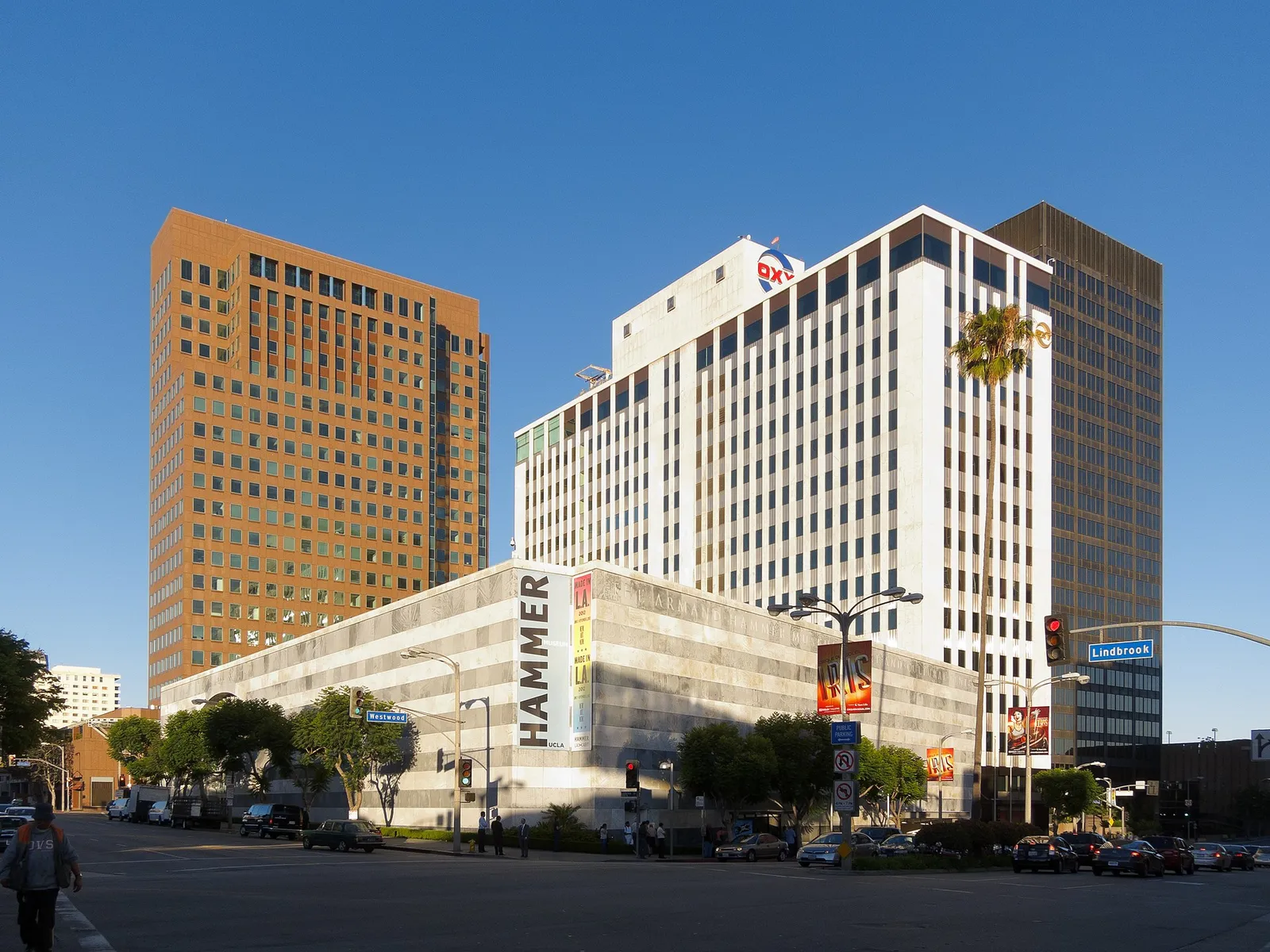
One correction to the guides circulating: LAist also lists "Memory of Fire" at the Hammer Museum through September 6. We were not able to confirm that as a current exhibition on the Hammer's own listings, so check with the museum before making the trip.
What she left here
Two of her daughters, Alison and Lezley, are artists. The Getty holds her archive. Her pieces are in permanent collections at LACMA and the Museum of Modern Art.
But the more local inheritance is the one she started with. A child in Watts watched a man build towers out of garbage, understood that this was a legitimate thing to do with a life, and then spent ninety years proving it.