

The assumption that blindness and precision manufacturing cannot coexist tends to dissolve the moment you stand on a factory floor where it happens every day.
Hands that know the fabric
At Bestwork Industries for the Blind in Cherry Hill, New Jersey, the loudest sound in the warehouse is the hum of industrial sewing machines, ABC7 reported. Workers guide fabric through the machines by feel, and what they produce, stitch by stitch, is clothing for the United States Armed Forces. Founded in 1981, Bestwork describes itself as the largest employer of blind and visually impaired people in New Jersey, and its operation is led by Jon Katz, a Marine Corps veteran supplying the same military he once served.
The program behind the work
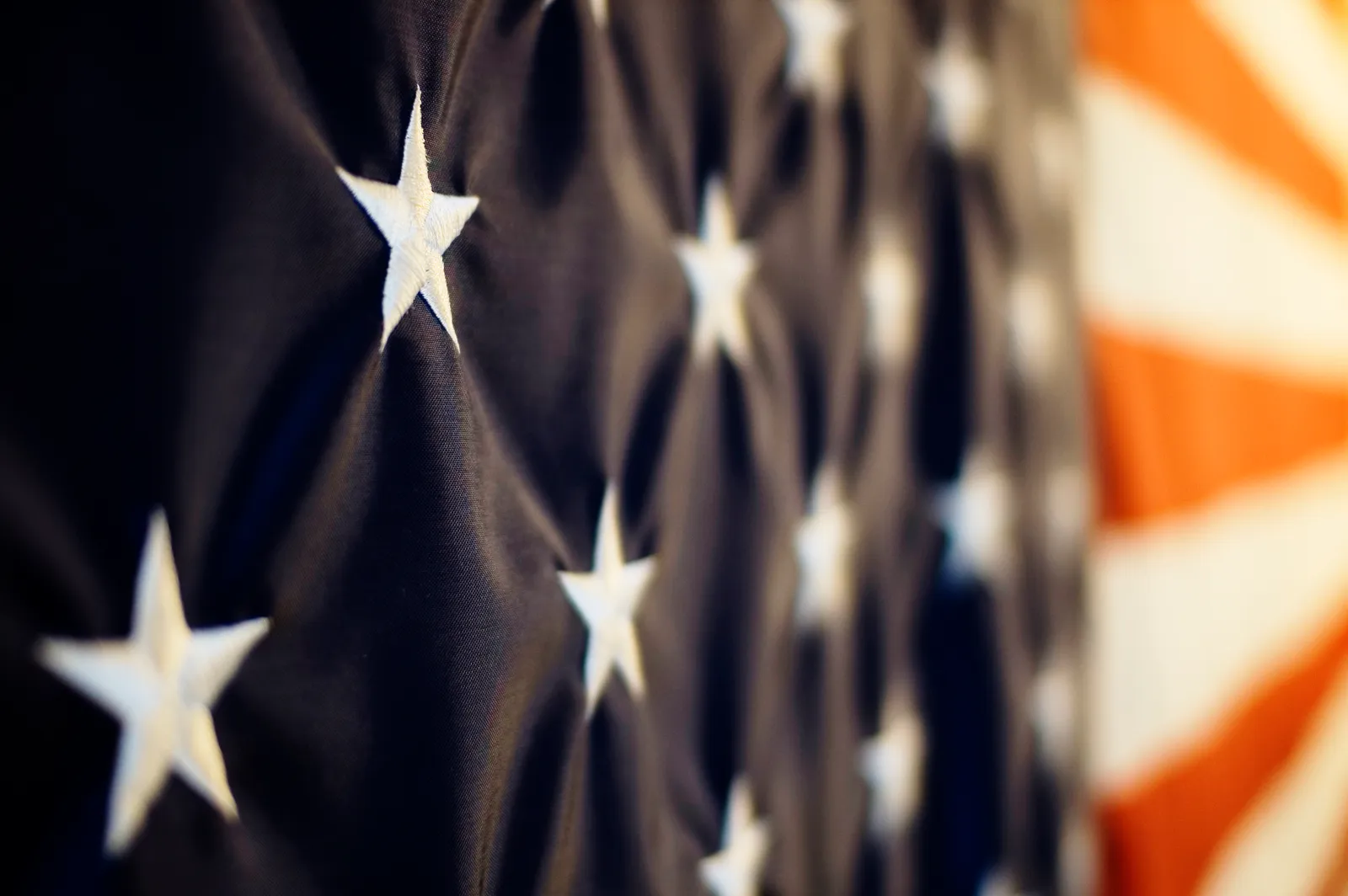
Bestwork is one node in a far larger network. The AbilityOne Program — created under the Javits-Wagner-O'Day Act and overseen by a federal commission — channels government purchasing toward nonprofits that employ people with disabilities. It supports roughly 41,000 jobs and generated about $4.7 billion in sales to federal agencies in fiscal 2025, with the Defense Department its largest customer. Among its contractors are agencies that produce American flags from domestically sourced materials — the flags raised over post offices and presented, folded, to families at military funerals. National Industries for the Blind, the country's largest employment resource for people who are blind, says its affiliated agencies employed more than 5,000 blind workers in fiscal 2024, including hundreds of veterans, some of whom lost their sight in service.
Precision without sight
Workers replace visual cues with tactile and spatial ones — guiding material along edge guides, gauging seam allowances by feel, and using machines fitted with accessible controls. Training is gradual: new employees work alongside coaches to internalize the geometry of a garment before running it on their own. Once a pattern is in the hands, the workers say, it stays there.
Why it matters
The stakes go beyond patriotism. Unemployment among blind and visually impaired Americans remains persistently high, and programs like AbilityOne exist partly because the mainstream labor market has long struggled to see past disability to competence. The federal procurement system, for all its bureaucracy, creates something unusual: a guaranteed market for goods made by people the private sector often overlooks. When the Pentagon orders uniforms from Cherry Hill, it is at once clothing a soldier and providing a livelihood to a worker who might otherwise have no steady path to one.
Stitching toward the Fourth
There is something fitting in the timing. As the Fourth of July approaches and Americans prepare to unfurl flags, the workers at Bestwork and facilities like it will be at their machines in ordinary time — not celebrating, just working. The flags some help make will wave at parades; the uniforms will be worn at ceremonies. For Katz and his team, the quiet invisibility of that labor is not the point. The point is the work, done well, by hands that know exactly what they are touching even when they cannot see it.