

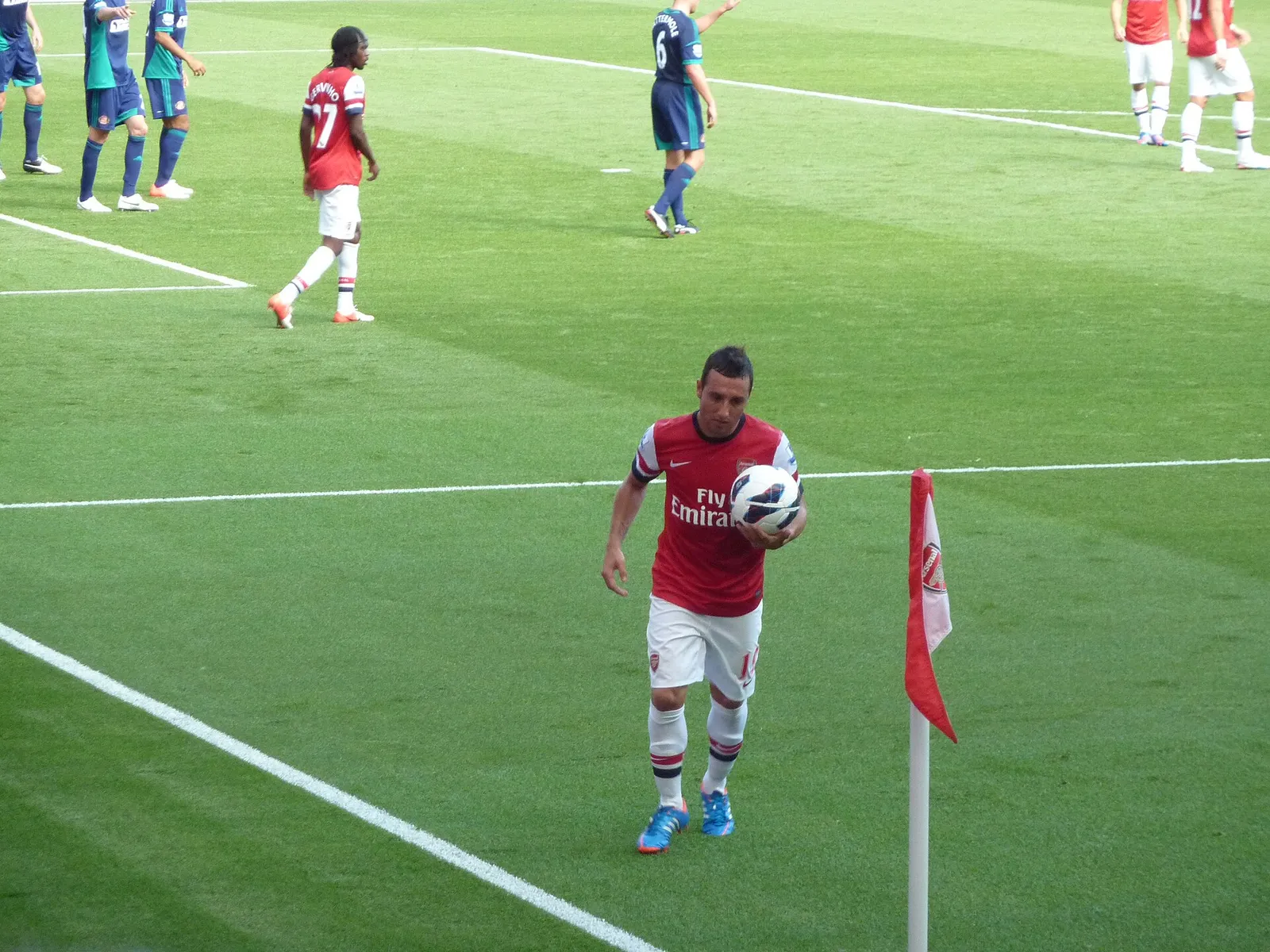
Some players are remembered for what they won. Santi Cazorla will be remembered for that, too — but even more for what he refused to give up. The little Spaniard, one of the most naturally gifted midfielders of his generation, has announced his retirement at 41, ending a career that by rights should have finished a decade ago in a hospital in Germany.
A rare kind of footballer
Cazorla was ambidextrous in the truest sense — genuinely two-footed, able to shoot, pass and dribble with either side, so that defenders never knew which way he would go. That gift made him a joy to watch across two decades: a diminutive, smiling conductor who played the game with obvious delight.
He built his reputation at Villarreal, became a Premier League favorite over six seasons at Arsenal — where he helped end the club's long trophy drought and won the FA Cup — and also turned out for Recreativo de Huelva, Málaga and, later, Al-Sadd in Qatar. With Spain, he was part of the golden generation that dominated world football, winning the European Championship in both 2008 and 2012.
The injury that nearly ended everything
Then came October 2016. Cazorla suffered a serious problem with his right Achilles and ankle that spiraled into something far worse: an infection set in, and over the following years he underwent a long series of operations — by many accounts around eight — as the injury ate into the tendon, according to his lengthy injury record. At one point, surgeons reportedly took a skin graft from a tattoo on his forearm to help repair the damage. Doctors, he has said, warned him he might never play again — and at times the concern was simply whether he would walk without pain.
That he returned to elite football at all was remarkable. That he then kept going for years more was, to those who watched his ordeal, close to miraculous.
Home to Oviedo
Cazorla's final act brought him full circle to Real Oviedo, the club of his Asturian childhood, which he helped drive back toward the top of Spanish football. Even in his forties he could still bend a free kick and dictate a match, a reminder of the player he had always been. Saying his body was telling him it was time, he chose to finish where he started.
Football will miss the trickery and the smile. But the lasting image of Santi Cazorla may not be a trophy lift at all — it may be a man who was told his career was over, and who answered by playing on, for years, for the sheer love of it.