A small aircraft crashed into Beijing's tallest skyscraper on Friday afternoon, damaging the upper floors of the 109-story CITIC Tower and scattering debris across one of the Chinese capital's busiest commercial districts, CNN reported.
Police sealed off roads around the building and ordered an evacuation as firetrucks, police cars and an ambulance converged on the scene. Hours after the crash, Chinese authorities had released no official account of what happened or whether anyone was hurt.
A landmark tower
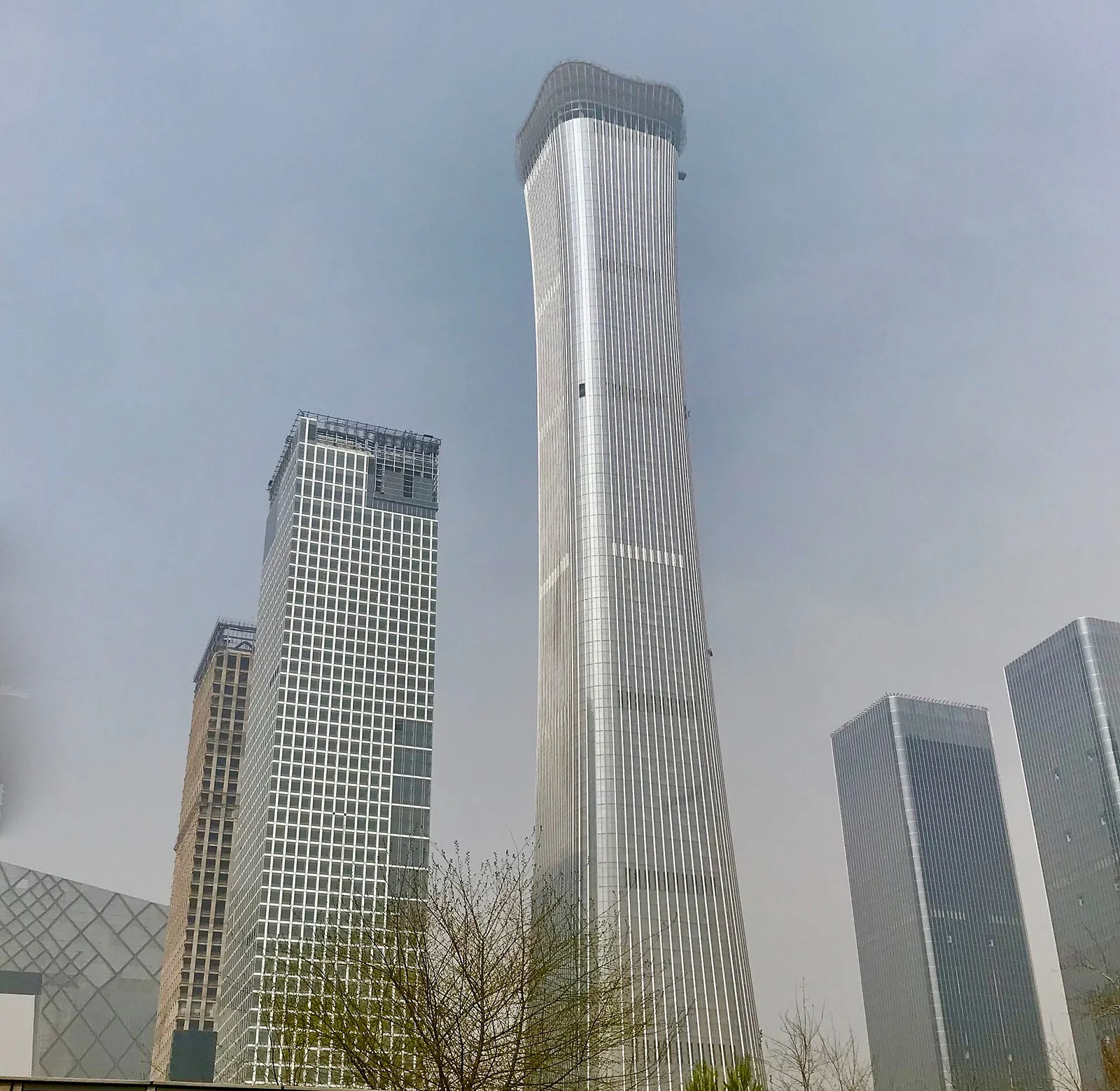
At about 528 meters (1,732 feet), CITIC Tower — widely known as China Zun for its resemblance to an ancient ceremonial wine vessel — is the tallest building in Beijing and ranks among the ten tallest in the world. Opened in 2019 in the Guomao central business district, it serves as the headquarters of CITIC Group, a large state-owned financial conglomerate, and would ordinarily be filled with office workers on a Friday afternoon.
Videos circulating briefly on Chinese social media, before many were removed, showed debris tumbling from high on the tower, with the tail section of a small plane and a damaged taxi visible on the ground below. Two glass panels on an upper floor appeared to have been blown out by the impact, according to NPR.
The aircraft
Images showing the plane's registration markings pointed to a domestically built light-sport aircraft, a Sunward SA 60L Aurora, a two-seat model used for pilot training and recreational flying, CNN reported. Such aircraft are not normally permitted to operate over central Beijing, which maintains some of the most tightly restricted airspace of any capital in the world — raising immediate questions about how the plane reached the city center.
The number of people aboard and any casualties on the ground or inside the building had not been confirmed by the time of this report. News organizations including CNN, NPR and NBC News stressed that the situation remained fluid and that officials had not provided figures.
Official silence
The Chinese government's reticence was itself notable for an event unfolding in plain sight in the heart of the capital. A heavy police presence pushed back onlookers, and posts, images and search results about the crash were actively removed from Chinese platforms even as the scene was still active — a pattern authorities often follow with sensitive incidents to limit speculation.
The cause — whether mechanical failure, pilot error, a medical emergency or something deliberate — remained unknown. Any investigation would unfold within a system that tightly controls the flow of public information, and it was unclear how much Chinese authorities would ultimately disclose.