

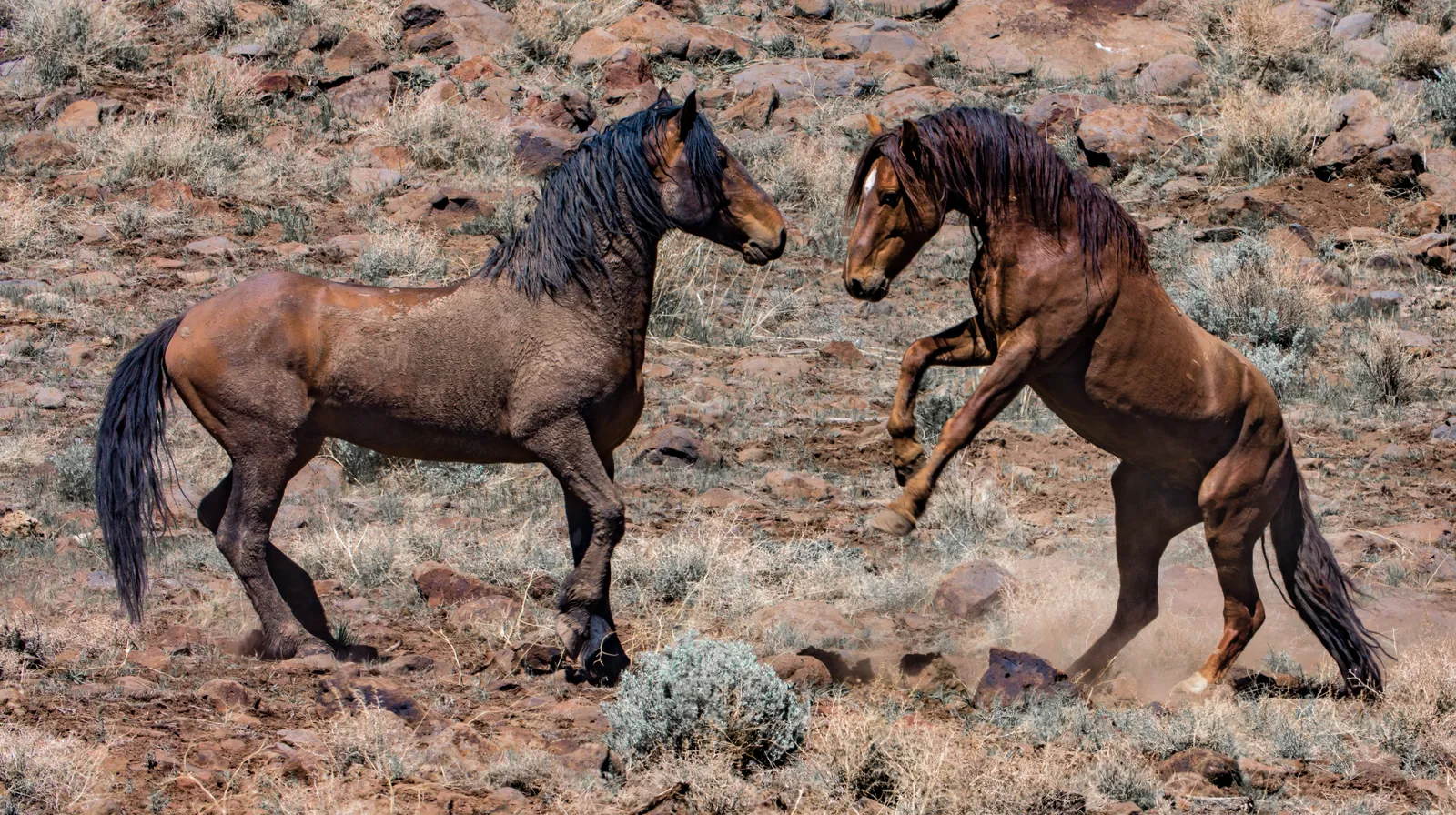
One of the West's most-watched free-roaming herds is again at the center of a fight that never quite ends.
The plan
Federal officials plan to gather about 450 wild horses from rangelands in the Eastern Sierra near the California-Nevada border, the Los Angeles Times reported, in a removal that has reopened a bitter, long-running dispute. The government says the gather is needed to bring herd numbers down to what it calls an "appropriate management level" — a population ceiling set for each area based on available forage, water and habitat. Horses removed in operations like this are taken to off-range holding corrals, where they await adoption or, often, spend years in government-funded pens.
The government's case
By the Bureau of Land Management's own numbers, the math is lopsided. California's wild horse and burro population stood at roughly 8,500 as of early 2026 — nearly four times the combined management level set for the state's herd areas — while nationally some 85,000 animals roam federal land against a ceiling of about 25,600, according to BLM data. Officials argue that when herds outgrow the land, horses overgraze native plants, foul water sources and crowd out wildlife, with the pressure especially acute in drought-stressed terrain. Under the Wild Free-Roaming Horses and Burros Act of 1971, the agency is required to keep herds at those levels and says it is obligated to remove the excess. The holding system, though, is itself strained: the BLM keeps tens of thousands of animals in off-range corrals and pastures, a cost that consumes much of the program's budget.
The advocates' objections
Wild-horse advocates see the roundups, often conducted with helicopters to drive the animals into traps, as inhumane and counterproductive. National groups have filed numerous lawsuits against the agency, arguing horses are injured or killed in the chase and that tight-knit bands are torn apart. Their preferred alternative is fertility control: a contraceptive vaccine, known as PZP, can be darted into mares on the range, and advocates point to programs that they say have sharply cut foal births over years of sustained use. The BLM has expanded fertility control but says vaccines alone cannot keep pace with herd growth in remote, rugged country like the Eastern Sierra.
A fight without an ending
The argument is older than most of the people having it. The 1971 law that protects the mustangs grew out of a campaign led by the Nevada activist known as "Wild Horse Annie," and in the half-century since, the cycle has repeated: each gather draws a lawsuit, each lawsuit delays the next gather, and the herds keep growing. For the Eastern Sierra towns from Bishop to Bridgeport, the horses are part of the region's identity and a draw for visitors; for ranchers sharing public-land grazing, they are competition for scarce forage; and for the federal government, they remain a problem with no solution that satisfies anyone. What becomes of these 450 horses is the same question that has shadowed every roundup for decades.