
Casey Harrell can no longer move his limbs or speak on his own. ALS took those abilities. But a set of tiny electrode arrays in his brain has been giving his words back — and, for the first time in this kind of research, doing it without scientists in the room.
Decoding speech from the brain
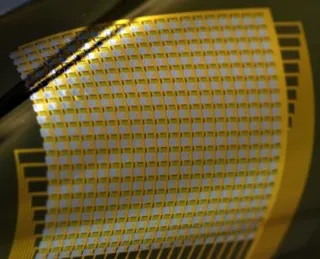
Harrell is a participant in the BrainGate2 clinical trial, and the speech system was developed by researchers at UC Davis Health, the university said. Microelectrode arrays implanted in the speech-motor region of his brain record the activity of neurons as he tries to talk; software translates that activity, in real time, into words spoken aloud in a synthesized version of his pre-ALS voice.
In controlled testing, researchers reported the system reaching about 99 percent word accuracy, drawing on a vocabulary of roughly 125,000 words. What sets the work apart, the team says, is endurance: across thousands of hours of everyday use at home, Harrell produced hundreds of thousands of sentences without technical support, MIT Technology Review reported, calling him the first "power user" of a speech brain-computer interface.
More than a demonstration
The detail that lands hardest is not a statistic. With the device, Harrell has read bedtime stories to his young daughter, browsed the web, sent messages and returned to advocacy work. The system also includes a cursor-control mode for navigating a computer and a privacy feature, additions the team says came directly from what Harrell asked for, according to Nature.
The careful caveats
The results are striking, but they describe a single participant — standard for early-stage neurotechnology, and a reason not to generalize. Open questions remain about durability: scar tissue can build up around implanted electrodes over time and degrade signal quality, and the surgery itself is a meaningful barrier for many patients. The device is investigational, limited by federal rules to research use, and is not commercially available.
The UC Davis team worked with collaborators at Brown University and Mass General Brigham. Their stated goal is modest and concrete — restoring ordinary, everyday communication — and the next step is extending the approach to more participants and, eventually, fully wireless systems.
For Harrell, the technology has already moved well past proof of concept. Thousands of hours of conversation, work and bedtime stories make the case on their own.