

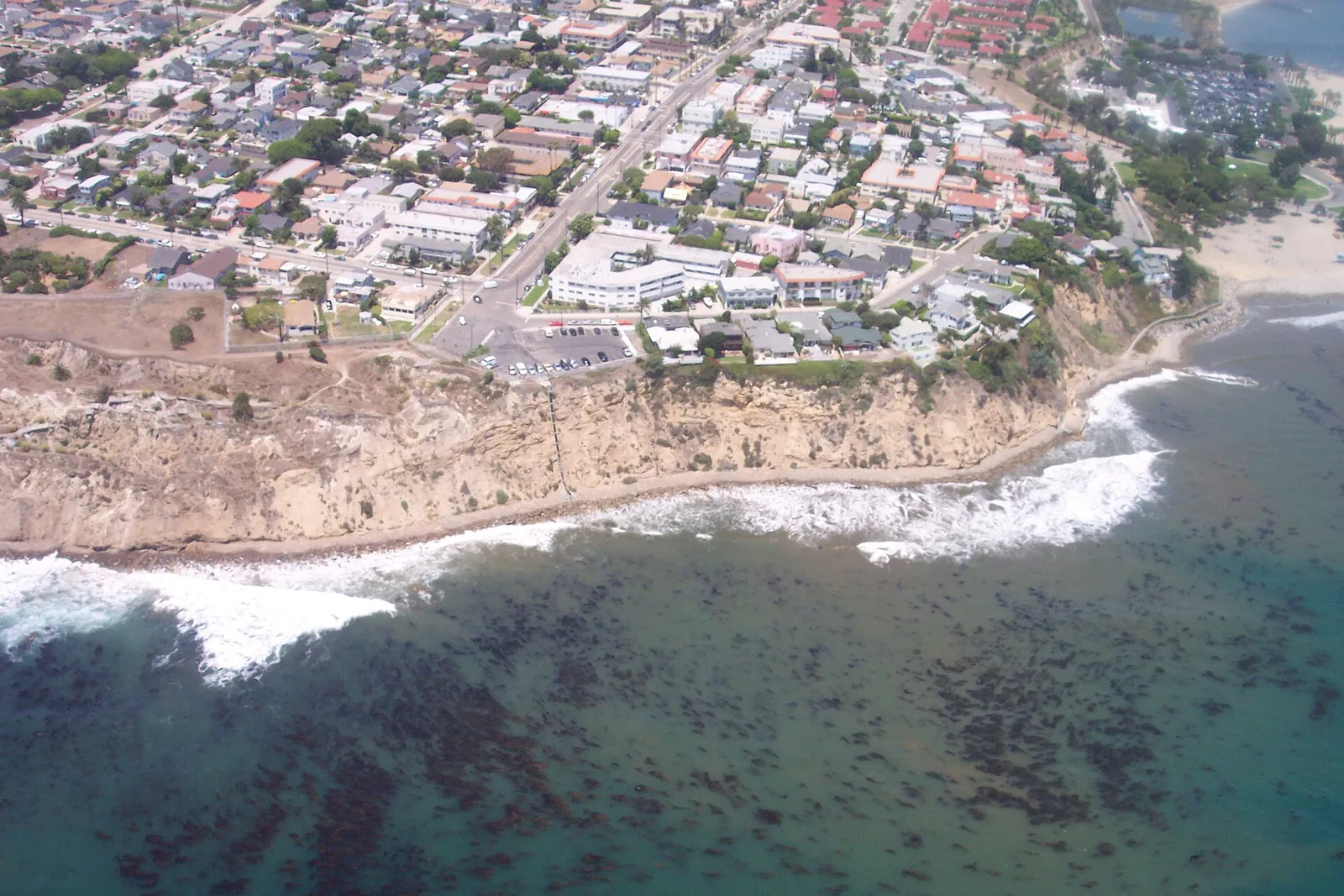
On a bluff near Point Fermin, at the southern tip of San Pedro, the street grid of a vanished neighborhood is still faintly legible: curbs that curl around intersections leading nowhere, cracked foundations tilted at odd angles, sidewalks that end at open air. Locals call it the Sunken City — and Los Angeles is again considering whether to let people in.
The ground that wouldn't hold
The collapse began in 1929, when the land beneath a cluster of Pacific-view bungalows started sliding toward the sea, LAist reported. The neighborhood had been built on coastal bluffs without the kind of geological scrutiny that would come later; the cliffs, it turned out, were laced with clay that loses its grip when saturated. Winter rains did the rest.
At the worst of it, the ground crept seaward by inches a day. Most residents managed to move their houses to safer lots before the land gave way, but two homes ultimately slid off the edge. Over the following decades — helped along by a 1969 earthquake — a large swath of the bluff broke apart and dropped toward the rocks below, according to Wikipedia's account.
A fence that never worked
What remained became one of Los Angeles's most stubborn unofficial attractions. The city fenced the site in the late 1980s, but the barrier never kept people out. For decades, urban explorers, photographers and teenagers have slipped through gaps to wander the broken slabs, which over time accumulated a dense layer of graffiti and a kind of mythic reputation, helped by cameos in film and a steady stream of online images.
The danger is real. The cliffs remain unstable, and people have died after falling from the edges over the years. Trespassers who are caught can face citations, and police and rangers periodically sweep the area — none of which has meaningfully slowed the foot traffic.
Another try at opening it
Los Angeles has floated plans to formally open the Sunken City before, going back decades, and each attempt stalled. The current effort is led by City Councilmember Tim McOsker, who represents the San Pedro area. His office has said the plan centers on safety upgrades and new fencing that would route visitors through the more stable upper portion of the site, away from the crumbling cliff edge, LAist reported.
There are hurdles. New fencing along the coast requires a permit from the California Coastal Commission, which adds time, and the city must weigh the liability of inviting the public into a place defined by instability. McOsker's office has described the project as moving forward but cautioned that any opening could still be a year or more away.
Why it resonates
The Sunken City endures as more than a curiosity. It sits in a region where the same restless geology is at work elsewhere — including the active landslides reshaping parts of the Palos Verdes Peninsula nearby. Letting people walk, safely and with guidance, through what a landslide leaves behind may be the most honest response to a place the city has spent most of a century trying to fence away. The ruins will be there regardless; the open question is whether the next person picking through the concrete will be trespassing or simply visiting.