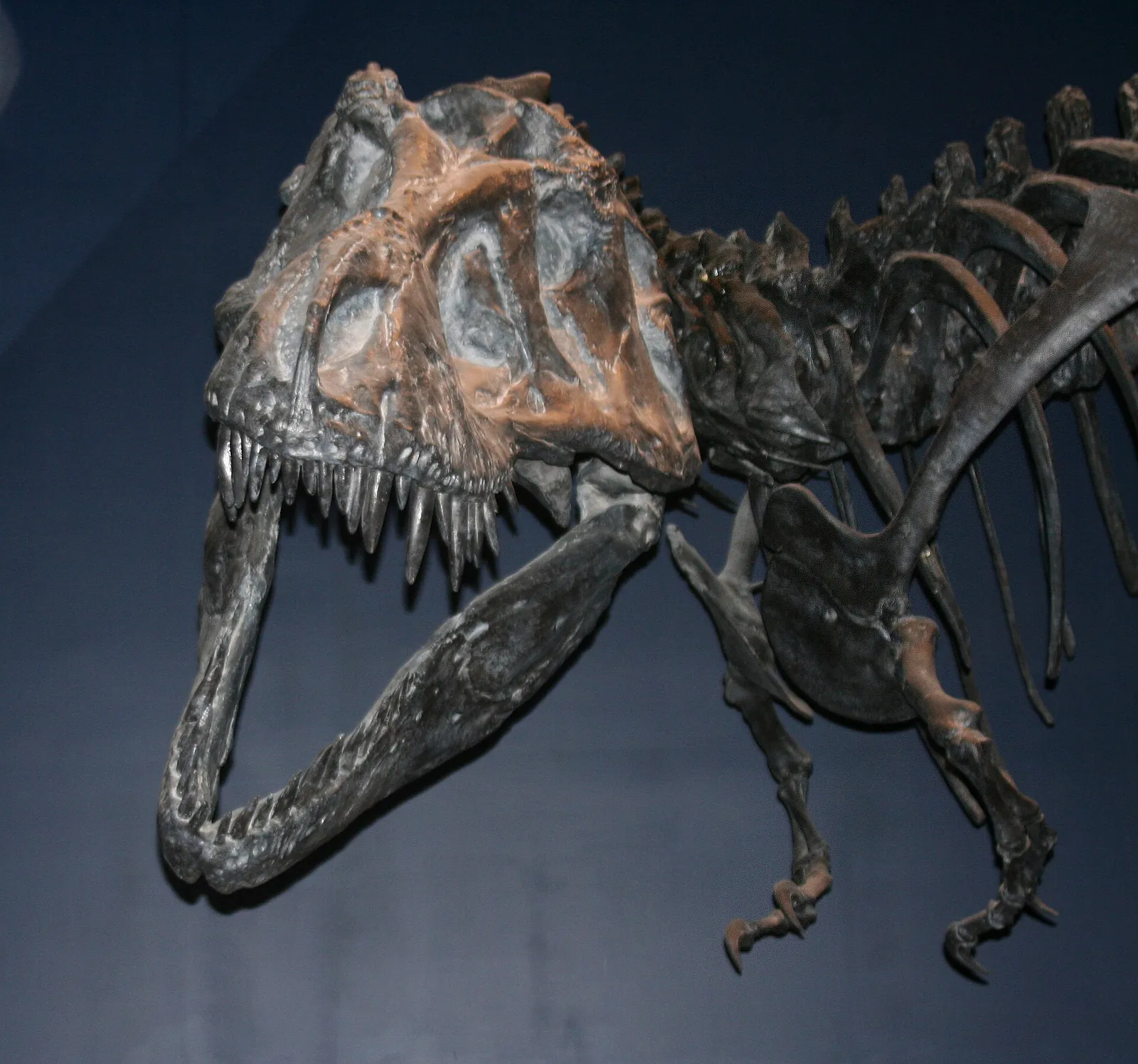
A 67-million-year-old predator has just set a very modern record. A Tyrannosaurus rex skeleton nicknamed Gus sold for $50.1 million at Sotheby's, becoming the most expensive dinosaur fossil ever sold at auction after a roughly 10-minute bidding contest among seven would-be buyers. The winner has not been identified.
The specimen
Gus was found in South Dakota and is, by the standards of its kind, remarkably intact. Sotheby's put the skeleton at about 61% complete, with 183 fossil bone elements, including a skull measuring roughly 54 inches. At about 38 feet long and 12.5 feet tall, it ranks among the larger T. rex specimens recovered, and it carries the scars of a hard life: healed rib fractures and bite marks on the skull hint at fights and injuries survived tens of millions of years ago.
The sale sailed past its pre-auction estimate of $20 million to $30 million.
A record among records
Gus's price extends a run of soaring results for prehistoric remains. It surpassed the $44.6 million paid in 2024 for Apex, a stegosaurus bought by the hedge-fund billionaire Ken Griffin, which had itself set a record. Another well-known T. rex, Stan, sold for $31.8 million in 2020. Auction houses have increasingly leaned on fossils and other natural-history lots as collectors treat rare specimens as trophy assets, a trend that has pushed prices to levels museums cannot match.
The scientists' worry
That is precisely what troubles many paleontologists. Researchers have long warned that when a fossil disappears into a private collection, it can effectively vanish from science: specimens that are not held in recognized public institutions generally cannot be studied, cited or independently checked, and owners can withdraw loaned fossils at any time, disrupting research.
Supporters of the trade counter that commercial excavators recover specimens that might otherwise stay buried, and note that some privately bought fossils, Apex among them, have been loaned to museums for public display. Whether Gus follows that path or ends up in a private vault is, for now, unknown. Sotheby's is not naming the buyer, leaving open the question of whether one of the finest T. rex skeletons ever found will be available to the public, or to the scientists who would most like to study it.