

The largest experiment in fusing cable pipes with Hollywood content is being taken apart, piece by piece.
A second breakup
Comcast said on June 29 that it will spin off NBCUniversal and Sky into a separate, publicly traded company in a tax-free deal expected to close in about a year, CNBC reported. It is the second and larger act of a corporate breakup: in January, Comcast completed the spinoff of most of its cable channels into a standalone company, Versant Media Group. Investors cheered the news, sending Comcast shares sharply higher in early trading before they settled to a more modest gain. (Stock figures move continuously.)
Who gets what
Under the plan, the new NBCUniversal company will hold the NBC and Telemundo broadcast networks, the Peacock streaming service, the Bravo cable channel, Universal Pictures and its TV studios, the Universal theme parks, and Sky, Comcast's pay-TV business in Britain, Germany and Italy, Variety reported. What remains of Comcast will be a connectivity company built around Xfinity broadband and wireless, reaching tens of millions of homes and businesses. Co-CEO Mike Cavanagh is set to lead the independent NBCUniversal, while a longtime executive takes the helm of the slimmed-down Comcast; chairman Brian Roberts is expected to keep significant voting control of both through a special class of shares, and Comcast plans to hold a minority stake in the new company for a time before shedding it.
Why now
The logic mirrors a wave of separations across the media industry: traditional cable television is in steady decline as viewers cut the cord, and the businesses that remain — broadband infrastructure on one side, streaming and studios on the other — run on very different financial models. Bundled together, the steady cash flows of the cable utility masked the growth potential of streaming, and vice versa, leaving the whole worth less to investors than its parts. At least one Wall Street firm, Deutsche Bank, upgraded its rating on Comcast after the announcement, shifting to a valuation that treats the pieces separately. The earlier-spun Versant holds CNBC, the channel now branded MS NOW, USA Network, Syfy, E! and Golf Channel, among others.
What it means for Los Angeles
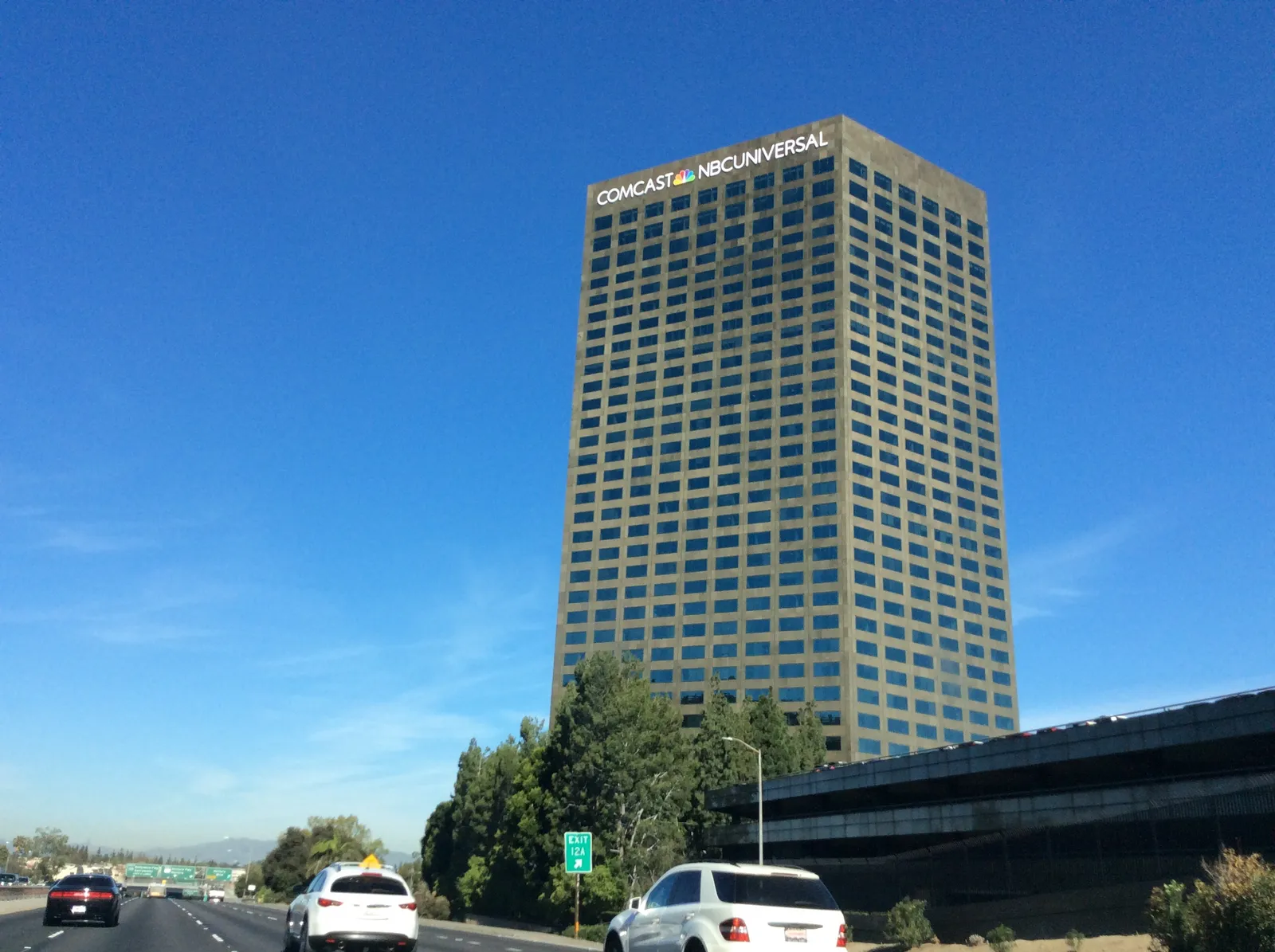
For Los Angeles, the stakes are concrete. NBCUniversal runs Universal Studios Hollywood in Universal City and maintains major production operations across the region, and a newly independent NBCUniversal — free of a cable parent — could move faster on content deals and is widely expected to draw takeover interest of its own. Comcast first took control of NBCUniversal in 2009 and bought out General Electric's remaining share in 2013; fifteen years later, that marriage of distribution and content is being fully undone, a verdict on a strategy much of the industry once raced to copy.