

For many Cubans, the rhythm of daily life now bends around the blackout: power out before dawn, a brief return at midday, darkness again by evening. The island's national grid has suffered repeated total collapses since late 2024, leaving households without electricity for much of the day.
A crisis rooted in fuel
The immediate cause is oil. Cuba's thermoelectric plants, most built in the 1980s and running well past their design life, depend on imported crude. Subsidized Venezuelan shipments long kept them going, but those supplies shrank as Venezuela's economy buckled, Al Jazeera reported. Pressure has tightened since: Washington has moved to choke off tankers bound for the island, and other suppliers have pulled back, according to NBC News.
Cuban officials describe the situation as an "energy siege" driven by U.S. sanctions. Washington casts its measures as pressure on Havana's government. The decades-old U.S. embargo — which Cuba calls a "blockade" — has long been blamed by the government for the island's troubles, though independent economists note that domestic mismanagement deepens the crisis.
China brings the panels
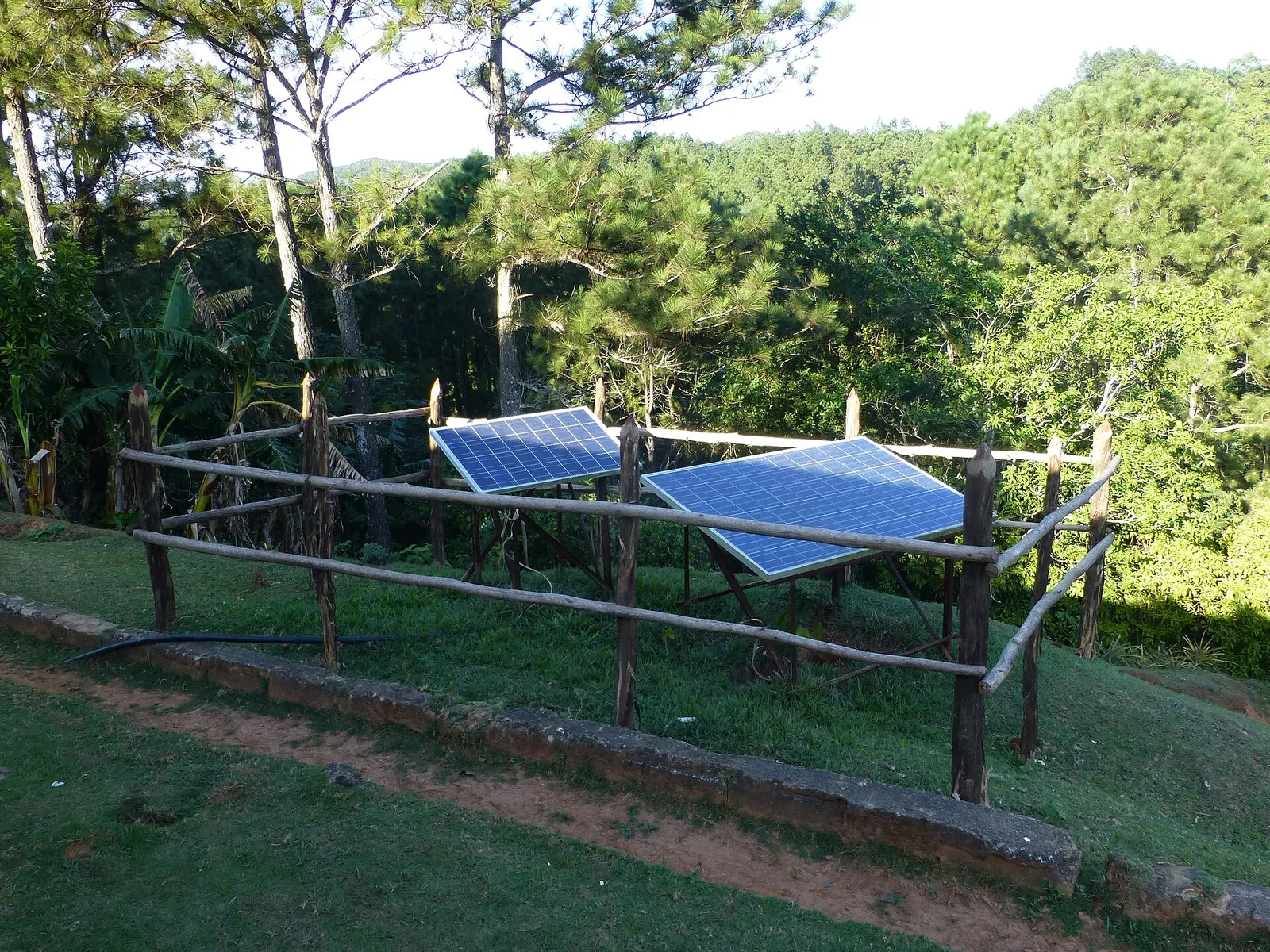
Into that gap has stepped China. Under a program launched in 2024, Beijing is financing and building a wave of solar parks across Cuba, with Cuban and Chinese officials describing a goal of dozens of installations and roughly 2,000 megawatts of capacity by the end of the decade — figures that depend on parks still under construction.
The pace has been real. Cuba connected dozens of new solar parks to its grid over the past year, lifting solar's share of total generation from under 6 percent to more than 20 percent, according to the energy outlet Microgrid Media, citing data from the think tank Ember. For a country largely shut out of international credit markets by U.S. sanctions, financing from China is effectively the only financing on offer — a dependence on a single partner that analysts say carries its own risks.
Why panels alone won't fix it
The paradox is that new solar farms sit beside communities still enduring long daily outages. The problem is timing and storage. Solar output peaks at midday, but demand surges in the evening, when people come home and cook. Without large-scale battery storage to carry daytime power into the night, the panels do little to ease the worst blackouts — and only a handful of Cuba's new parks have been paired with batteries so far.
Cuba's aging transmission network compounds the problem, losing a significant share of generated power before it reaches homes. And when the grid weakens during a collapse, solar farms automatically disconnect to protect themselves, pulling capacity exactly when it is most needed.
Racing against collapse
The human toll is mounting, from spoiled food and stalled water pumps to surgeries postponed for want of reliable power, and prolonged hardship has helped drive a wave of emigration. Cuba's solar buildout is genuine and unusually fast for an economy under this much strain. But until the island can store the power it generates, rehabilitate its grid and ease its financing constraints, the panels may keep shining over a system too broken to carry the current — a point even Cuban officials concede when they say no single solar park will end the deficit.