As the country marks 250 years, it is worth remembering that some of America's most enduring exports were not written into any founding document. They were kept alive in a patch of open ground in New Orleans, on the Sundays when the people with the least freedom were briefly allowed to gather.
An opening in a closed system
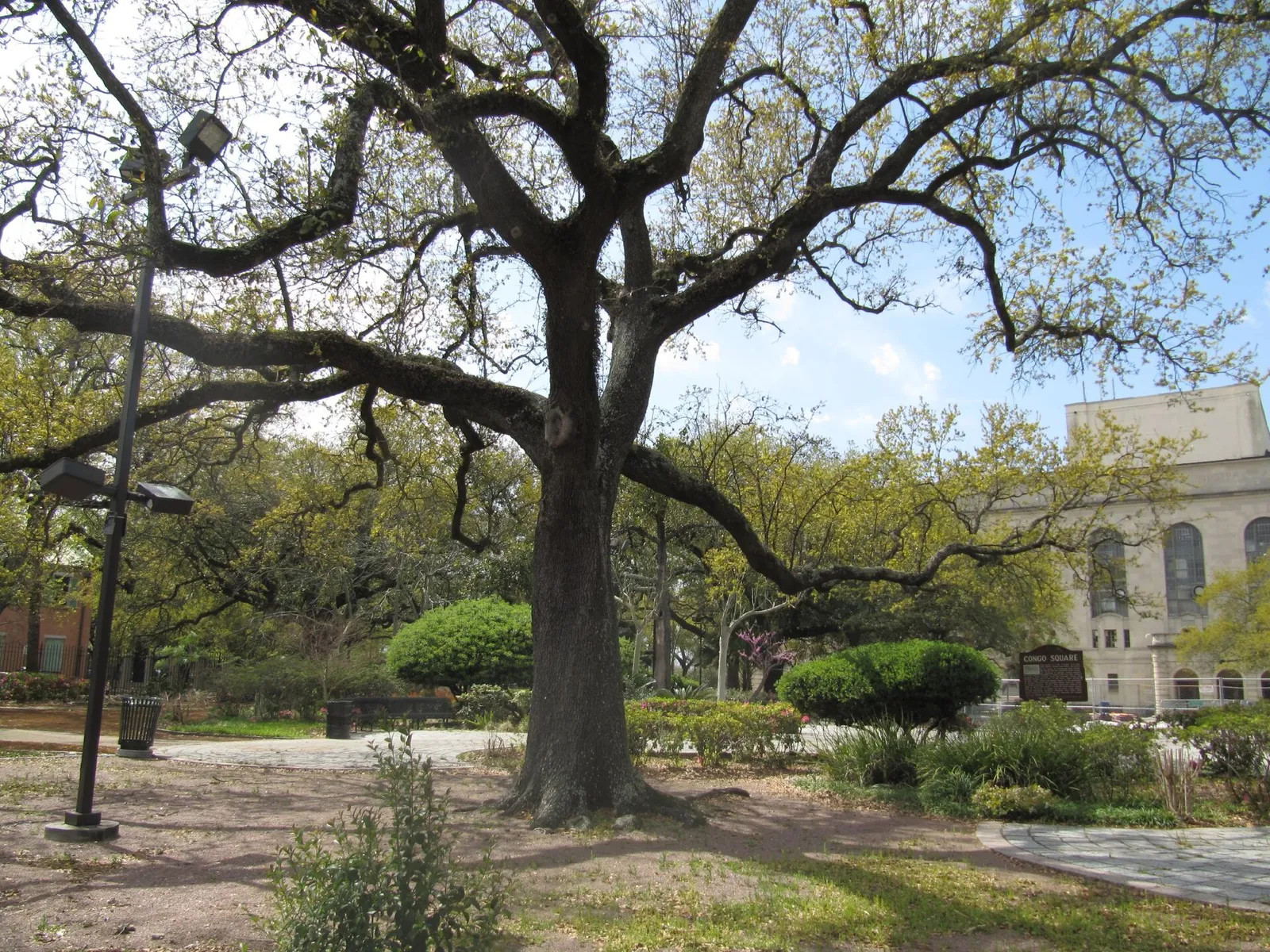
Congo Square sits today in the southwest corner of Louis Armstrong Park, a modest rectangle of ground with an outsized place in cultural history. Under French and later Spanish colonial rule, enslaved people in Louisiana were permitted to gather on Sundays, a narrow exception inside an otherwise total system of control. The Code Noir, first issued under Louis XIV in 1685 and extended to the French colonies, regulated nearly every aspect of enslaved life, yet that single day left room for something the law never intended to protect.
From roughly the early 1800s until the 1850s, hundreds and at times thousands of enslaved and free people of African descent gathered at the square to trade at a market, and to make music, according to Tulane University's Music Rising project. The city tolerated the gatherings for decades before a law targeting drums and horns effectively ended them in the 1850s.
The sound they carried
What happened at Congo Square was not idle entertainment. Observers of the period documented call-and-response singing, layered polyrhythm and improvisation, the building blocks that would later define jazz and blues, Tulane's researchers note. The instruments themselves carried memory across the Atlantic. Drums and a gourd-bodied stringed instrument sometimes called the banza, a forerunner of the banjo, gave the gatherings their texture.
One of the most vivid records comes from the architect Benjamin Henry Latrobe, who visited in 1819 and sketched dancers moving in rings around musicians. A striking feature of the crowd was its coherence: a large share of the Africans brought to Louisiana in the colony's early decades came from the same region of West Africa, Tulane's account explains, so related rhythms and musical languages survived together rather than being scattered and lost.
From a square to a century of sound
The line from Congo Square runs directly into the music New Orleans is famous for: the brass bands and second lines, the Mardi Gras Indian traditions, and by the turn of the 20th century, jazz itself. Each carried forward the same improvisational logic and call-and-response structure.
From there the music traveled. Jazz climbed onto recordings and riverboats, moved north to Chicago and New York, and by the mid-20th century had become a shared language heard from Rio to London. Blues and rhythm and blues followed similar paths, seeding rock and much of modern popular music.
The square is quiet now, marked for visitors rather than crowded with dancers. But the case for its importance is not sentimental. It is one of the clearest places to see how people stripped of nearly everything held onto a way of making sound, and how that act, repeated on Sunday after Sunday, ended up shaping an entire country's contribution to the world's music.