


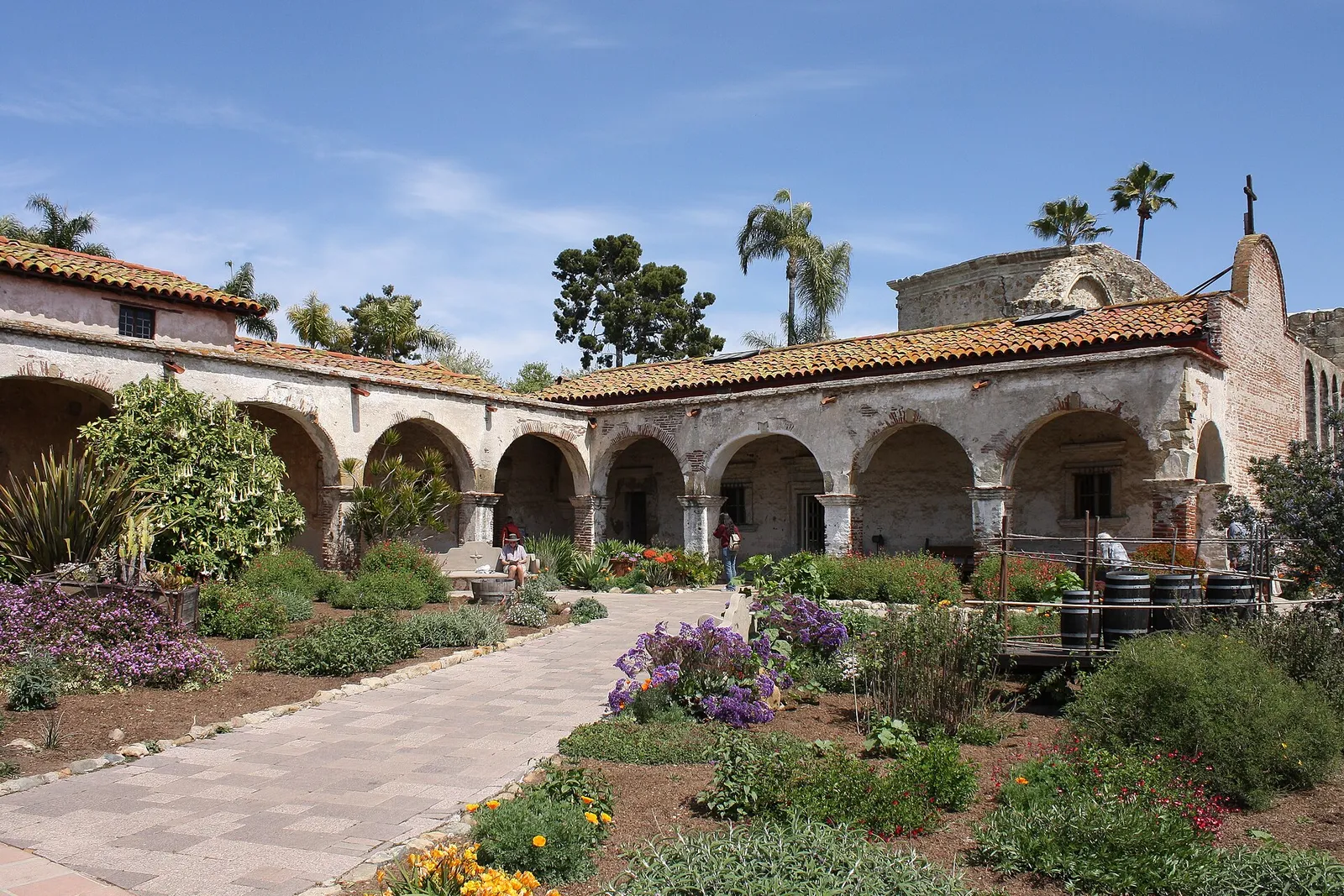
While the United States marks 250 years of independence this month, a Spanish mission in Orange County is quietly reaching the same milestone. Mission San Juan Capistrano was founded in 1776, and its anniversary offers a different vantage point on the American story, one in which the same year meant very different things depending on who you were and where you stood.
The Jewel of the Missions
Established in 1776 as the seventh of California's Spanish missions, San Juan Capistrano became known as the "Jewel of the Missions," according to Mission San Juan Capistrano. Its most ambitious feature was the Great Stone Church, an unusually grand structure for the chain, built of stone rather than the adobe common to the other missions.
That grandeur was short-lived. A powerful earthquake struck on December 8, 1812, collapsing the church during morning services and killing dozens of worshippers, as historical accounts of the mission record. The ruins were never fully rebuilt and still stand today, the mission's most photographed and most sobering image.
The swallows, and their absence
For much of the 20th century, the mission was best known for its swallows. Cliff swallows returning each spring inspired a popular song and an annual celebration, a ritual so dependable it became part of California folklore.
In recent years, though, the large flocks have often failed to appear in their old numbers, a shift that has prompted the mission to actively encourage the birds to return. The uncertainty around a tradition once taken for granted has become, in its way, a fitting emblem for an institution rethinking the story it tells about itself.
A harder history
For generations, the mission was presented largely as a tale of faith and architecture. That account left out the people who were already here. The mission was built on the land of the Acjachemen, whom the Spanish called the Juaneño, and the mission system as a whole brought disease, forced labor and sharp population decline to California's Native communities, as broad histories of the missions document.
Today the mission acknowledges more of that complexity, including through exhibits on the region's Native history, its own materials indicate. Nearby, the Acjachemen community has created its own commemorative space to tell the story on its own terms, and descendants remain active in the area even without federal recognition as a tribe.
Two anniversaries, one question
The parallel is hard to miss. As the nation debates how to tell its 250-year story, this mission is asking a version of the same question on a smaller stage. The stone church still stands as a testament to ambition and craft. Its ruins stand for what was lost, both to nature and to conquest. Marking the anniversary honestly, the mission's evolving approach suggests, means holding both of those truths at once rather than choosing between them.