

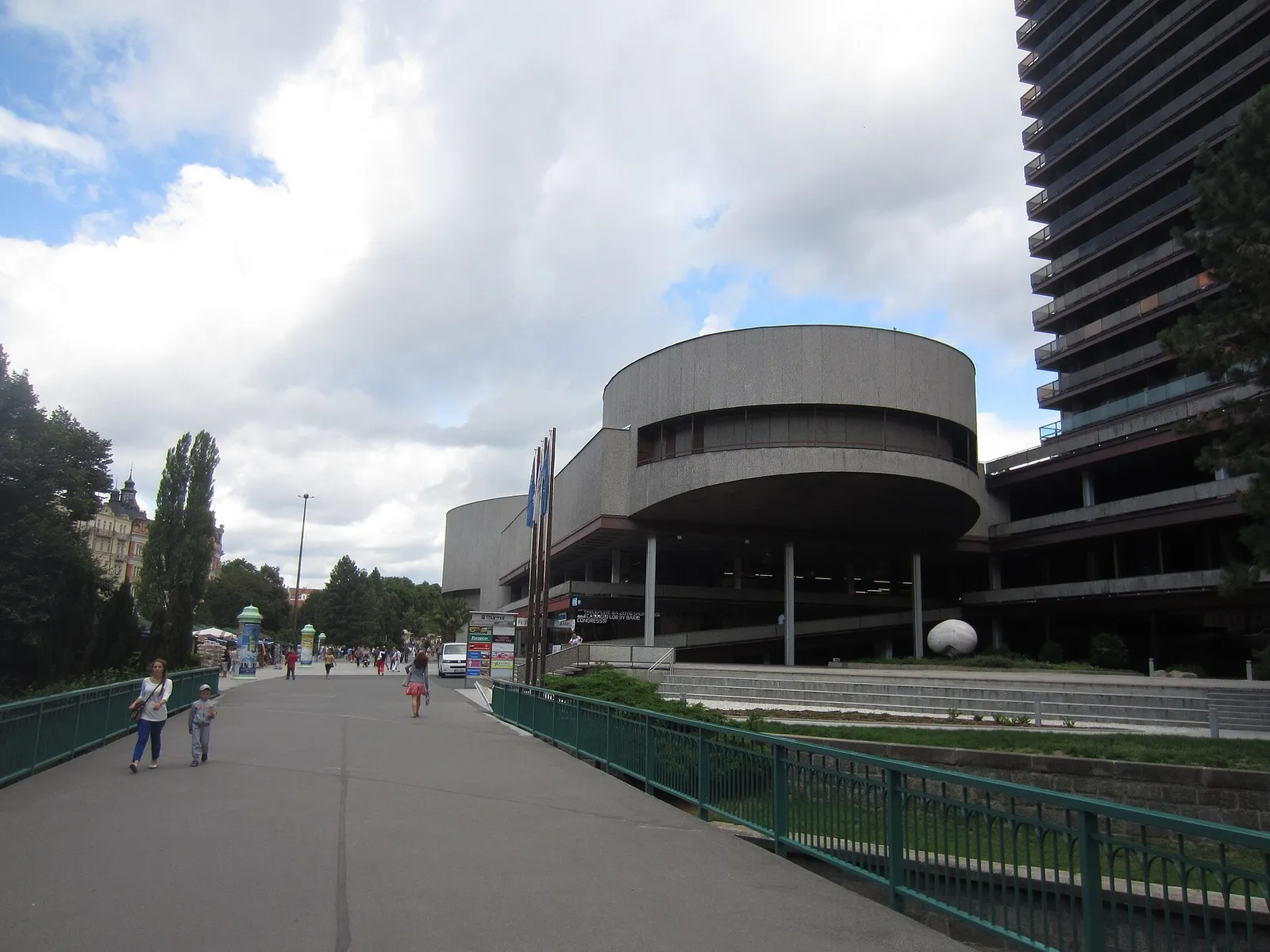
Tucked into a valley of colonnades, hot springs and pastel facades in western Bohemia, Karlovy Vary spends most of the year as a genteel spa town. For nine days each summer it becomes something else: one of Europe's most beloved film festivals, and an unlikely magnet for Hollywood.
An old festival with a tangled past
The Karlovy Vary International Film Festival runs July 3 to 11 this year. It is a milestone edition — the 60th — even though the festival dates back to 1946, making it one of the world's oldest. The gap between its age and its edition count is a quirk of history: for decades during the Cold War it was forced to alternate years with Moscow's festival, and it only returned to a reliable annual schedule after the fall of communism in the early 1990s.
That survival is part of its identity. Where newer festivals were built as marketplaces, Karlovy Vary grew up as a showcase — and, in the years after 1989, the Czech-born Hollywood director Milos Forman is often credited with coaxing big names to make the trip.
Who's being honored in 2026
This year's guest list is heavy on screen legends. Dustin Hoffman and Juliette Binoche will each receive the festival's top honor, the Crystal Globe for outstanding artistic contribution to world cinema — Hoffman at the opening ceremony, Binoche at the close, Variety reported. The acclaimed cinematographer Robert Richardson is also set to be recognized, and the actor Jeffrey Wright will receive the President's Award.
The tributes come with the movies attached: the festival plans to screen Hoffman's "The Graduate," Binoche films including "Certified Copy" and "Three Colours: Blue," and Wright's "Basquiat." Stars such as Dakota Johnson and Johnny Depp are among those who have made the pilgrimage in recent years, The Hollywood Reporter has noted.
Why the stars keep coming
What sets Karlovy Vary apart, by the accounts of those who attend, is its texture. Instead of the deal-driven crush of the biggest markets, the Czech festival throws filmmakers together with ordinary, ravenous audiences — students who camp in the surrounding hills, cinephiles who queue at dawn for a rare retrospective print, crowds that treat a screening as an event rather than a transaction.
That enthusiasm reads, to many visitors, as a tonic for an industry anxious about streaming economics and artificial intelligence. Here the reception is measured in applause rather than box-office projections.
More than a red carpet
The festival is not only star wattage. It screens roughly 200 films a year across competition, documentary and retrospective sections, and it has long championed filmmakers from the former Eastern bloc through strands built to spotlight emerging European talent. But the enduring image is the simple one: a movie star strolling a spa-town colonnade, mineral cup in hand, briefly free of the machinery of fame — in front of a crowd that came, above all, for the films.