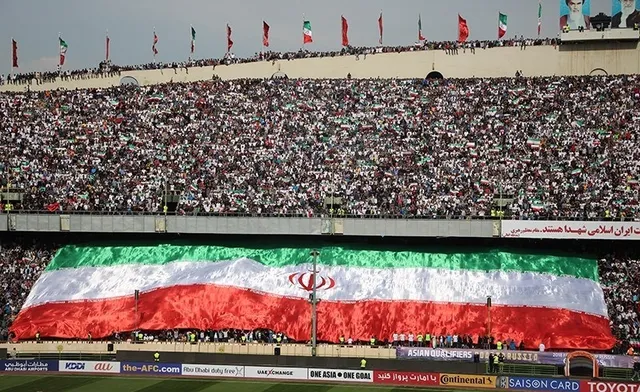
Iran's 2026 World Cup ended without a defeat — and without a place in the new Round of 32 — in one of the cruelest exits of the tournament.
Eliminated from afar
Iran drew 1-1 with Egypt in their final Group G match, a result that could have carried them through as one of the eight best third-placed teams in the expanded 48-team field. It didn't. In another match, Austria scored what Al Jazeera called "almost the final kick of the game" to draw 3-3 with Algeria, erasing Iran's last hope. Iran finished the group unbeaten — with draws against Belgium, New Zealand and Egypt — and still went home.
So close on the field
The margins were agonizing. Against Egypt, captain Mehdi Taremi missed a first-half penalty and later sent a header off the crossbar, Yahoo Sports reported. A stoppage-time effort that found the net was ruled out for offside after a video review. A win would very likely have put Iran into the knockout stage for the first time in the country's history.
Playing under restrictions
The football was inseparable from the politics. With relations between Washington and Tehran badly strained in 2026 — the two governments have traded strikes and remain at odds over Iran's nuclear program — the Iranian delegation competed under unusually tight U.S. visa conditions. Players and staff were generally required to enter the country shortly before each match and leave soon after, with only a slightly longer stay permitted for their final game, according to Al Jazeera and Yahoo Sports. Some members of the delegation were reportedly unable to travel to the United States at all.
Iran's players and staff did not hide their frustration. "Who wants to help us?" Taremi told reporters. "If they want us to be out, OK, let's be out. But that's not fair." Coach Amir Ghalenoei said his team had been "oppressed" by the travel complications.
A team used to the spotlight
Iran's footballers have long competed under political scrutiny. At the 2022 World Cup in Qatar, players declined to sing the national anthem before an early match, a gesture widely read as solidarity with protests back home. This time, the story was logistical as much as political: a team that never lost a game, but spent the tournament shuttling in and out of a host country at odds with their own — and went out, in the end, on a goal scored a thousand miles away.