

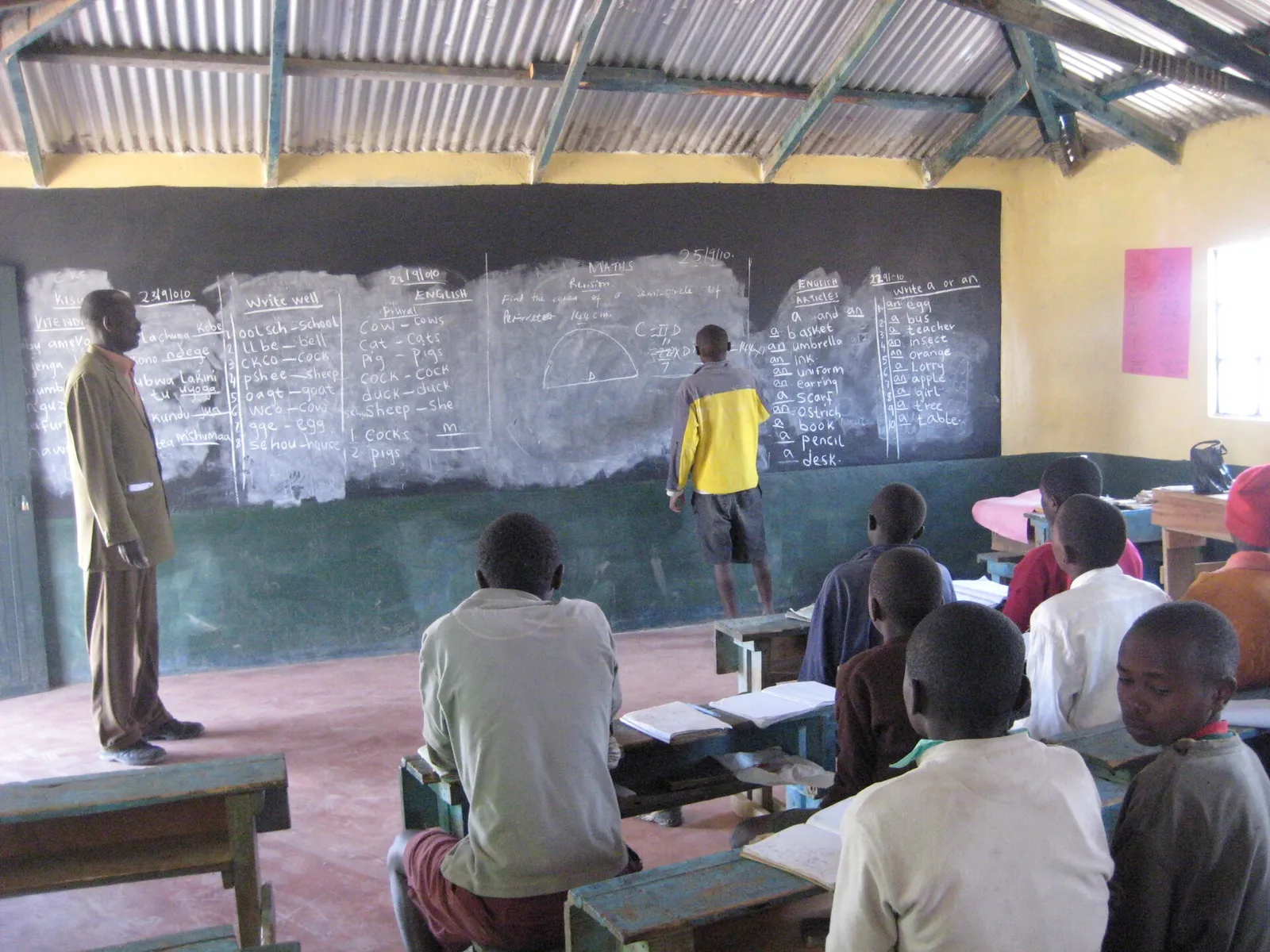
For many Kenyan children, the classroom is, in effect, a foreign country — a place where lessons arrive in a language they do not speak at home. It is a gap that national policy was meant to close, and often does not.
A policy that barely holds
Kenya is a country of dozens of languages, with English and Kiswahili as its two official tongues. Under longstanding policy, children in the first years of primary school are supposed to be taught in the dominant language of their area — a regional mother tongue such as Kikuyu, Dholuo or Kalenjin — before switching to English from about Grade 4, Al Jazeera reported.
In practice, the rule bends constantly. In classrooms that mix children from different communities, teachers often default to English or Kiswahili because no single mother tongue is shared by everyone. The result is that many pupils spend their earliest, most formative school years decoding an unfamiliar language while also trying to learn to read and count.
The cost of learning in a foreign tongue
Al Jazeera profiled Kenyans who say their schooling only clicked once instruction came in a language they actually understood. One woman who struggled through primary school in English described finally feeling "at home" at a technical college where instructors moved fluidly among Kalenjin, Kiswahili and English. The frustration runs deep. "I ask myself sometimes why someone in Europe, Asia or America learns in a language they grew up speaking, while we are expected to compete in theirs," one graduate told the outlet.
The pattern is global. UNESCO estimates that roughly 40 percent of the world's learners are taught in a language they do not fully understand — a figure that climbs much higher in some lower-income countries, as Al Jazeera noted. The United Nations points out that of the thousands of languages spoken worldwide, only a few hundred have any place in education at all.
A three-way tension
Kenya's debate is not a simple choice between mother tongue and English. Kiswahili sits in the middle: it is the national language and a unifying lingua franca, but it is the first language of only a minority of Kenyans, so for most children it is itself a second language. Families, meanwhile, often push for English as early as possible — correctly seeing fluency as a ticket to university, professional work and global mobility. That pressure pulls schools away from mother-tongue instruction even where it is officially required.
What the research says
Education researchers, in UNESCO and World Bank literature, broadly agree that children build foundational reading and math skills more easily in a language they already know; the mental load of learning an unfamiliar language and new material at the same time is heavy, and pupils who fall behind early rarely catch up. That does not argue for delaying English forever — only for grounding the first years in a language a child can follow.
Kenya has tried to reflect this in its Competency-Based Curriculum, adopted in 2017, which lists English, Kiswahili and indigenous-language activities among primary-school components. Whether that intent becomes consistent, well-supported teaching across a country of dozens of languages — with the teacher training and learning materials that requires — is the open question. For the children caught in the gap between policy and the classroom, it is also the most consequential one.