

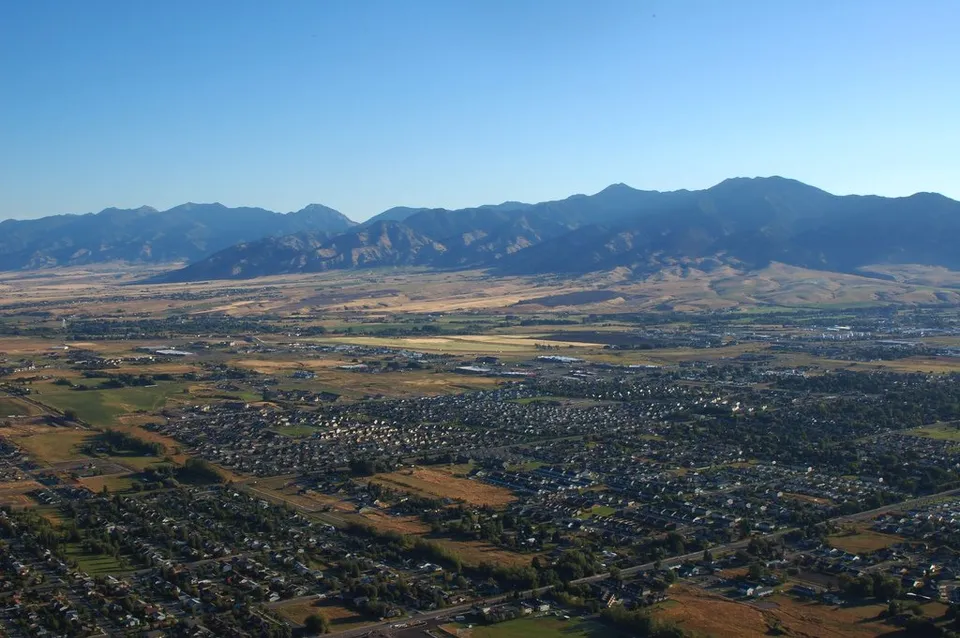
The image that travels is the tarmac at Bozeman Yellowstone International Airport on a busy summer weekend, lined with private aircraft. The BBC reported this week on the gap between that scene and the housing situation of the people who work in the towns below it.
The more revealing number is the lot rent.
Where the squeeze actually lands
Mobile home parks have long been the least glamorous and most durable form of affordable housing in the mountain West. Residents typically own the home and rent the ground beneath it, an arrangement that offers ownership without the protection ownership usually implies. When the land changes hands, the rent can move sharply, and moving a manufactured home is expensive enough that many residents cannot practically leave.
That is the mechanism now under strain in Montana. The Daily Montanan documented residents facing lot rent increases of roughly $100 a month, with one park's residents mounting what was described as the state's first rent strike in decades.
Who is buying
The ownership shift is not incidental. The Missoulian has tracked out-of-state investors acquiring mobile home courts across Montana, including California-based firms holding communities in Missoula and the Bitterroot. Its reporting places this within a national pattern of private equity acquisition of manufactured housing parks.
The investment logic is straightforward and not hidden: residents who own immovable homes on rented land are unusually unlikely to leave when rents rise. What is a stable yield to an investor is, to a resident, an exit that is priced out of reach.
The California thread
There is a genuine Los Angeles and California angle here, though it is easy to overstate. Research from the Public Policy Institute of California has found that higher-income remote workers account for much of the increase in out-migration from the Bay Area since remote work became widespread.
When a household earning a California salary buys in a town where local wages have not moved comparably, housing stops functioning as shelter and starts functioning as a sorting mechanism. That dynamic is not unique to Montana, and Californians are not its only agents. But California money is part of the story, both in the homes being bought and in the firms buying the land under the trailers.
The argument on the other side
The case for the influx is not nothing, and it deserves stating. New residents bring tax revenue, spending and, in some cases, businesses and jobs. Property owners of long standing have seen substantial gains in wealth. Some local officials have argued that the answer is to build considerably more housing rather than to restrict who may move in, and that constraints on new construction, not newcomers, are the binding problem.
Housing advocates counter that supply alone has not moved fast enough to matter to a worker facing a rent increase this year, and that manufactured housing residents in particular need protections tied to land ownership.
What the towns are left with
The practical result, described consistently across the reporting, is a labor problem wearing the costume of a housing problem. Restaurants, clinics, schools and shops in resort-adjacent towns need staff who can afford to live within a reasonable distance, and increasingly cannot find them.
Los Angeles knows this pattern well enough. The details differ, but the arithmetic does not: when housing costs decouple from local wages, the people who make a place work are the first to be pushed out of it.