

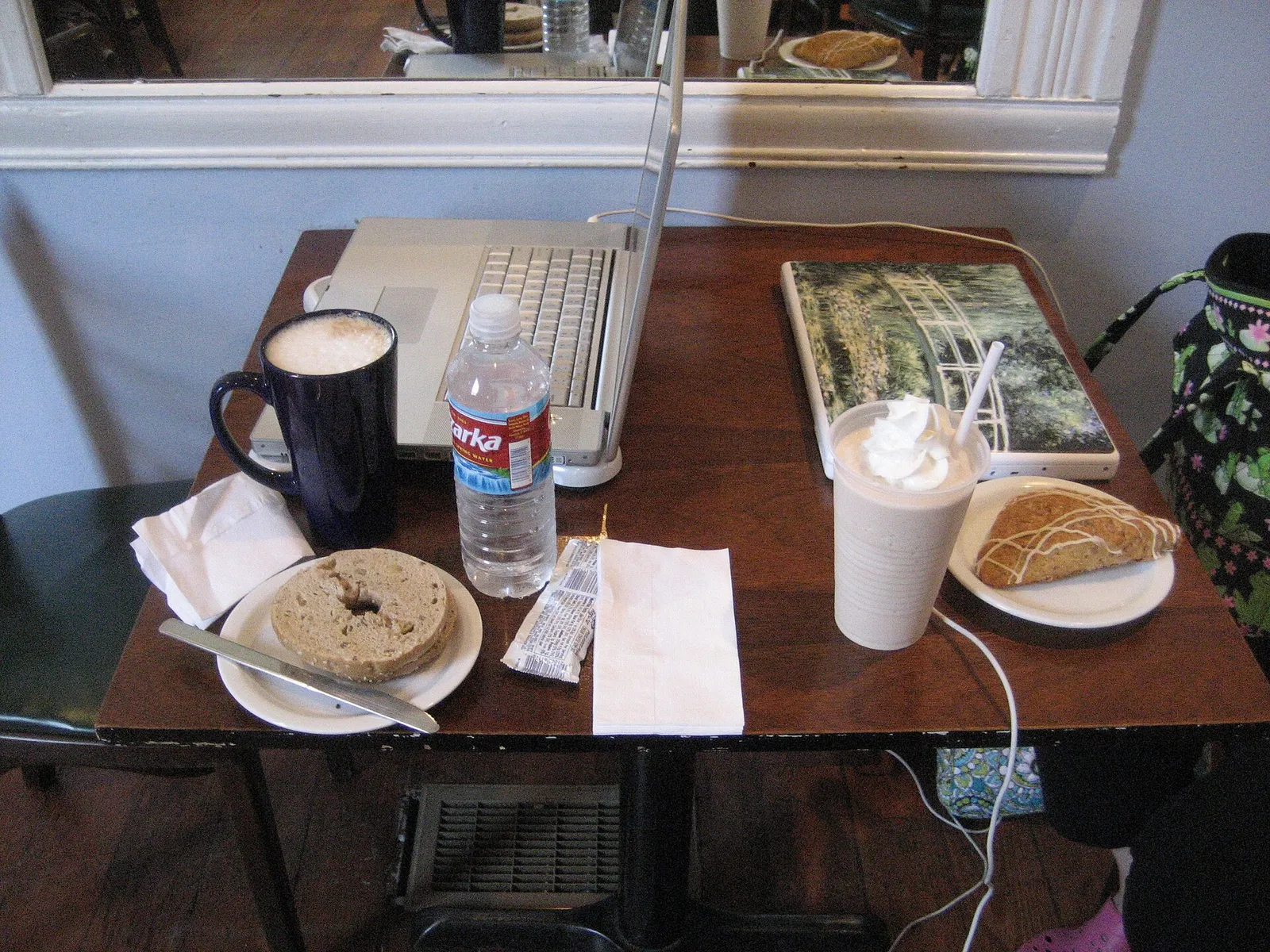
A man in Burbank who goes by Raz had breakfast with a stranger once, by accident, because she was eating alone at a nearby table and he decided to say something.
About a year later he started doing it deliberately. He put out an open invitation, through a neighborhood forum and by email, for anyone who wanted to have breakfast with someone they had never met. He has been doing it on Sunday mornings at a cafe in Burbank for roughly six months, and LAist reports that close to 20 people have taken him up on it.
How it works
There is no structure to speak of. Someone gets in touch, they agree on a Sunday, they eat breakfast and talk. Conversations have run for hours. Afterward Raz writes up an account of the meeting without using anyone's name, giving people descriptions instead, which is how a reader ends up learning about "the Artist" or "Captain Max" without learning who they are.
The reporter who went to one of these expecting it to be uncomfortable found that it was not, and that the conversation crossed a thirty-year age gap without difficulty.
Raz's own summary of why he keeps going is unremarkable and probably the point. "It's just more about the impact that we have on each other," he told LAist. He says he no longer feels lonely.
The reason this is a health story
It would be easy to file this as a pleasant local curiosity. The underlying subject is not.
In 2023 the U.S. Surgeon General issued an advisory treating loneliness and social isolation as a public health problem. The figures in it are the ones that get quoted: social isolation associated with a 29 percent higher risk of heart disease and a 32 percent higher risk of stroke, and with a roughly 50 percent higher risk of dementia in older adults. The advisory's comparison of the mortality effect to smoking has been widely repeated and is, reasonably, also widely debated among researchers.
The direction of causation in this research is genuinely difficult. Isolated people are more likely to be ill, and ill people are more likely to become isolated. What the advisory established is that the association is large enough to take seriously, not that a breakfast prevents a stroke.
Why Los Angeles makes it harder
LAist's reporting notes that close to a quarter of adults in Los Angeles County report feeling isolated.
There is a structural explanation that Angelenos will recognize. Casual encounters, the kind that produce weak social ties without anyone planning them, mostly happen when people are out of their cars and moving at walking pace past each other. A region built around driving generates fewer of them per day than a dense one does, and the ones it does generate are largely at work.
Research from UC San Diego on walkability and social connection found that people in more walkable neighborhoods were meaningfully more likely to know their neighbors. That finding travels well here, where two households a mile apart may share a ZIP code and never occupy the same sidewalk.
Add the cost of housing, long commutes and a population that is unusually likely to have arrived recently from somewhere else, and the ordinary machinery of making friends runs slower.
What a breakfast can and cannot do
The city has a long history of people organizing against this. The Los Angeles Breakfast Club has been meeting in Los Feliz for more than a century on essentially the same premise.
What Raz has built is small. It reaches about 20 people, it depends entirely on one person continuing to want to do it, and it is not a substitute for the housing, transit and public-space decisions that determine how easy it is to run into another person in this region.
It is also, for those 20 people, a real Sunday morning that they spent talking to somebody. In a county of ten million where a quarter of adults report feeling isolated, that is not nothing, and the barrier to copying it is a table and a willingness to go first.