

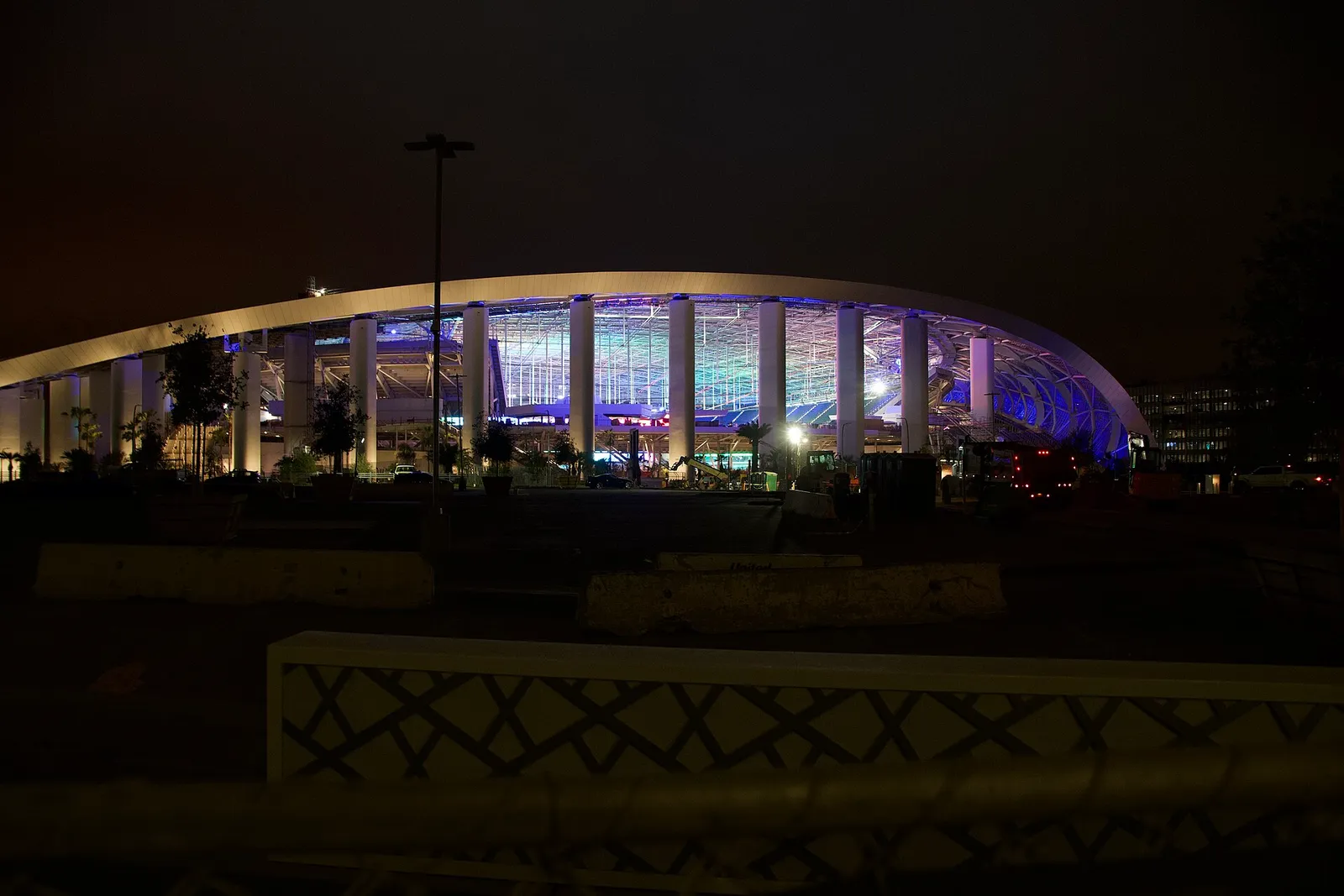
As the World Cup plays out at SoFi Stadium in Inglewood, boosters are putting a big number on what it means for the regional economy: about $892 million. Economists who study these events say to read that figure carefully.
The projection
The estimate comes from an economic-impact study prepared for Los Angeles' World Cup effort, which projects roughly $892 million in total economic activity for the county from hosting the tournament's matches, ABC7 reported. The figure is up sharply from an earlier projection, reflecting higher visitor estimates. Backers count spending on hotels, restaurants, transportation and retail, plus the downstream activity that spending is expected to generate, and a longer-term tourism halo from having Los Angeles beamed to a global television audience.
Inglewood, the small city that is home to SoFi Stadium, is projected to see a share of that in local spending and tax revenue, a concentrated burst of activity for the businesses around the venue.
The caveat
Here is where economists step in. Researchers who study major sporting events have repeatedly found that official impact studies function more as promotional tools than neutral analysis, tending to count all event spending while glossing over public costs and over the ordinary economic activity that would have happened anyway. As a North Carolina State University analysis put it, many such studies are structured in ways that "predictably produce large numbers."
The skepticism is grounded in history. Independent economists, including Robert Baade and Victor Matheson, have found that the real economic bump from past World Cups fell well short of the pre-tournament promises, in part because FIFA captures much of the event's revenue while host cities absorb costs for security, transportation and stadium operations.
What's real, and what to watch
None of that means the tournament brings nothing. Hotels near capacity, packed restaurants and a summer of international visitors are tangible, and for hospitality workers and small businesses the surge is real money in a compressed window. The harder question is how much of the projected spending is genuinely new, and how much is simply money that would have been spent in the region on something else.
For Los Angeles, a city with deep tourism infrastructure and a long history of staging global events, the World Cup is a marquee moment either way. The honest accounting, economists say, comes later, when the visitors have gone home and the receipts can be measured against the promises.