

Drill deep enough into the earth and you reach something older than civilization: heat left over from the planet's formation and continuously renewed by the slow decay of radioactive elements in the crust. It is effectively inexhaustible on any human timescale, it flows around the clock regardless of weather, and burning nothing to capture it means no carbon emissions. So why does geothermal supply only a sliver of the power grid?
The answer is geography and cost — and both are now being challenged.
How conventional geothermal works
A traditional geothermal plant is elegantly simple. Engineers drill into an underground reservoir where water or steam has been heated by volcanic or tectonic activity, run that fluid through a turbine, then pump it back down to be reheated. The cycle repeats with little fuel cost.
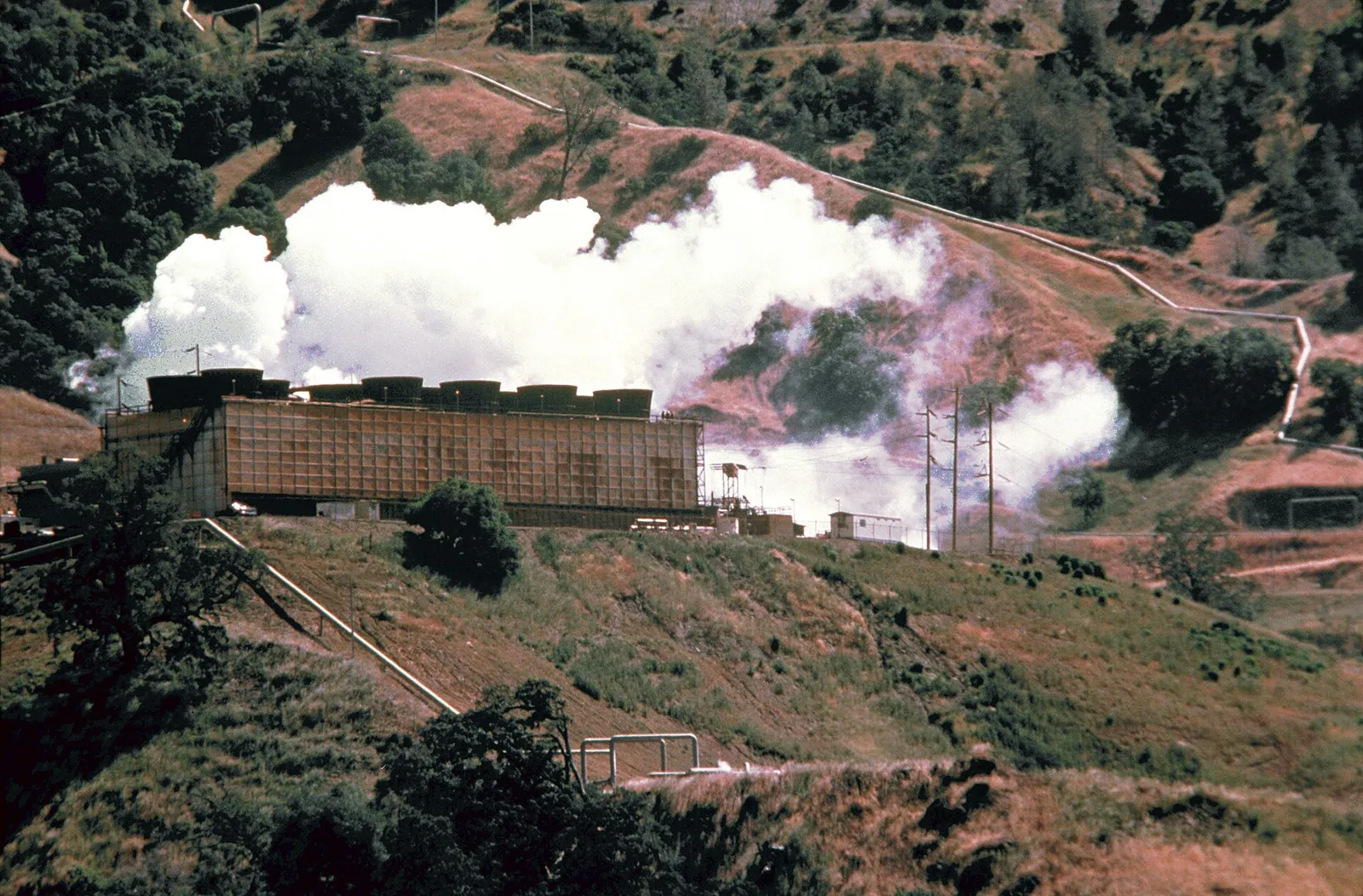
The catch is that the right conditions — rock that is hot, cracked, and saturated with water all at once — occur only in a few places, mostly along tectonic boundaries. In California, The Geysers, a complex of power plants in the Mayacamas Mountains north of San Francisco, is the most dramatic example in the world, drawing steam from hundreds of wells to power a city-sized load. But for the vast stretches of the country that sit atop hot rock that happens to be dry and sealed, conventional geothermal has meant nothing at all.
The leap: enhanced geothermal
Enhanced geothermal systems, or EGS, flip the problem. Instead of searching for the rare spot where nature has done the work, engineers make their own reservoir, drilling into hot rock and injecting fluid under pressure to widen existing fractures. The cracked rock becomes a giant heat exchanger: water goes down one well, picks up heat, and returns up another to spin a turbine.
The techniques — directional drilling, hydraulic fracturing, downhole sensing — come straight from the oil and gas industry, refined over decades and now repurposed for a very different end. The U.S. Department of Energy has run a dedicated EGS research site in Utah for years, and the results have drawn serious private investment.
The cost problem
EGS's promise comes with a steep bill. Drilling deep into hard, hot rock is slow and expensive, and the wells alone can account for a large share of a project's total cost, the Department of Energy notes. Driving that cost down — through faster drilling and fewer failures — is the single biggest lever for making the technology competitive with solar and wind.
Geothermal's trump card is reliability. Unlike solar and wind, which rise and fall with the sun and weather, a geothermal plant runs continuously, providing the kind of firm, always-on power that a grid leaning ever harder on renewables badly needs. That is why a technology long treated as a niche curiosity is suddenly attracting capital and federal attention.
California's twist: power and lithium together
Near the shrinking Salton Sea in Imperial County, geothermal developers are chasing a second prize alongside electricity. The super-heated brines pumped from deep underground in this region are unusually rich in dissolved lithium — the metal at the heart of electric-vehicle and grid-storage batteries.
The California Energy Commission has branded the area Lithium Valley and estimates it could eventually yield a substantial share of domestic lithium demand. The appeal is twofold: lithium revenue could help underwrite geothermal power that might otherwise struggle to pencil out, while extracting the metal from brine carries a far smaller footprint than conventional hard-rock mining.
The long game
Geothermal has been the quiet member of the clean-energy family for decades — dependable and carbon-free, but boxed into a geographic corner. The combination of oil-field drilling know-how, a grid hungry for steady power, and new public and private investment has, for the first time in a generation, put it back in the conversation.
The challenges remain real. Reservoir engineering miles underground is still closer to art than science, and scaling from a handful of pilot plants to a meaningful share of the grid would require supply chains that do not yet exist. But the heat has always been there. The open question is whether the technology can finally reach it cheaply enough to matter.