
The murals Dave Young Kim remembers from a Koreatown childhood have mostly disappeared. His response has been to paint a new one, LAist reports.
What went missing
Kim, 46, was born and raised in Koreatown, and he grew up seeing Korean culture on the neighborhood's walls, traditional drummers and dancers, historical figures, the visual vocabulary of a community announcing itself. Over the years, much of that public art has been lost. The absence is what the story is really about: a neighborhood whose Korean identity was once legible on its buildings and gradually was not.
That earlier wave had names. Korean American muralists worked in Koreatown in the late 1980s and early 1990s, among them Dong-In Park, who painted a 1993 mural at the Korean Community Center on South Western Avenue, along with Sonia Hahn and Kuk Chol Han. Many of those works are gone now, and with them a piece of the neighborhood's memory of itself.
The new mural
Kim's contribution, completed in summer 2026, is at the Korean Resource Center's Durae Crenshaw House, an affordable housing complex for seniors. It depicts pungmulnori, the Korean folk tradition that combines drumming, dance and acrobatics, with traditional drummers, plum blossoms and faint Korean architecture in the background.
The detail that makes it more than decoration is how it was built. Kim worked with the Koreatown Storytelling Program, in which young people interviewed elders living at the complex, and the transcripts of those conversations shaped the artwork. The mural shows three generations of drummers: an older immigrant, a middle-aged performer, and younger drummers wearing sneakers, a single image carrying the neighborhood's arc from arrival to the present.
The project was funded through the Abbey Mural Prize, a national grant program, which is part of why it could happen at all when so much public art depends on money that rarely materializes.
Why it matters
Kim frames the stakes in terms of how culture actually passes down. "We don't learn culture via formal education," he said. "It's all gleaned." A mural is one of the ways it gets gleaned, absorbed by a kid walking past it the way Kim absorbed the ones that are now gone.
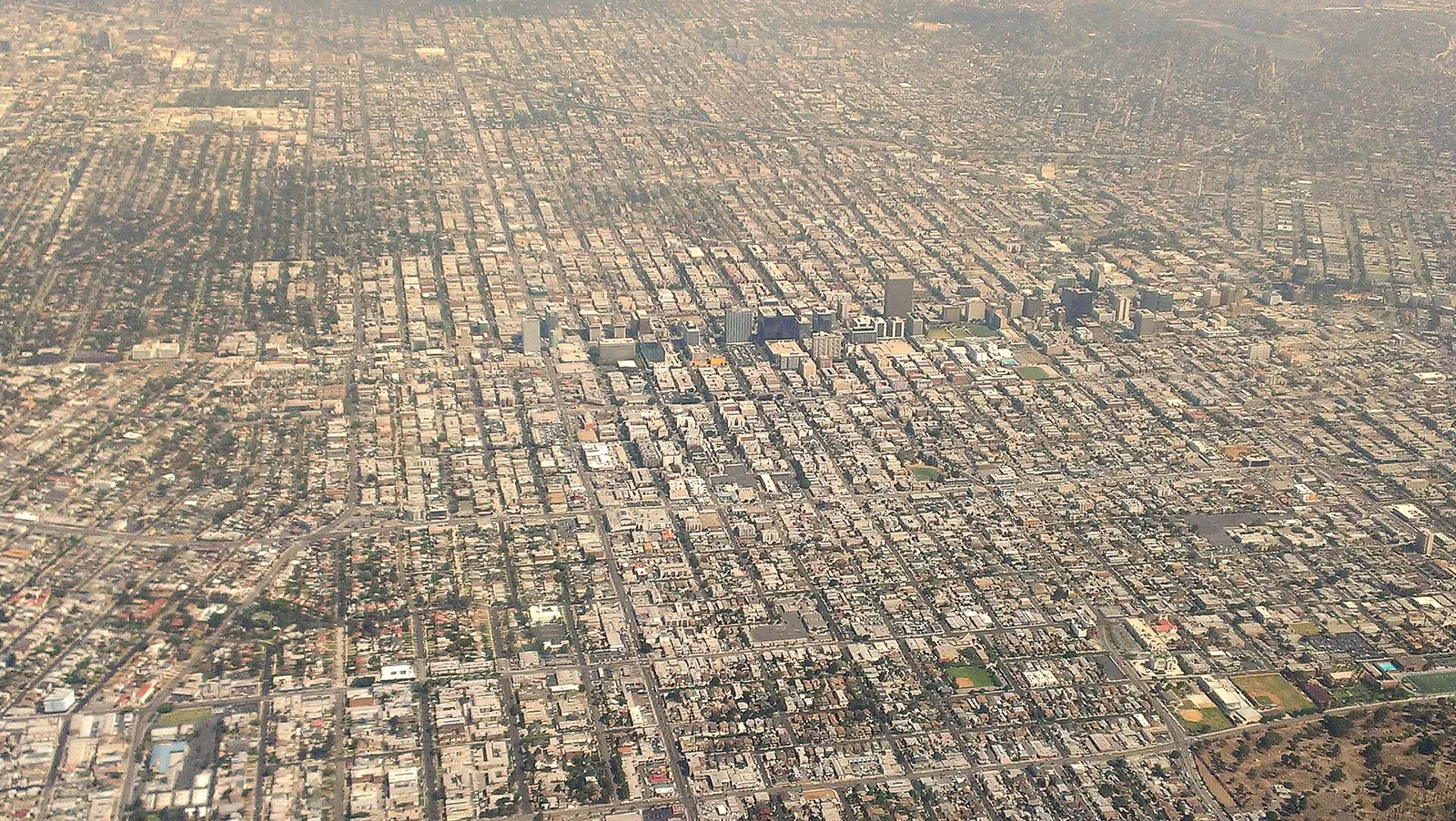
Koreatown is one of the densest, most vibrant immigrant neighborhoods in Los Angeles, and its public face has always been part of its identity. A single mural does not restore what a generation of lost ones represented, but it is a deliberate act of putting the community's story back where the community can see it. The Herald notes the work as exactly that, a small, rooted piece of a neighborhood writing itself back onto its own walls.