Three space travelers came home on Sunday, dropping out of orbit and onto the flat grasslands of central Asia to close out eight months off the planet, ABC7 reports.
The landing
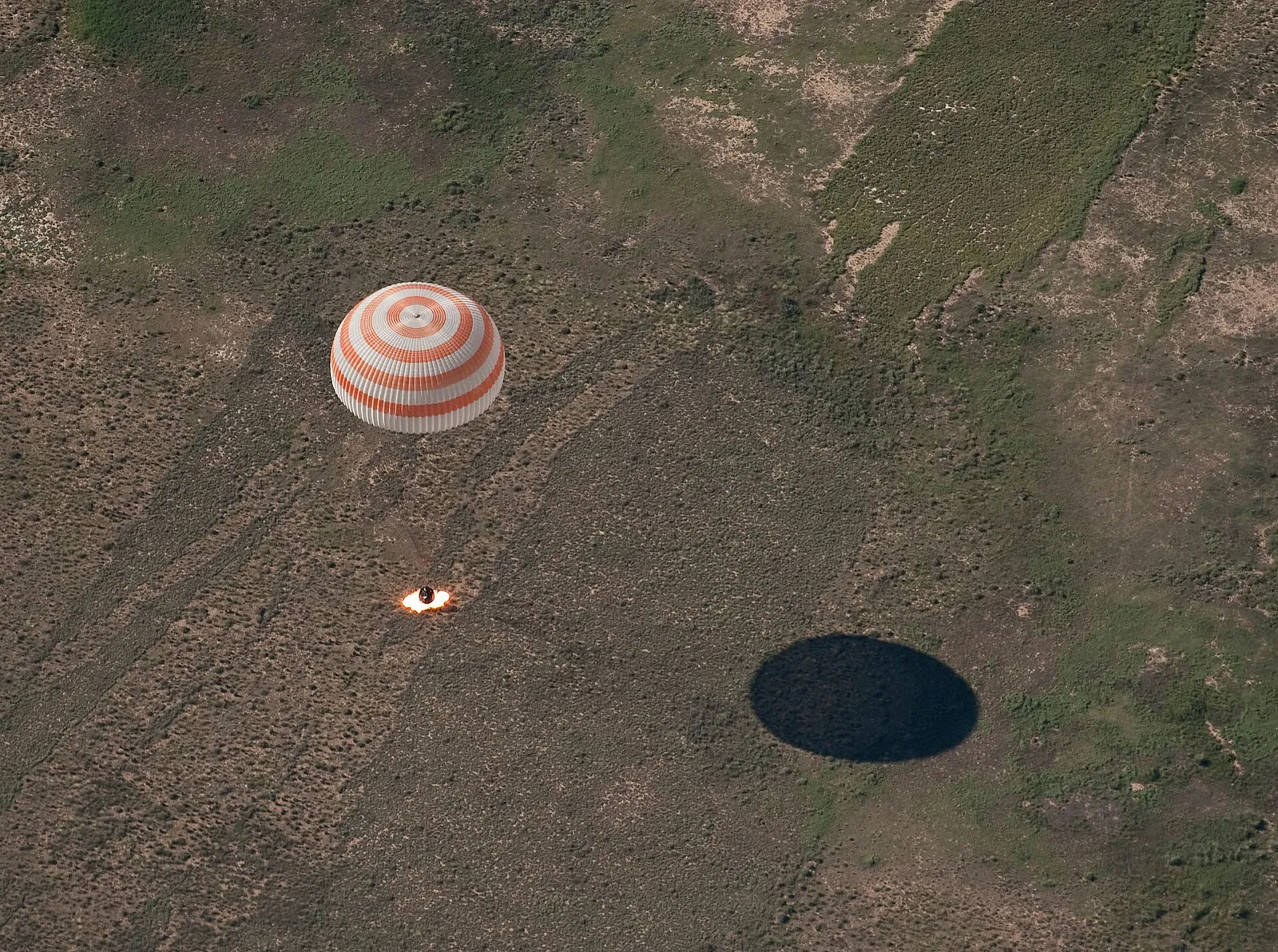
The Soyuz MS-28 spacecraft carrying NASA's Chris Williams and Russia's Sergei Kud-Sverchkov and Sergei Mikaev landed smoothly by parachute in a designated area on the Kazakh steppe, southeast of the city of Dzhezkazgan. The three had spent 241 days in space aboard the International Space Station.
The choreography afterward was the usual one, honed over decades of Soyuz returns: recovery teams reached the capsule, helped the crew out, and flew them by helicopter to the city of Karaganda. From there their paths split, Williams heading back to NASA's Johnson Space Center in Houston, and the two cosmonauts flying to the Star City training base near Moscow.
Who they are
For two of the three, this was a first flight. Williams and Mikaev were both making their debut long-duration missions, while Kud-Sverchkov was on his second trip to the station. Eight months is a standard tour aboard the ISS, long enough for the body to adapt to weightlessness and long enough that readjusting to gravity, the heaviness of one's own limbs, the simple work of standing, takes days of careful monitoring after landing.
The quiet significance
There is nothing dramatic about a clean Soyuz landing, and that is rather the point. An American astronaut rode home in a Russian spacecraft, landed on Russian-operated ground, and was recovered by Russian teams, at a time when cooperation between the two countries has frayed almost everywhere else. The International Space Station remains one of the last places where the US and Russia still operate as genuine partners, flying each other's crews and depending on each other's hardware.
That arrangement has a horizon. The ISS is nearing the end of its planned life, with retirement expected around the end of the decade, and no successor guarantees the same US-Russian partnership will carry into whatever comes next. For now, a routine landing on the steppe is a small, functional example of two rival powers still doing something difficult together, and doing it well. The Herald notes the return as the milestone it is: three people safely home after 241 days, and a partnership in orbit that, for the moment, still works.