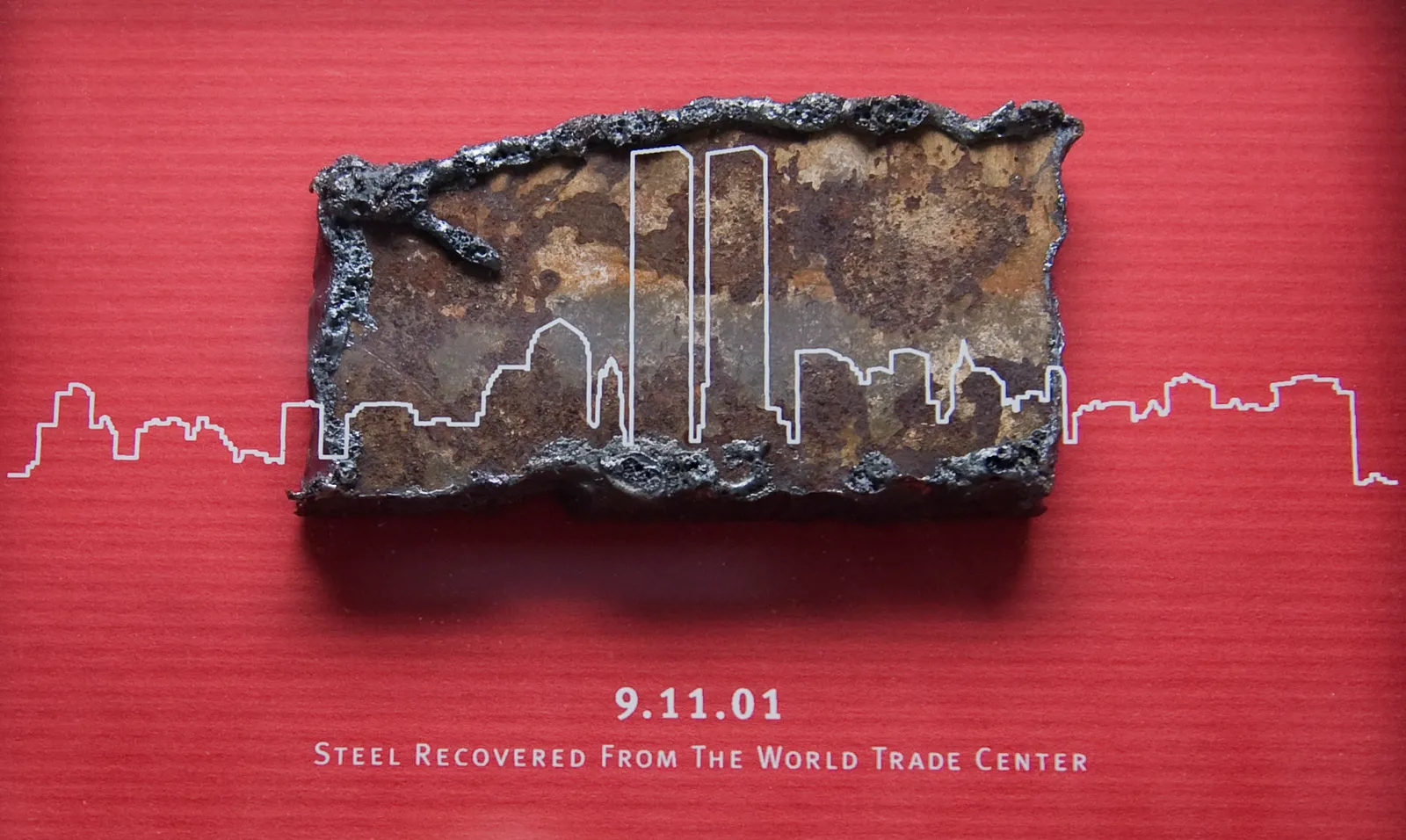
It is not the sort of cargo that usually moves down a Southern California highway: a 16,000-pound steel beam, dark and twisted, recovered from the wreckage of the World Trade Center. This week, it came through Orange County.
A rolling memorial
The beam is the centerpiece of the Tunnel to Towers Foundation's "Steel Across America" tour, a months-long journey carrying an original piece of the Twin Towers from community to community before it returns to Ground Zero in Manhattan for the 25th anniversary of the September 11, 2001, attacks. The artifact was recovered from the South Tower, and the foundation has been displaying it across the country since the spring, Spectrum News NY1 reported when the tour began.
When the convoy reached Huntington Beach, the city's police department escorted it through town, KTLA reported — a ceremonial welcome for an object that carries the weight of one of the defining days in American history.
What the steel holds
The beam is not a replica or a reproduction. It is a structural member of one of the towers that fell on September 11, 2001, when nearly 3,000 people were killed, among them hundreds of New York City firefighters. The Tunnel to Towers Foundation was created in memory of one of them — FDNY firefighter Stephen Siller, who ran through the Brooklyn-Battery Tunnel in his gear to reach the burning towers and died that day. The foundation is now best known for its annual memorial run retracing his steps, and for its work supporting the families of fallen first responders and service members.
Carrying the steel itself across the country is a newer undertaking, timed to the quarter-century mark. For visitors, the appeal is the chance to stand close to something that was there — to see, up close, the raw material of a skyline that no longer exists.
Why it resonates here
Southern California is far from Lower Manhattan, but the region has its own deep ties to the military and first-responder communities that the day's losses fell hardest on. The beam's swing through the area — including an earlier display in San Diego — gave residents a place to gather and remember, particularly meaningful in the run-up to the Fourth of July.
For Americans too young to remember 2001, the tour offers something a textbook cannot: the physical heft of that morning, made real in a length of rusted steel. For those old enough to recall exactly where they were, it is a chance to pause and carry the memory one more mile down the road to Ground Zero.