

A spending plan big enough to reorder the global chip industry was supposed to be a show of strength. Instead, it spooked the market.
A trillion-dollar pledge
Samsung Electronics and SK Hynix are reported to be preparing to commit up to 2,000 trillion won — roughly $1.3 trillion — to semiconductor factories, AI data centers and related infrastructure over the next ten years, CNBC reported. The plans were unveiled at a government briefing in South Korea chaired by President Lee Jae-myung, who has made semiconductors and artificial intelligence a centerpiece of national industrial strategy.
It is, by most measures, one of the largest corporate investment commitments ever announced — a combined wager spanning new chip fabrication plants, expanded memory capacity and gigawatt-scale data centers, according to Fortune. To be clear about what the figure is and isn't: it represents the two companies' forward-looking investment intentions, not a government appropriation or a single customer contract.
The market flinched
Investors did not respond with enthusiasm. Samsung shares fell about 4.7 percent and SK Hynix dropped around 3.1 percent on the news, weighing on South Korea's Kospi index, which had already been rattled by a broader tech selloff in recent sessions.
The cool reception has a logic familiar to anyone who has watched the memory-chip business. Memory is deeply cyclical: when the two dominant producers simultaneously commit to aggressive, multi-year capacity expansions, the market's worry is not whether demand is strong today — it plainly is — but whether supply will overshoot demand once those plants come online years from now. A previous wave of buildouts helped trigger a painful memory glut and price crash near the end of the last decade, and that memory is fresh.
The AI memory boom underneath it all
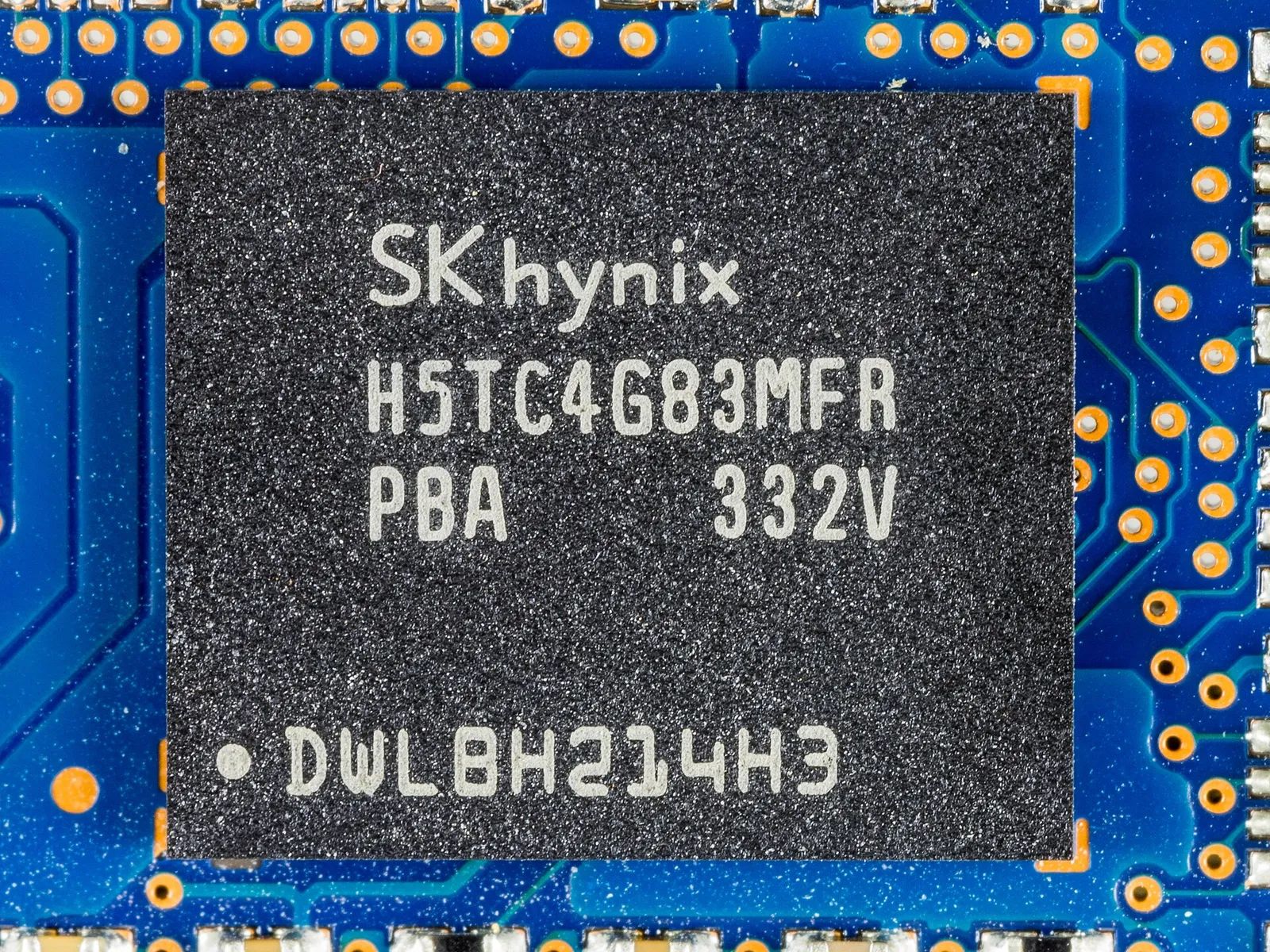
Driving the spending is the explosion in demand for high-bandwidth memory, or HBM — the stacked, high-speed chips that power the AI accelerators at the heart of the data-center boom. SK Hynix has ridden that wave to become the leading HBM supplier and a primary partner to Nvidia; its market value briefly crossed $1 trillion earlier this year, Al Jazeera reported, at one point surpassing Samsung as South Korea's most valuable company. Samsung, racing to close the gap, has every incentive to spend.
HBM is also far more capital-intensive to manufacture than conventional memory, which magnifies both the potential payoff and the risk if demand cools.
A bet on a decade
Layered on top is geopolitical uncertainty — U.S. export controls on advanced chips to China and the broader reshaping of global supply chains all complicate any ten-year forecast. For now, Seoul is framing the investment as a national strategy to cement its lead in the technologies expected to define the next era of computing. Whether shareholders come to share that confidence will depend on a question no spending plan can answer on its own: how durable the AI boom proves to be.