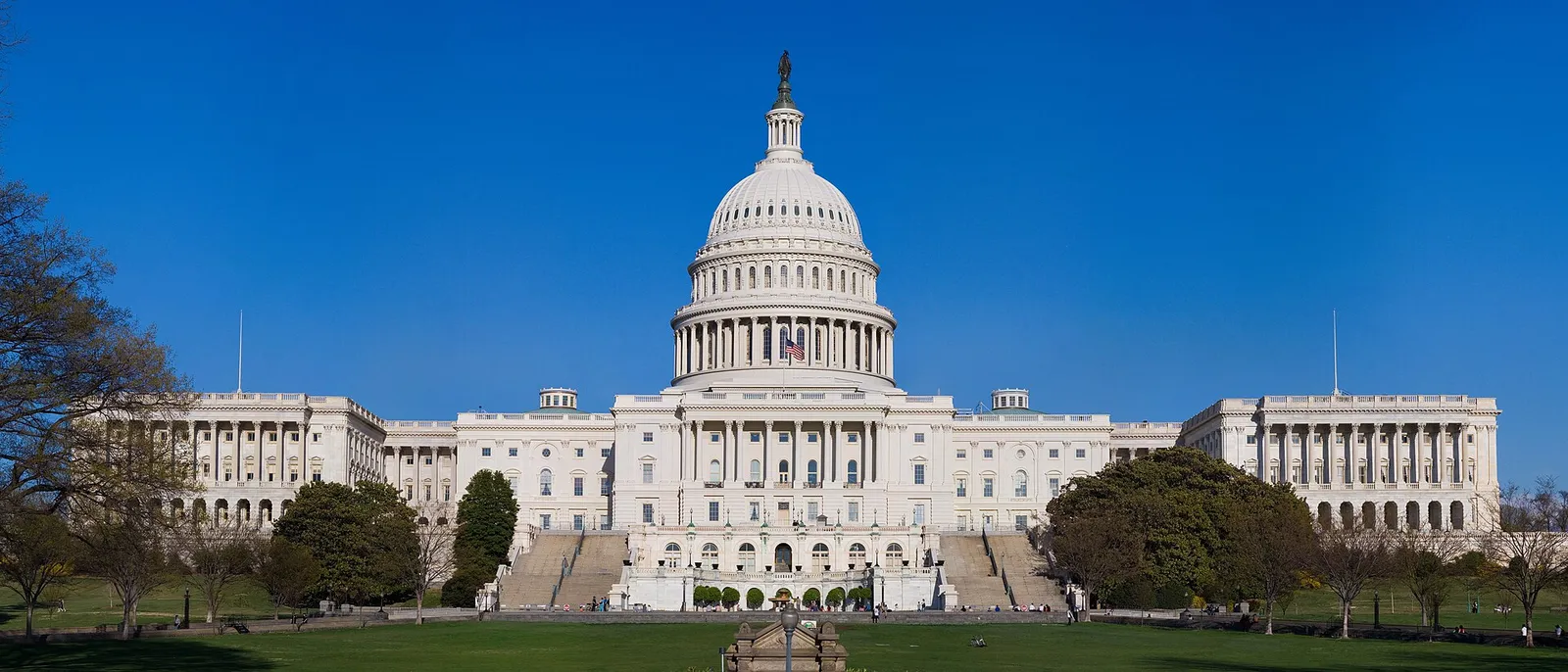
An unusual scene on the Capitol steps this week has become a test of the rules that govern how members of the military may engage in politics.
What happened
Maj. Jason Watson, an active-duty Air Force logistics readiness officer, was detained by U.S. Capitol Police after he appeared in uniform outside the Capitol and publicly called for the impeachment of President Trump and Vice President JD Vance, Military Times reported. According to the reporting, Watson stood on the House steps holding a sign reading "Impeach Convict Remove" and spoke at a press event, at which Rep. Al Green, a Texas Democrat, initially appeared alongside him.
Watson accused the administration of unconstitutional actions and urged people to "peacefully exercise your First Amendment rights," NBC News reported. Capitol Police took him into custody under a District of Columbia statute covering "crowding, obstructing, and incommoding," and CNN reported that a court official indicated the criminal case would not be pursued. "Detained" here means a brief arrest at the scene, not confinement in military custody.
The rules at stake
The conduct implicates two long-standing sets of restrictions on service members. Article 88 of the Uniform Code of Military Justice makes it an offense for a commissioned officer to use "contemptuous words" against the president, the vice president, Congress and certain other officials — a provision that is rarely prosecuted. Separately, Defense Department rules, including Directive 1344.10, limit partisan political activity by active-duty personnel, and generally bar wearing the uniform at political events in a way that could imply the military is endorsing a cause.
Those rules exist to keep the armed forces publicly nonpartisan and under civilian control. Critics of any discipline in this case counter that service members retain First Amendment rights; the advocacy group Free Speech For People said it supported Watson.
What the Air Force said
The Air Force announced a formal investigation that it said would "proceed unimpeded." Air Force Secretary Troy Meink said he expects "every Airman and Guardian to comply with all laws and policies governing personal conduct, political participation, and the wear of the uniform," and that commanders would ensure an "appropriate disposition" consistent with military law and due process.
As of this reporting, no formal charges had been filed. Reports indicate the inquiry may weigh possible violations of Article 88 and Article 92, which covers failure to obey regulations; potential outcomes range from administrative counseling to a court-martial, and none has been determined. No statement from Watson after his arrest had been reported. The account originated with The New York Times and has been corroborated by Military Times, NBC News, CNN and The Hill; this story relies on those outlets, which were directly accessible.