


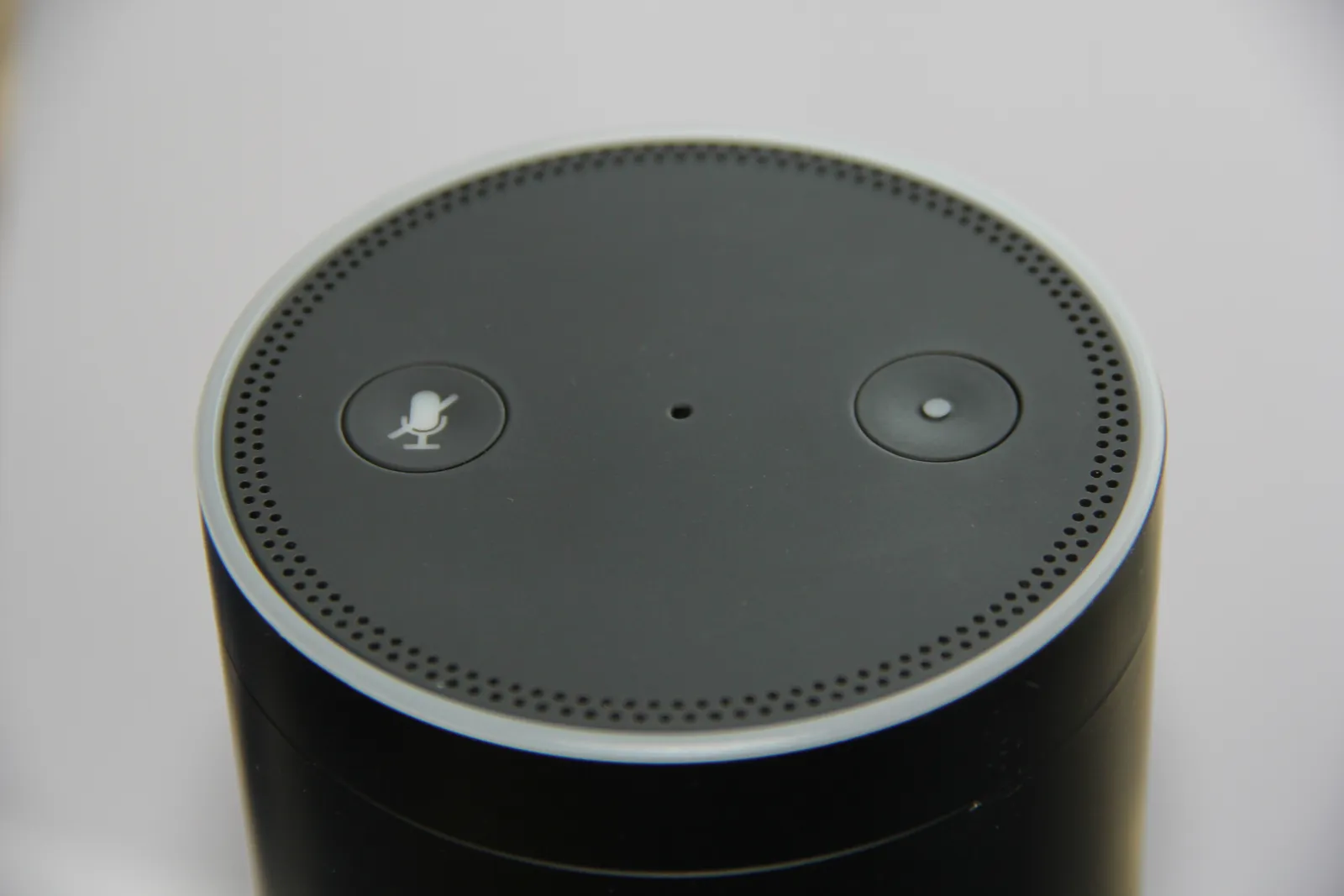
Amazon is designing its own artificial-intelligence chips for its consumer gadgets, extending a custom-silicon strategy it has long pursued in its cloud business down to the devices in people's living rooms.
Chips for the living room
Amazon hardware chief Panos Panay told CNBC that the company is designing custom chips for its key devices as it pushes AI deeper into products like the Echo speaker and Fire TV. The effort centers on two processors, the AZ3 and the more powerful AZ3 Pro, which Amazon unveiled in October 2025 to run AI models on the device rather than entirely in the cloud.
The chips are already shipping. Amazon's newest Echo lineup — introduced at a fall hardware event — pairs the AZ3 with the Echo Dot Max and puts the AZ3 Pro in the redesigned Echo Show 8 and Echo Show 11 smart displays and the Echo Studio speaker, alongside new Fire TV hardware. Amazon says the AZ3 improves wake-word detection by more than 50 percent and helps the devices pick a user's voice out of a noisy room.
Why on-device AI
The appeal of running AI locally is speed and privacy: many routine requests — setting a timer, controlling a light, answering a simple question — can be handled on the device without sending audio to Amazon's servers. That matters as Amazon expands Alexa+, its generative-AI assistant, which the company rolled out more widely in early 2026 and offers free to Prime members.
Putting more of that processing on a dedicated chip is meant to make the assistant feel faster and more responsive, while giving Amazon tighter control over how its own AI models run on its own hardware.
A strategy that started in the data center
The move is a natural extension of work Amazon has done for years through Annapurna Labs, the chip-design group it acquired in 2015. Annapurna's designs power much of Amazon Web Services: the Graviton processors for general computing and the Trainium and Inferentia chips built for training and running AI models. Amazon has promoted those chips as a lower-cost alternative to buying all of its silicon from suppliers such as Nvidia.
Designing chips for consumer devices applies the same logic in a different arena — reducing dependence on outside suppliers like Qualcomm and MediaTek for the processors inside gadgets, and tailoring the hardware to Amazon's software. It is a path other giants are also walking: Google and Microsoft have built their own AI data-center chips, and Amazon has continued to buy large quantities of Nvidia GPUs even as it expands its in-house designs, suggesting a mixed approach rather than a clean break.
What's still unclear
Amazon has not laid out a full roadmap for how far the custom chips will spread across its product line, or a detailed timeline for future device categories beyond the current Echo and Fire TV hardware. For now, the company's message is consistent with a broader industry shift: as AI features become central to everyday devices, the firms that make them increasingly want to design the brains inside.