

Most ancient cities that survive into the modern record do so battered — by weather, by farming, and above all by looters. So when a team working in southern Mexico reached a Maya site untouched by treasure hunters, the archaeologists knew they had something unusual.
A city with "no road"
The site, called Minanbé, sits deep in the Calakmul Biosphere Reserve in the state of Campeche, near the base of the Yucatán Peninsula. The name comes from Yucatec Maya and means, roughly, "there is no road" — an apt label for a place the team could reach only after cutting a path through kilometers of dense forest, Smithsonian Magazine reported.
The work was led by the archaeologist Ivan Šprajc of the Slovenian Academy of Sciences and Arts, with authorization from Mexico's National Institute of Anthropology and History (INAH). The researchers first spotted the city using aerial LiDAR — a laser-mapping technique that strips away the tree canopy in the data to reveal structures on the ground, and which has driven a wave of Maya discoveries in recent years, The Art Newspaper reported.
What they found
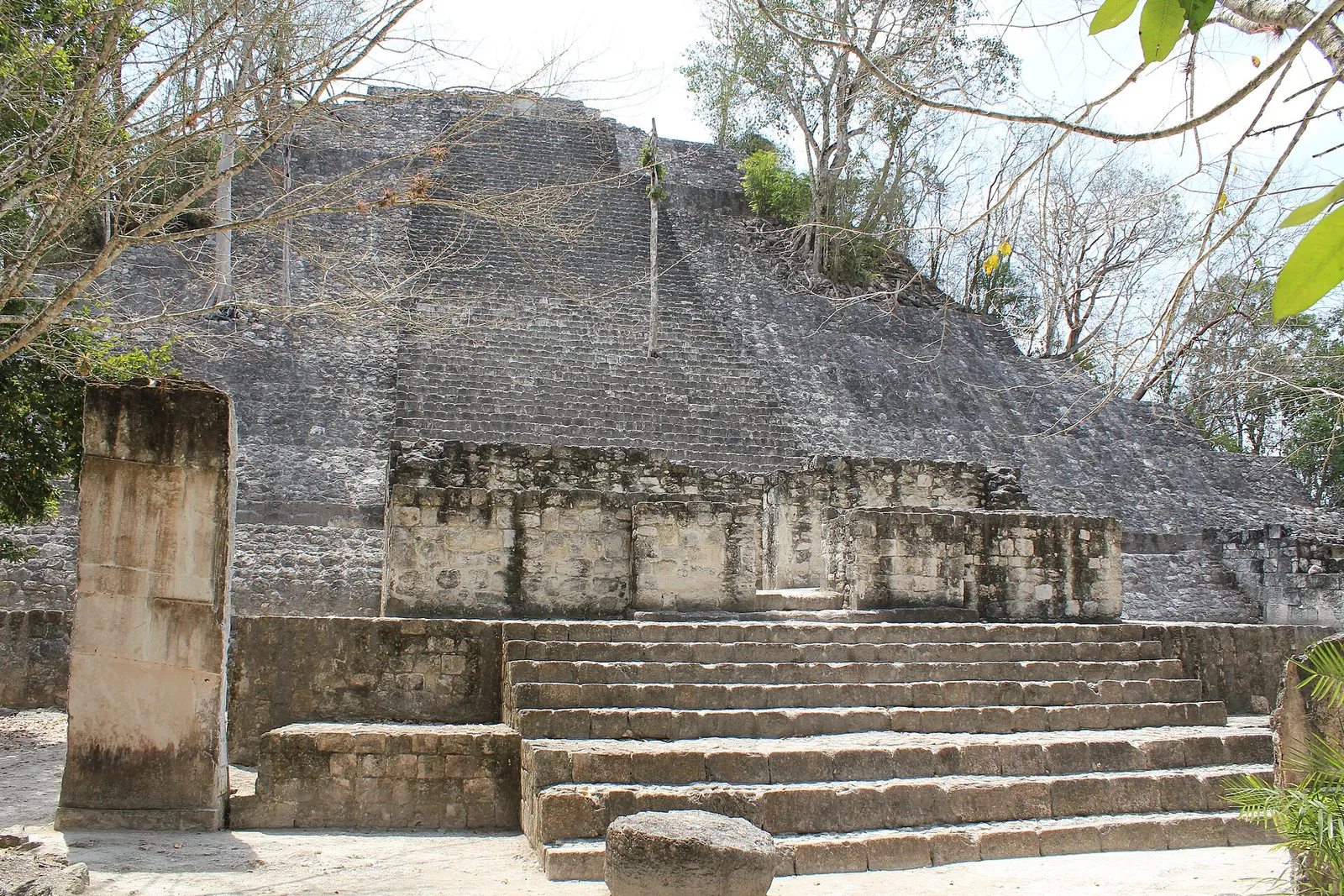
Minanbé's core covers roughly 15 hectares and includes about 14 carved stone monuments — stelae and altars — along with a pyramid-topped temple rising more than 40 feet in the ornate Río Bec style, according to Ancient Pages. One monument depicts a figure standing over a captive in what researchers read as a scene of ritual violence, and carries a date corresponding to the year 849 in the Maya calendar.
The site flourished in the Late Classic period, roughly A.D. 600 to 900, when the Maya lowlands were densely populated. Within a century or so of those monuments being carved, the great lowland cities were largely abandoned — the still-debated "collapse" of Classic Maya civilization.
Why an untouched site matters
That timing is what makes Minanbé valuable, the researchers say. Because it was never looted, its monuments and layout survive in place, letting archaeologists study how the city was organized and how it related to neighboring powers in the decades before the region emptied out. Šprajc's team has described it as their first wholly intact find in years of surveying — a reminder that the same isolation that hid the city for more than a millennium is now what makes it so useful to those trying to understand the Maya's final Classic-era chapter. Detailed excavation and study of the inscriptions lie ahead.