

Among the buildings New York never got is one of its most improbable: a tower designed as a castle — turrets, a moat, a drawbridge — proposed for Madison Avenue by one of the 20th century's most influential architects. It exists today only in the record of a brash architectural moment.
A castle for a developer
In the mid-1980s, the architect Philip Johnson drew up plans for a high-rise, sometimes called "Trump Castle," for the developer Donald Trump, envisioned for a Manhattan site around Madison Avenue. The design leaned into medieval fantasy on a skyscraper scale, and Johnson made no secret of relishing the audacity of the commission. Trump promoted his real-estate ventures of the era in grand terms, as TIME reported in 1984. The castle, however, was never built, and the reasons were never fully spelled out in the architectural record.
The architect behind it
That Johnson would attempt something so theatrical says a great deal about him. Born in 1906, he was a defining figure of American architecture for decades: the first curator of architecture at the Museum of Modern Art, a champion (and namer) of the austere "International Style," and later a leading practitioner of playful postmodernism. He won the inaugural Pritzker Prize, architecture's highest honor, in 1979, Britannica notes.
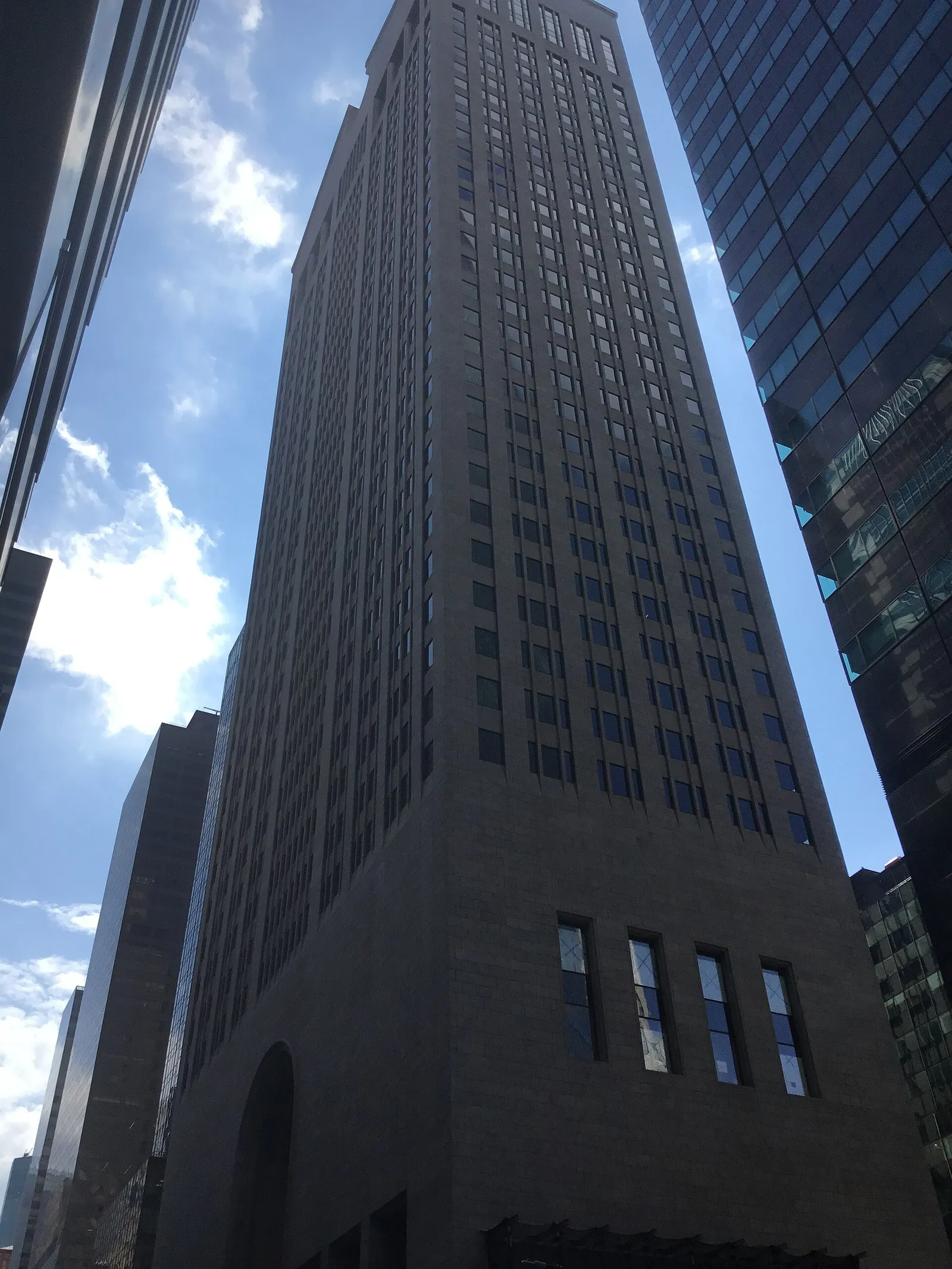
His most famous New York tower captured that later, wittier sensibility: the AT&T Building at 550 Madison Avenue, completed in the 1980s, topped with a split "Chippendale" pediment that made a skyscraper look like a piece of antique furniture, the Skyscraper Museum has documented. A castle with a moat was, in that light, less an aberration than an extreme expression of Johnson's late-career delight in architecture as spectacle and reference.
Why the unbuilt matters
Unbuilt buildings are their own genre of history. They preserve the ambitions of a moment more purely than finished ones, unspoiled by compromise or the wear of decades. Johnson's castle belongs to a 1980s New York of soaring real-estate confidence, when a developer and an aging master could sketch a fortress above Midtown and, at least for a while, take it seriously. The tower never rose. But as a drawing, it remains a small, telling monument to how boldly — and how strangely — a city can dream.