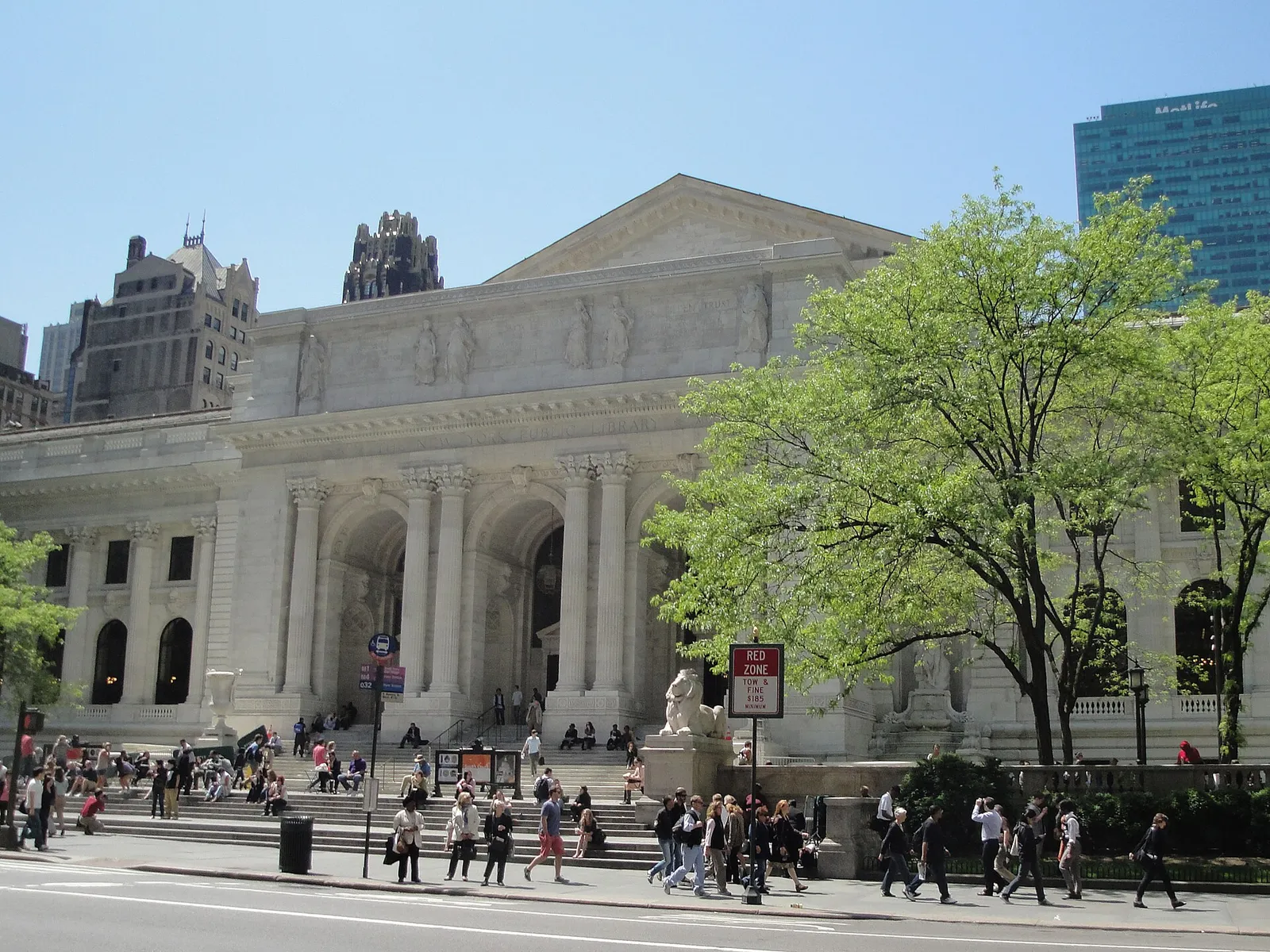
For the country's semiquincentennial — its 250th birthday — the New York Public Library has chosen not a pageant but a reckoning. Its new exhibition sets the founders' words beside the long, contested history of trying to live up to them.
The show
"Declaring America: 1776 and Beyond" is a free exhibition at the library's landmark Stephen A. Schwarzman Building, running from mid-June into January 2027, the library announced. It gathers roughly 250 objects, from Revolutionary-era manuscripts — among them a June 1776 letter from Benjamin Franklin to George Washington and an early broadside of the Declaration of Independence — to protest artifacts of later eras, such as an antislavery banner, civil-rights-march materials and AIDS-era activist posters, as Time Out New York described.
The centerpiece, and its shadow
The biggest draw is a handwritten copy of the Declaration of Independence in Thomas Jefferson's hand, shown for a limited window in early July, with the library using free timed tickets to handle the crowds, amNewYork reported. The exhibition does not present the document uncritically: the poet Tracy K. Smith, a former U.S. poet laureate, contributed an "erasure" poem, "Declaration," that removes words from Jefferson's text to foreground the distance between what the founders proclaimed and the enslaved and excluded people the promise did not reach.
Many hands on the story
Curators say the show deliberately widens the cast of the Revolution beyond the familiar founders to include loyalists, women, enslaved people and Native people, and it threads in contemporary artists — among them Kara Walker, Jenny Holzer and Kerry James Marshall — whose work presses on questions of liberty, land and citizenship, according to the library. A companion project, "We the People," invites visitors to record their own reflections on this moment, to be kept in the library's collections.
The framing throughout, the library and reviewers note, is that the country's ideals have been advanced less by the founding text alone than by generations who pushed to make its promises real. For a milestone that tends to invite fireworks and nostalgia, it is a notably searching way to mark 250 years — an argument, laid out in documents and art, that the American story is still being written.