Its name is a warning and a promise: Minanbé, "there is no path."
No path in
To reach the site, a team led by the archaeologist Ivan Šprajc had to cut a five-kilometer route through dense jungle in southern Campeche before continuing by all-terrain vehicle and on foot, Smithsonian Magazine reported. What they found in the Calakmul Biosphere Reserve was an ancient Maya city that had sat undisturbed for more than a thousand years — and, in three years of fieldwork across the region, the first the team had encountered with no sign of looting. Šprajc, of the Slovenian Academy of Sciences and Arts, worked with Mexican colleagues under the authorization of the country's National Institute of Anthropology and History (INAH).
Found by laser, verified on foot
The discovery began in the air. The team used airborne lidar — laser pulses that pierce the forest canopy and map the ground beneath — to reveal the outlines of a roughly 15-hectare settlement: plazas, palatial and religious buildings, terraces and water-management channels, Heritage Daily reported. Ground crews then hiked in to confirm and document the ruins, building detailed 3-D models. What set Minanbé apart was its condition: the monuments were exactly where the Maya had placed them.
Monuments that still speak
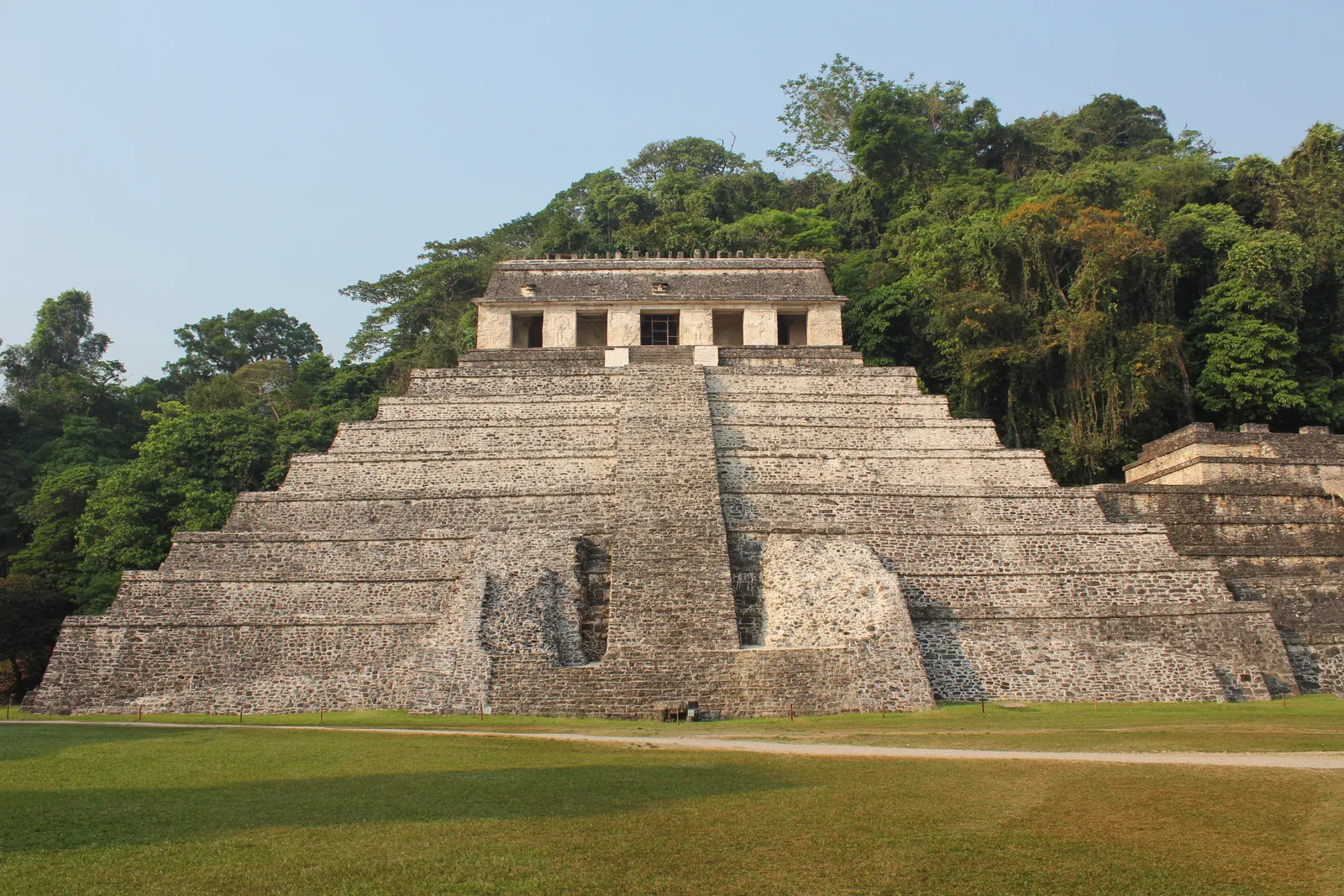
At the site's heart stands a pyramid temple more than 13 meters tall, built in the region's distinctive Río Bec style. The team documented 14 monuments in all — stelae and altars. The most striking, Stela 1, depicts a decapitation scene and carries a date that corresponds to A.D. 849, placing it in the Terminal Classic period, the era just before the great Maya Lowland cities began to be abandoned. Another monument bears an earlier date and a portrait of a ruler in a feathered headdress and ceremonial ornaments, per Heritage Daily. Because the site is unlooted, researchers can study those objects in their original context — information that vanishes the moment a site is plundered.
Why it matters
At their height, the Central Maya Lowlands — spanning parts of today's Mexico, Guatemala and Belize — held an estimated nine to eleven million people. Minanbé sat within that world, near a larger site the same team documented in 2013. Its Terminal Classic dates make it a potential witness to the still-debated collapse of Classic Maya civilization. And it is the latest in a wave of finds driven by lidar, which over the past decade has repeatedly redrawn the map of the ancient Maya, revealing that sites once thought isolated were nodes in vast, interconnected networks. Each discovery, and now Minanbé, adds a piece to a picture archaeologists are still assembling.