
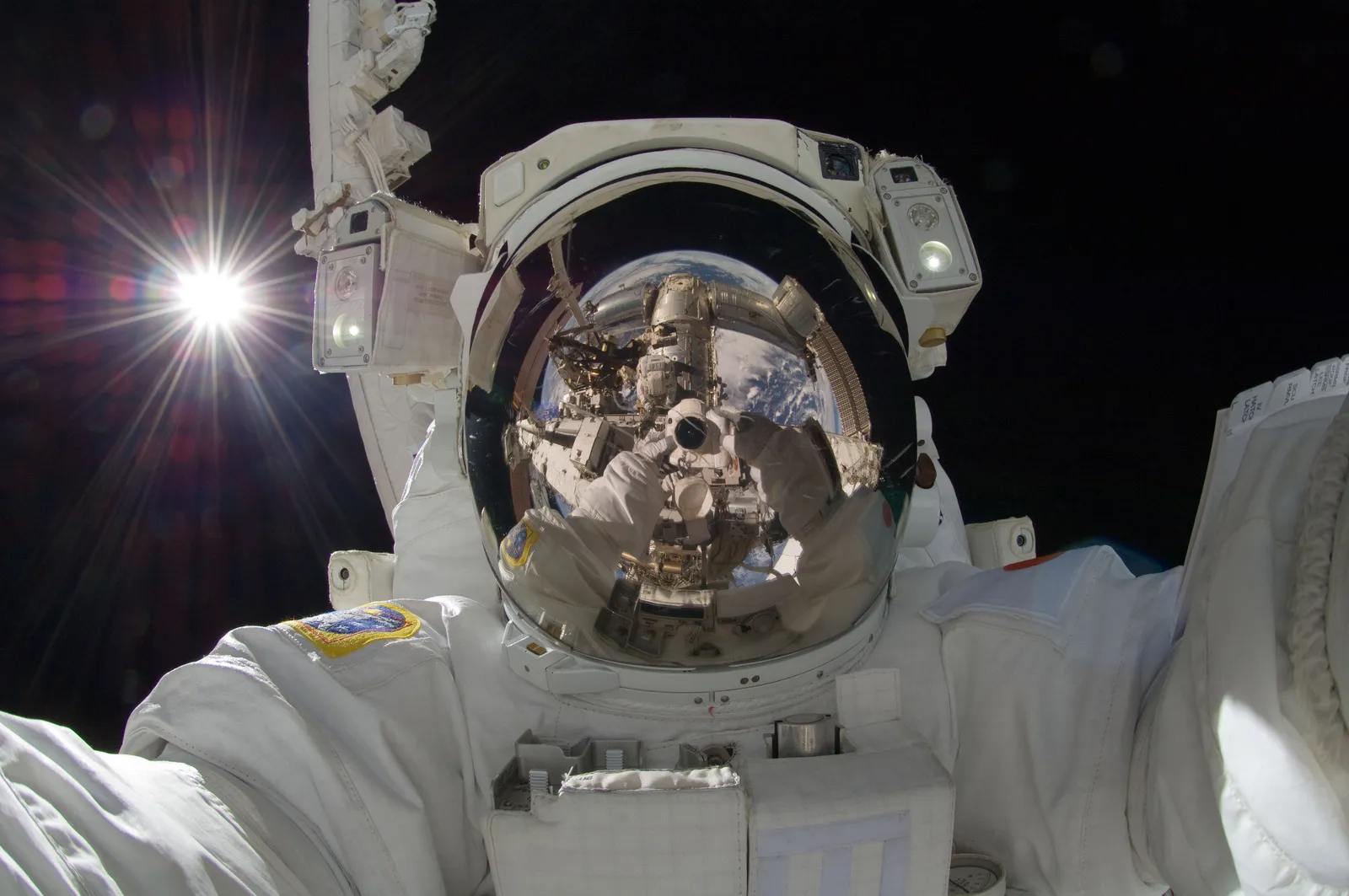
Some repairs can only be done by hand — even when the workshop is orbiting 250 miles above Earth.
The fix
Expedition 74 astronauts Chris Williams and Jessica Meir floated out of the space station's airlock on Monday and spent about seven hours and 20 minutes replacing a malfunctioning wrist joint on Canadarm2, the station's 17-meter robotic arm, according to NASA. Controllers had detected the fault — abnormal movement and elevated motor current in one of the arm's seven joints — in late May, and a spare joint was already stowed outside the station, waiting. The astronauts removed the failed unit and bolted the replacement in place, completing their primary objective before returning inside. It was Williams's first spacewalk; for Meir it was her fourth. The outing was one of hundreds of spacewalks devoted to building and maintaining the station over its lifetime — and, as observers noted, the repair of Canada's signature contribution wrapped up just before Canada Day.
Why the arm matters
Canadarm2 is not a spare part but core infrastructure. The arm reaches out to grab arriving cargo ships — including SpaceX and Northrop Grumman vehicles — and berth them to the station; it moves equipment and experiments around the exterior; and it serves as a mobile perch that carries spacewalking astronauts from one worksite to another. Losing it, even briefly, would snarl the station's supply line. That is why engineers keep a replacement joint on hand and why a fault warrants sending crew outside to fix it by hand.
An aging outpost
The repair comes as NASA and its partners manage the final years of a station now a quarter-century old and slated for retirement around 2030, after which a controlled deorbit is planned. The older the hardware, the more often it needs this kind of attention. An independent NASA safety panel warned earlier this year that the margins for keeping the station's risks acceptable have narrowed, SpaceNews reported, and flagged supply-chain strains affecting the spacesuits astronauts rely on. NASA says more spacewalks are scheduled beginning in August to service solar arrays, electrical systems and communications gear — a reminder that keeping a laboratory running in the vacuum of space is work that never quite ends.