


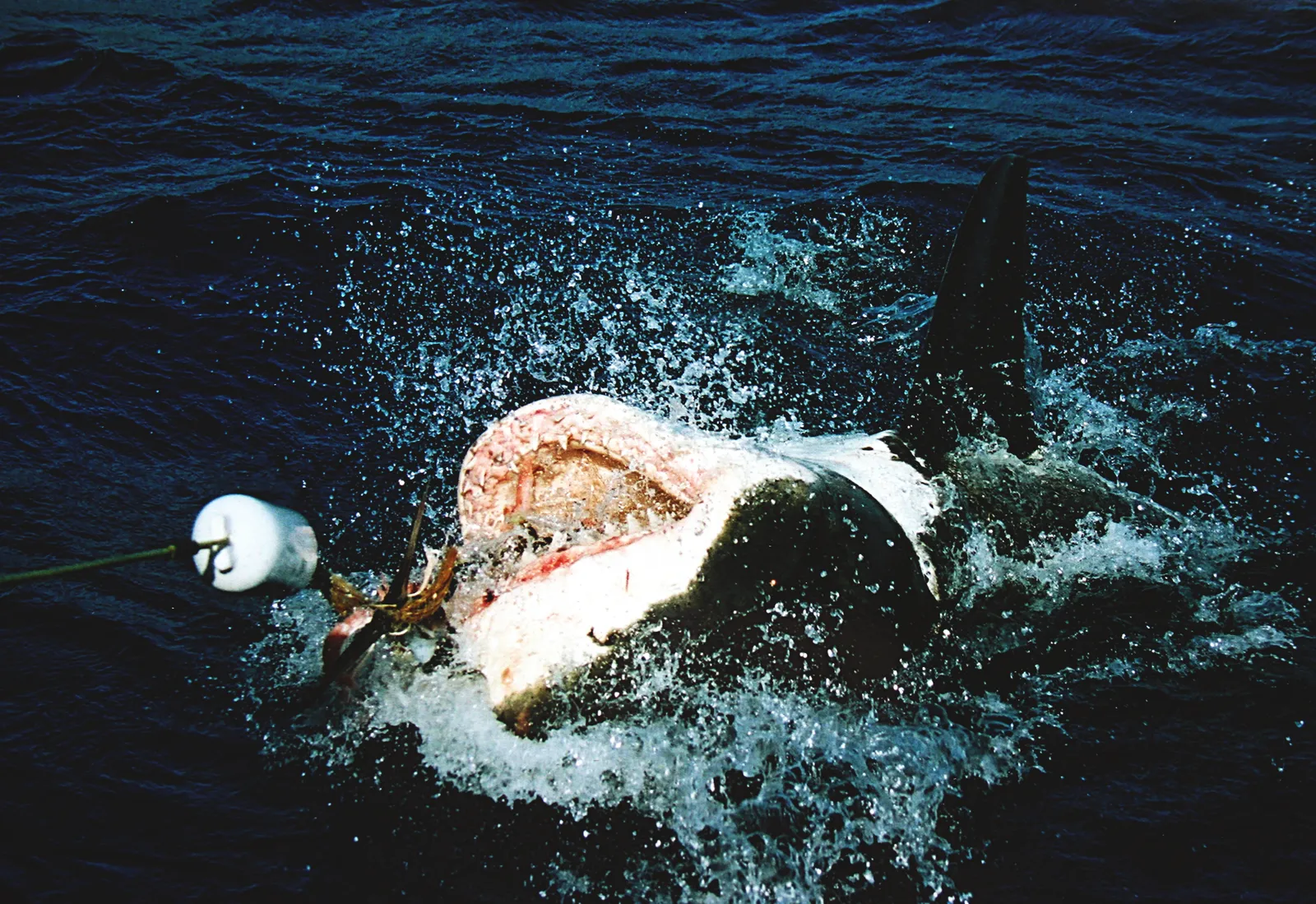
A floating whale, a cluster of white sharks and a drone overhead made for one of the season's most striking — and widely shared — ocean scenes off the Northern California coast.
What the video shows
Drone pilot Sammy Rigling was flying over the waters off Martin's Beach, a stretch of San Mateo County shoreline just south of Half Moon Bay, when he came upon a whale carcass ringed by great white sharks, Yahoo News reported. Rigling said he counted six to eight sharks over the day, including a few juveniles and two or three large adults, the biggest near 15 feet. His footage shows the sharks circling and lunging to strip blubber, with smaller animals darting away whenever a larger one moved in. A paddleboarder who drifted near the scene described being "terrified" heading back to shore.
A caution, not a panic
After the video spread online around June 26, local authorities urged beachgoers along the San Mateo County coast to stay alert and steer clear of the carcass, which keeps drawing sharks as it decomposes. (The exact agency and wording of the advisory could not be independently confirmed, and no formal beach-closure order tied to this incident was verified; California State Parks lifeguards typically post 48-hour shark-advisory signage after a confirmed sighting.) Martin's Beach sits near the famed Maverick's big-wave break and within the "Red Triangle" — the stretch from Bodega Bay out to the Farallon Islands and south to Año Nuevo that, thanks to large seal and sea lion colonies, is among the densest white-shark habitats on Earth.
Why a dead whale draws sharks
A whale carcass is, to a great white, an enormous and rare windfall — rich in fat and calories, capable of drawing sharks from miles away and holding them in one area for days. That concentration, while dramatic on camera, also means the animals are fixed on an abundant food source rather than on surfboards or swimmers. Chris Lowe, who directs the Shark Lab at Cal State Long Beach, has predicted a "very sharky summer" along the California coast, tied to warm Pacific waters pushing juvenile white sharks farther north. In mid-June, the state's Fish and Game Commission took emergency action to reduce risky interactions between hooked sharks and swimmers, including new shore-fishing gear restrictions near beaches.
Keeping the risk in perspective
Shark bites on humans remain statistically rare: California has logged only about 25 confirmed unprovoked attacks in a century. Safety experts offer consistent advice — stay out of the water near a whale carcass or a seal colony, avoid dawn and dusk when sharks are most active, heed posted signs, and don't swim or surf alone. For most beachgoers this Fourth of July weekend, the whale off Martin's Beach is best enjoyed the way most people saw it: from dry land, on a screen.