

A company best known for a chatbot is now trying to help design drugs — and, in a notable step, to discover some itself.
What was launched
Anthropic introduced a product it calls Claude Science, an AI "workbench" built on its Claude models that the company says lets researchers run research tasks — literature reviews, hypothesis generation, analysis of lab and genomic data, regulatory paperwork — using plain-language commands, STAT News reported. The company says the tool connects to software labs already use and to hundreds of scientific databases, and it cited an internal benchmark on which a version of Claude scored modestly above a human-expert baseline on scientific-protocol questions. Those figures come from Anthropic's own testing.
A drug program of its own
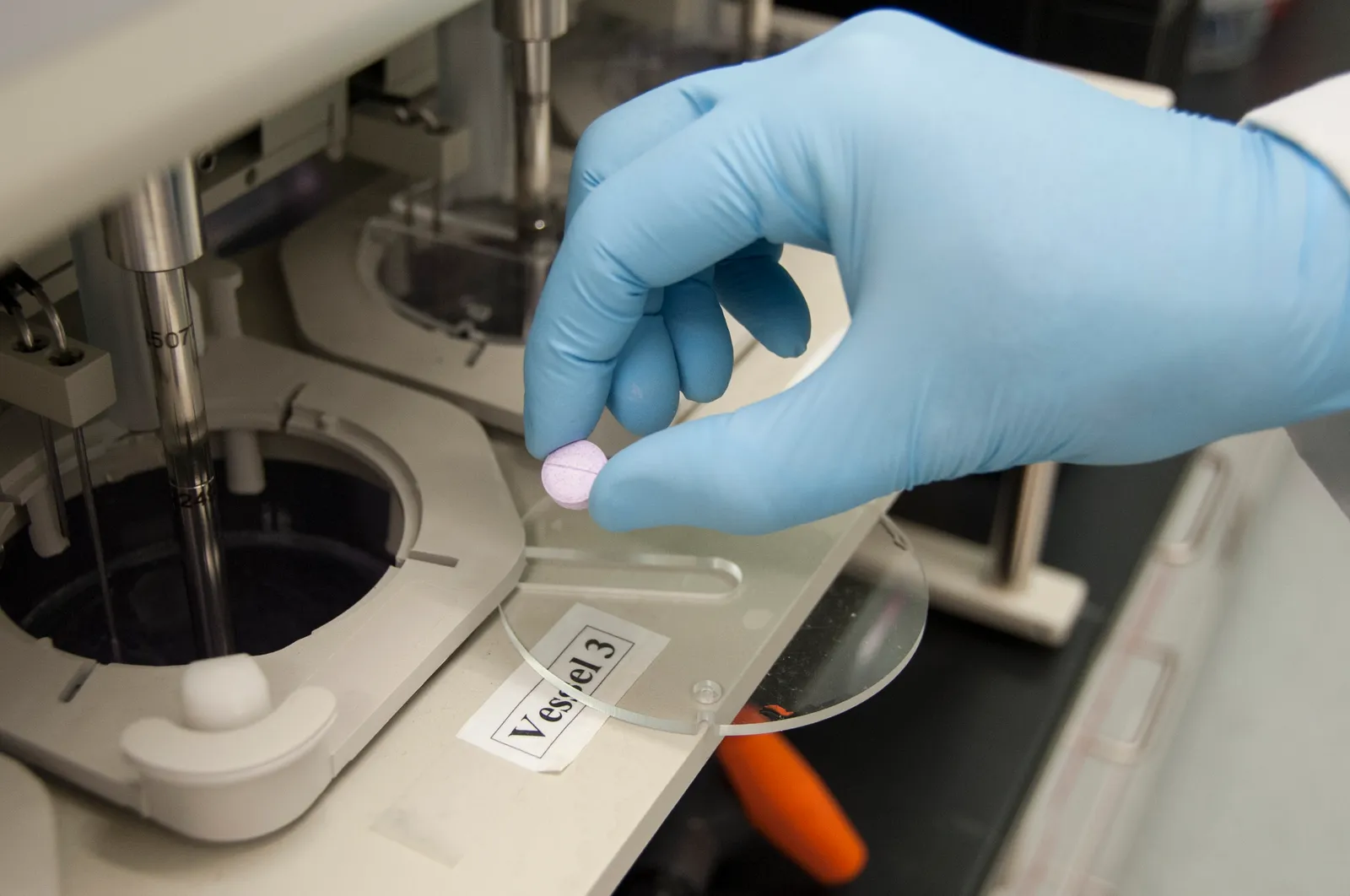
More striking than the software is what Anthropic says it is doing with it. The company disclosed that it has opened wet labs and is running its own drug-discovery programs, focused on so-called neglected diseases that large drugmakers often find commercially unattractive, according to STAT News. To build that capability, Anthropic acquired a small biotech startup founded by former Genentech scientists earlier this year and hired a life-sciences lead. The effort puts a software company, unusually, in the role of a would-be drugmaker.
A crowded field
Anthropic is far from first. Google DeepMind's AlphaFold protein-structure models are widely used by researchers, and its Isomorphic Labs unit is pursuing its own drug pipeline; OpenAI has moved into biomedical applications; and Nvidia, a partner on the new platform, supplies much of the field's hardware and molecular-modeling tools. The launch is best understood as Anthropic joining an already-contested race rather than opening a new one.
The limits
For all the ambition, the industry has yet to deliver a drug designed mainly by AI to patients at scale, and the hardest problems — including predicting which patients a treatment will actually help — remain unsolved. Anthropic's chief executive, Dario Amodei, was unusually hedged about the prospects, saying the company is seeing "the beginnings" of progress but "we don't know for sure if that's going to work out." Company officials acknowledged that fully automated, "one-button" drug design remains years away. The promise of compressing years of research is real in theory; whether it materializes is, for now, an open question.