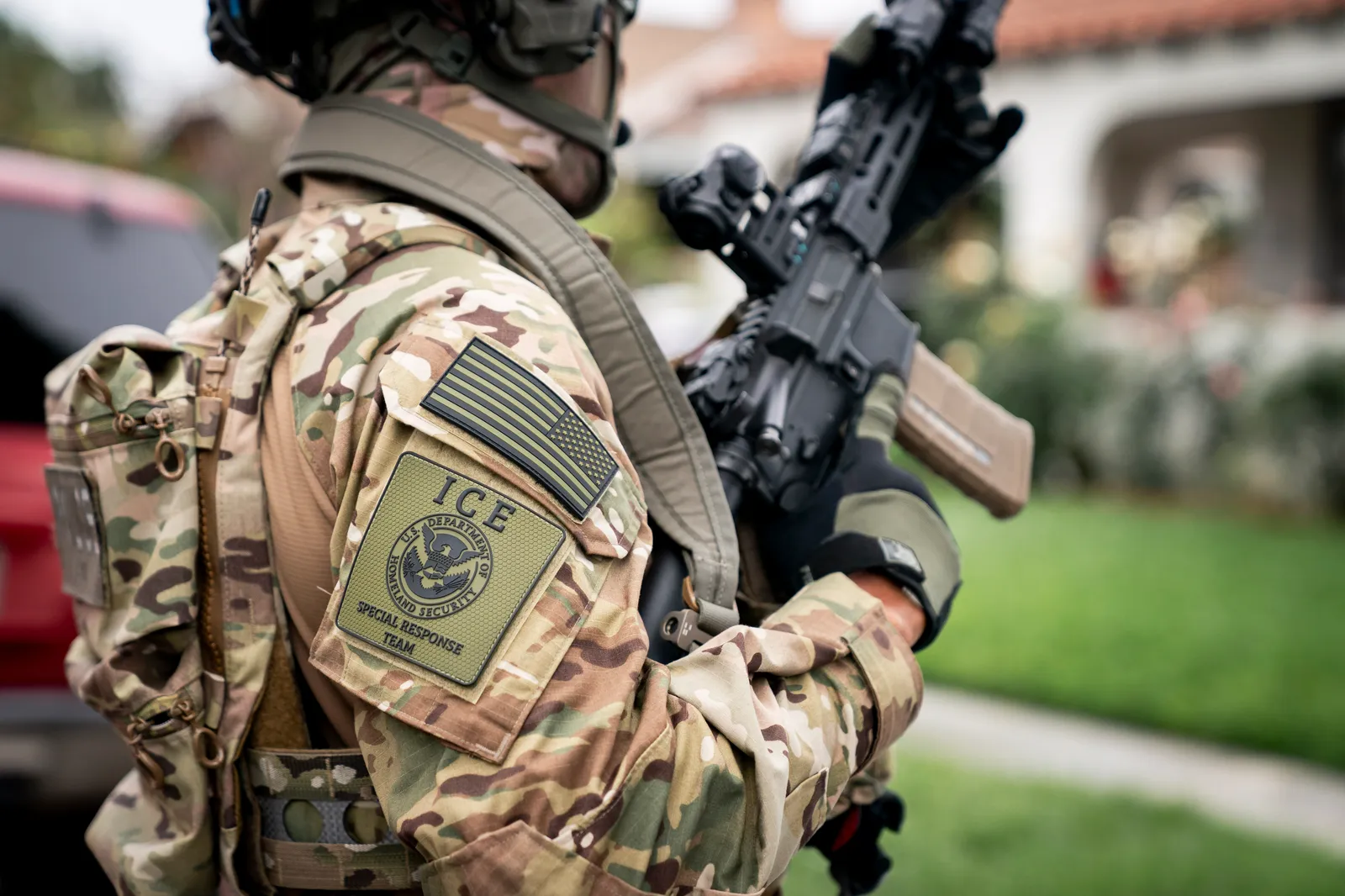
The Trump administration's immigration crackdown reached a new intensity this week, with the government reporting more than 10,000 arrests in five days.
A record pace
Immigration and Customs Enforcement arrested over 10,000 people across a five-day span in late June, Fox News reported, citing the Department of Homeland Security — a rate that would translate to roughly 60,000 arrests a month if sustained. The push came as the administration pressed field offices toward aggressive daily quotas and as billions of dollars in new enforcement money began flowing to the agency. The Herald could not independently confirm the exact five-day tally, which originates with DHS.
DHS cast the operation as targeting dangerous offenders. A department spokesperson said the large majority of those arrested had been charged with or convicted of crimes in the United States, and repeated the administration's refrain that it will "find you, we will arrest you, and we will deport you."
A dispute over who is being arrested
That characterization is contested. An analysis by FactCheck.org, drawing on detention data compiled by researchers at the University of California, found that as arrests climbed, a growing share of detainees had no U.S. criminal conviction or pending charge — nearly 43 percent by early 2026, up sharply from a year earlier. A separate review by the libertarian Cato Institute found that only a small fraction of detainees with any conviction had a violent offense on record.
Immigration attorneys note that some of those swept up are asylum seekers who had been checking in voluntarily with the government under prior rules, having already cleared background checks. "Why would they turn themselves in to ICE if they had a serious criminal charge?" one lawyer told KERA News.
Los Angeles in the crosshairs
Southern California has been among the most heavily targeted regions since the administration escalated operations. Human Rights Watch, in a report last year, described "highly visible raids" in Los Angeles that it said relied in part on stopping people based on apparent ethnicity — an approach the group called unlawful. The raids have drawn sustained protest: thousands marched in downtown Los Angeles earlier this year, and community groups have organized through Koreatown, Boyle Heights and other immigrant neighborhoods. Businesses have periodically closed in solidarity.
The enforcement has also produced confrontations. At a cannabis operation in Camarillo, a raid led to clashes and the arrests of several demonstrators accused of interfering with agents, ABC7 reported.
The courts push back
Federal judges have moved to rein in some tactics. A judge in Manhattan barred ICE from arresting immigrants at their own court hearings there except in narrow circumstances, and a California court issued a broader order in late June. Attorneys say agents have flouted those limits: in the week of June 23, ICE arrested three immigrants at New York City immigration courts despite the orders, The Intercept reported. "We're witnessing ICE operate in a lawless and rogue fashion and not following court orders," said Murad Awawdeh of the New York Immigration Coalition.
The clashes over quotas, criminal records and court orders are likely to intensify as the money behind the surge — part of a sweeping enforcement package Congress approved this year — expands ICE's ranks. How the courts resolve the disputes, and whether the agency complies, will shape the crackdown in Los Angeles and nationwide in the months ahead.