The United States Navy has spent years describing a future in which swarms of uncrewed boats screen its carriers, carry sensors and missiles, and put fewer sailors in harm's way against a rapidly growing Chinese fleet. Getting there has proven harder than the vision suggests. The effort's recent history is one of programs launched, renamed and canceled, a churn that has slowed the arrival of the very vessels the Navy says it urgently needs.
A program scrapped after a year
The clearest sign of the difficulty came this spring. In March, the Navy canceled its Modular Attack Surface Craft program and rolled out a new acquisition approach in its place, barely a year after standing the effort up. Officials said the design was too narrowly tailored for a service that wants a medium uncrewed vessel able to take on many missions, and war games had exposed a range of about 2,500 nautical miles as too short to be useful across Pacific distances.
In its place the Navy launched what it calls a "marketplace" for medium unmanned surface vessels, or MUSVs, a model meant to buy mature, production-ready boats from industry rather than fund a bespoke design from scratch. Rebecca Gassler, the Navy's portfolio acquisition executive for robotic and autonomous systems, described it as the first of a recurring marketplace intended to match rising demand for uncrewed systems across several classes of vessel.
The strategic case
The reasoning behind the push is consistent even as the programs change. The Navy's operating concept calls for spreading combat power across many smaller, cheaper and more expendable platforms rather than concentrating it in a handful of expensive crewed ships that a modern missile salvo could threaten. Against China's naval expansion in the Western Pacific, cost and numbers are central to the argument.
Under the new marketplace, the Navy issued a request for proposals seeking companies with mature platforms to take part in on-water testing during the 2026 fiscal year and to deliver initial production vessels in fiscal 2027. Funding for the effort, about $2.1 billion for medium uncrewed vessels, came through the sweeping tax-and-spending law enacted this month.
Why it keeps stalling
The repeated resets reflect real disagreements rather than simple indecision. Lawmakers and Navy officials have questioned whether uncrewed vessels can reliably cross oceans on their own, whether their propulsion and autonomy are mature enough for sustained operations, and how the Navy should balance rapid fielding against the risk of buying systems that do not yet work as advertised. Each answer has reshaped the program, and each reshaping has cost time.
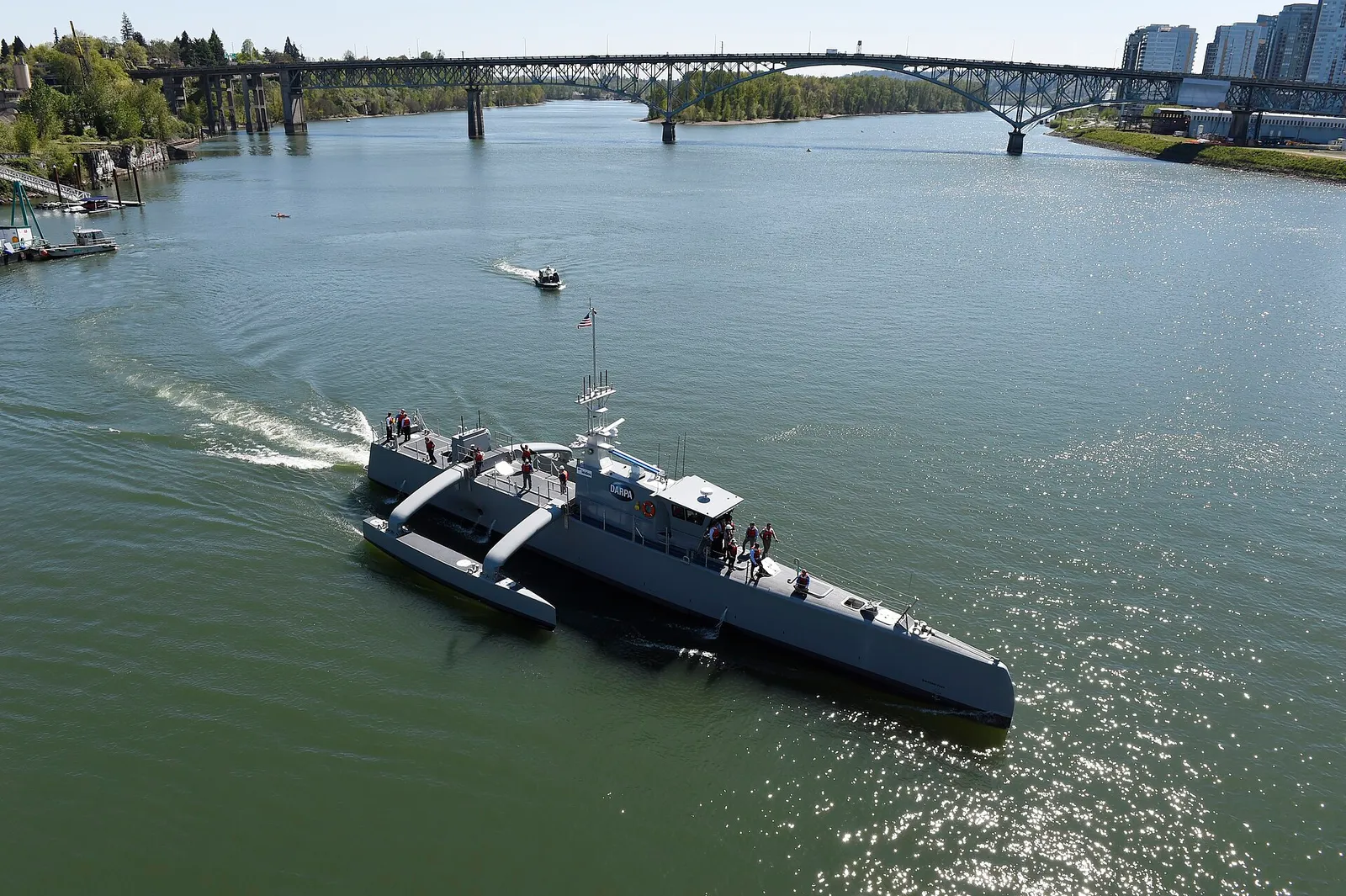
The Navy's own vessels show the technology is not merely theoretical: the Sea Hunter and its sister craft have logged years of experimental operation. The open question is whether the service can translate those prototypes into a fleet on the schedule it says the strategic moment demands, without another round of cancellations first.