An earthquake that would pass almost unnoticed in much of California killed at least five people in the Peruvian Andes on Saturday night.
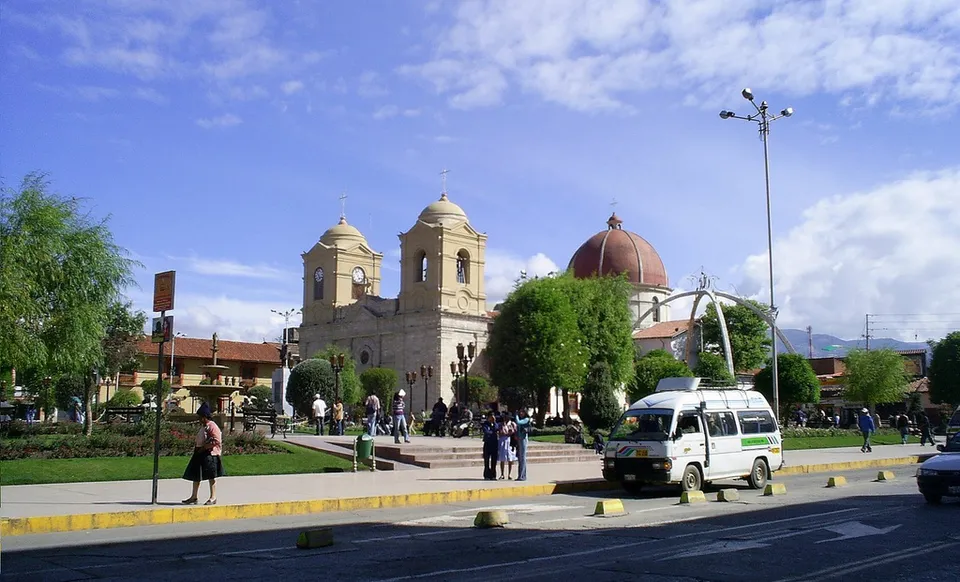
The U.S. Geological Survey put the magnitude at 5.5, with the epicenter about two kilometers west-southwest of Sicaya, in Huancayo province, at 9:24 p.m. local time. The depth was about 10 kilometers.
Peru's National Civil Defense Institute reported at least five deaths, more than 20 injuries and about 300 people displaced. Those figures are early, and counts after an earthquake typically move as remote communities are reached.
Why a 5.5 did this
Magnitude alone is a poor predictor of harm, and this quake is a clean illustration of why.
Ten kilometers is shallow. The energy released by a moderate quake at that depth arrives at the surface with much less attenuation than the same magnitude at 60 or 100 kilometers, so the shaking directly above the rupture can be severe even when the total energy is modest.
The second factor is what the shaking hits. In highland agricultural districts a great deal of housing is adobe or unreinforced masonry, which performs badly under lateral loading: it has compressive strength and very little tensile strength, so walls crack and then fail. This is a well-understood engineering problem rather than a matter of poverty in the abstract, and it is the reason comparable quakes produce wildly different casualty figures in different places.
Damage in this case was reported around Chongo Bajo, an agricultural area, where homes were severely damaged and a church and convent were among the structures hit.
The Los Angeles comparison, carefully
Peru sits on the Pacific Ring of Fire. So does California. The instinct to draw a lesson is reasonable, but the lesson is narrower than it first appears.
Los Angeles would not expect five deaths from a magnitude 5.5 at 10 kilometers, and the reason is building stock rather than luck. California has required seismic design for decades, banned new unreinforced masonry construction, and pushed retrofit ordinances covering older brick buildings and soft-story apartments. Those programs are the difference.
What does not transfer is complacency. Los Angeles carries its own inventory of buildings that have not been retrofitted, and the hazard here is larger events on larger faults rather than a moderate shallow quake. The honest version of the comparison is that engineering standards are the variable that turns a moderate earthquake into a survivable one, and that this is an argument for finishing retrofit work rather than for feeling secure about it.
What happens next in Peru
The immediate work is search, medical care and shelter for the displaced. Aftershocks are likely following a shallow event, and buildings already cracked are at greater risk in them, which is why authorities usually keep people out of damaged structures even when they appear to be standing.
The magnitude is preliminary and may be revised as seismologists refine the data. We will update the figures as Peruvian authorities and the USGS release confirmed numbers.