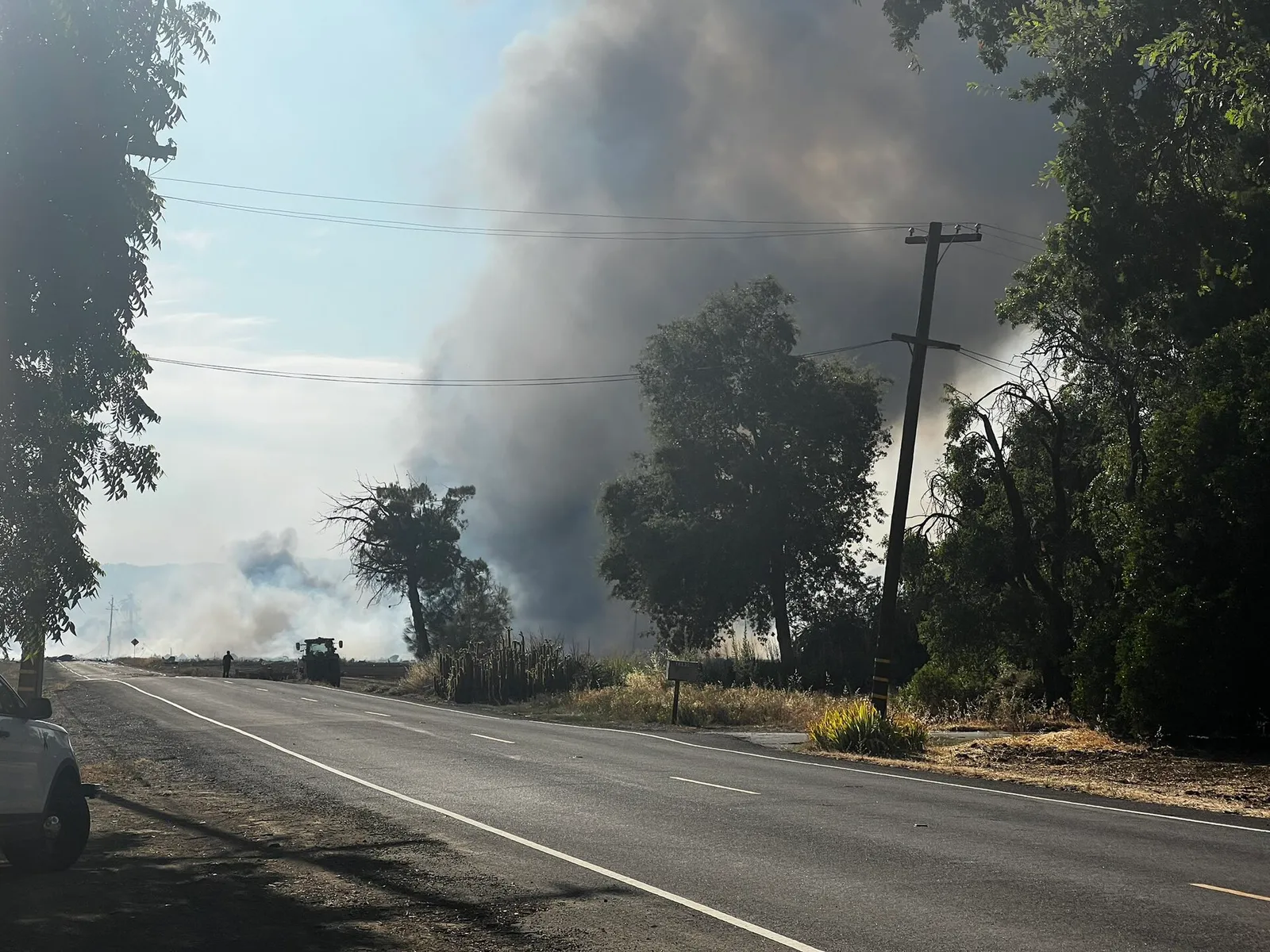
A warehouse fire that burned for more than a week in Boyle Heights has left behind a harder question than the flames themselves: what went into the air, the soil and the water of one of Los Angeles's most densely populated neighborhoods? A team of UCLA scientists is racing to find out.
A fire that wouldn't go out
The blaze broke out on June 17 inside a cold food-storage building in Boyle Heights and was not declared fully extinguished until June 25, eight days later, ABC7 reported. The smoke traveled well beyond the immediate block. Several miles east, Monterey Park saw its air quality degrade enough that the city opened a program to reimburse residents who had bought air purifiers to cope, according to NBC Los Angeles.
What the researchers are collecting
The UCLA team moved quickly, gathering ash from car surfaces, dust wiped from street signs and water drawn from a pond that had formed outside the warehouse. They also placed small particle collectors around the neighborhood to track how fine particles spread on the wind, finding that nanoparticle concentrations spiked sharply downwind of the building, ABC7 reported.
The conditions were grim. "There's a lot of rotten food, so the smell is very strong," UCLA researcher Jing Li told ABC7, describing the scene as the team worked. Nearby residents said the odor — a campfire smell laced with something sickly sweet — had seeped into their homes.
The contaminants of concern
Laboratory results are weeks away, but the researchers are looking for two categories of pollutants that are notoriously difficult to remove once released. The first is heavy metals, which can settle into soil and water and accumulate in the body over time. The second is PFAS — synthetic compounds often called "forever chemicals" because they resist breaking down — which studies have linked to a range of health effects. The team wants to know whether the fire pushed any of these substances into the surrounding blocks.
The cost, and the advice
Fighting an eight-day fire is expensive. The city of Los Angeles had spent roughly $4.45 million on the response as of late last week, ABC7 reported, with officials suggesting state and federal funds could offset part of that.
For now, guidance to residents has centered on indoor air. Monterey Park's reimbursement program offers qualifying households up to $75 toward air purifiers, with the city's mayor saying officials "recognized that many families incurred unexpected expenses to safeguard indoor air quality." Health agencies are expected to update their guidance for Boyle Heights itself as the UCLA results come in.
The fire adds a fresh chapter to a long environmental history in Boyle Heights, a neighborhood that already carries an outsized pollution burden from nearby freeways, rail yards and legacy industrial sites. Whether the warehouse blaze meaningfully worsened that burden is exactly what the UCLA team is working to determine.