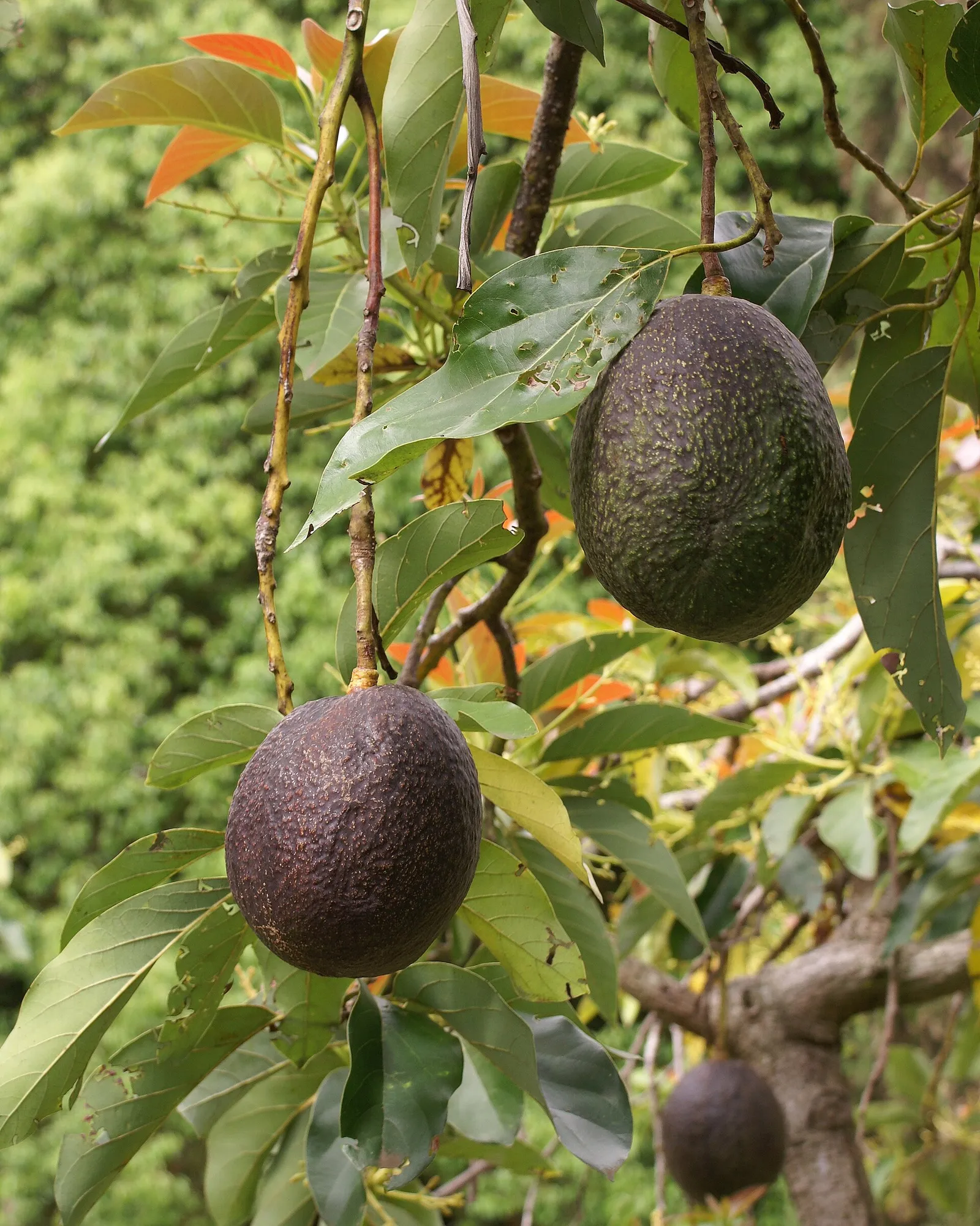
The avocado has an unusual sex life, and it has been slowing down California's breeding programs for a century.
Every avocado tree is one of two flowering types, A or B. Their schedules are mirror images: when one type is releasing pollen, the other's flowers are receptive. Plant only one type and the orchard pollinates itself poorly. Plant both and it works. Growers have known this for generations without knowing why.
A study published Tuesday in the Proceedings of the National Academy of Sciences identifies the gene behind it. Led by UC Davis with UC Riverside, whose Department of Botany and Plant Sciences runs California's main avocado breeding program, the researchers pinned the trait to a floral transcription factor they call SDMYB, according to UC Riverside.
"Our study provides a genetic explanation for a century-old mystery of avocado pollination," said Jeffrey Groh, the paper's first author, now at UC Berkeley.
Why this is a breeding problem and not just a curiosity
Breeding a tree crop is slow in a way that breeding an annual is not. You plant a seedling and then you wait, because the traits you are selecting for do not appear until the tree is mature. For flowering type, that wait has been five to ten years.
Multiply that by the number of seedlings a program has to grow to find one worth keeping, and the arithmetic is brutal: most of the orchard is occupying land and water for a decade to answer a question about a single trait.
The gene changes the order of operations. "Instead of waiting years for a tree to flower, we can identify its flower type almost immediately using its DNA," said Eric Focht, a UC Riverside researcher. His colleague Marllon Soares dos Santos put the point about timing: "This is something we can begin using right away. We can make those decisions at the beginning. That makes breeding much more efficient."
The specific bottleneck it opens
The commercial problem is on the B side. Orchards need B-type trees for pollination, but the B-types available have generally been the weaker fruit, so growers plant them as a necessary compromise rather than for the crop. UC Riverside's Luna UCR is the counterexample the program points to, a B-type bred to carry commercial-quality fruit as well as pollen.
Being able to sort seedlings by type on day one means a program can screen a large population for B-types and then spend the decade on the ones worth spending it on, rather than discovering at year eight that a promising tree is the wrong type.
What this does not do yet
It is a genetic marker, not a variety. Nothing about this shortens the time a new avocado still needs in field trials, and nothing about it puts fruit in a Ventura County orchard sooner than the ordinary cycle allows. The gain is at the front of the pipeline, in what gets planted, not at the end.
That is still worth something in a state where avocado growers are contending with water costs and import competition, and where the value of a breeding program lies in how many candidates it can afford to evaluate. The answer to that question just went up.