
The blacklist was a Los Angeles event. It was argued about in Washington, but it was executed here, in studio offices, over careers built in this city. Next week a Swiss film festival will spend eleven days on it.
"Red & Black - Hollywood Left and the Blacklist" is the retrospective at the 79th Locarno Film Festival, which runs August 5 to 15. Curated by Ehsan Khoshbakht, it gathers more than 50 films, documentaries, shorts and newsreels, including "High Noon" (1952), "Force of Evil" (1948), Chaplin's "A King in New York" (1957), "On the Waterfront" (1954) and "The Front" (1976). Two new documentaries premiere: "Dangerous Citizen: The Life and Times of Abraham Polonsky" and "The Hollywood Blacklist: The Survivors Tell Their Stories."
The history it is drawing on
The specifics are worth restating because they are frequently blurred.
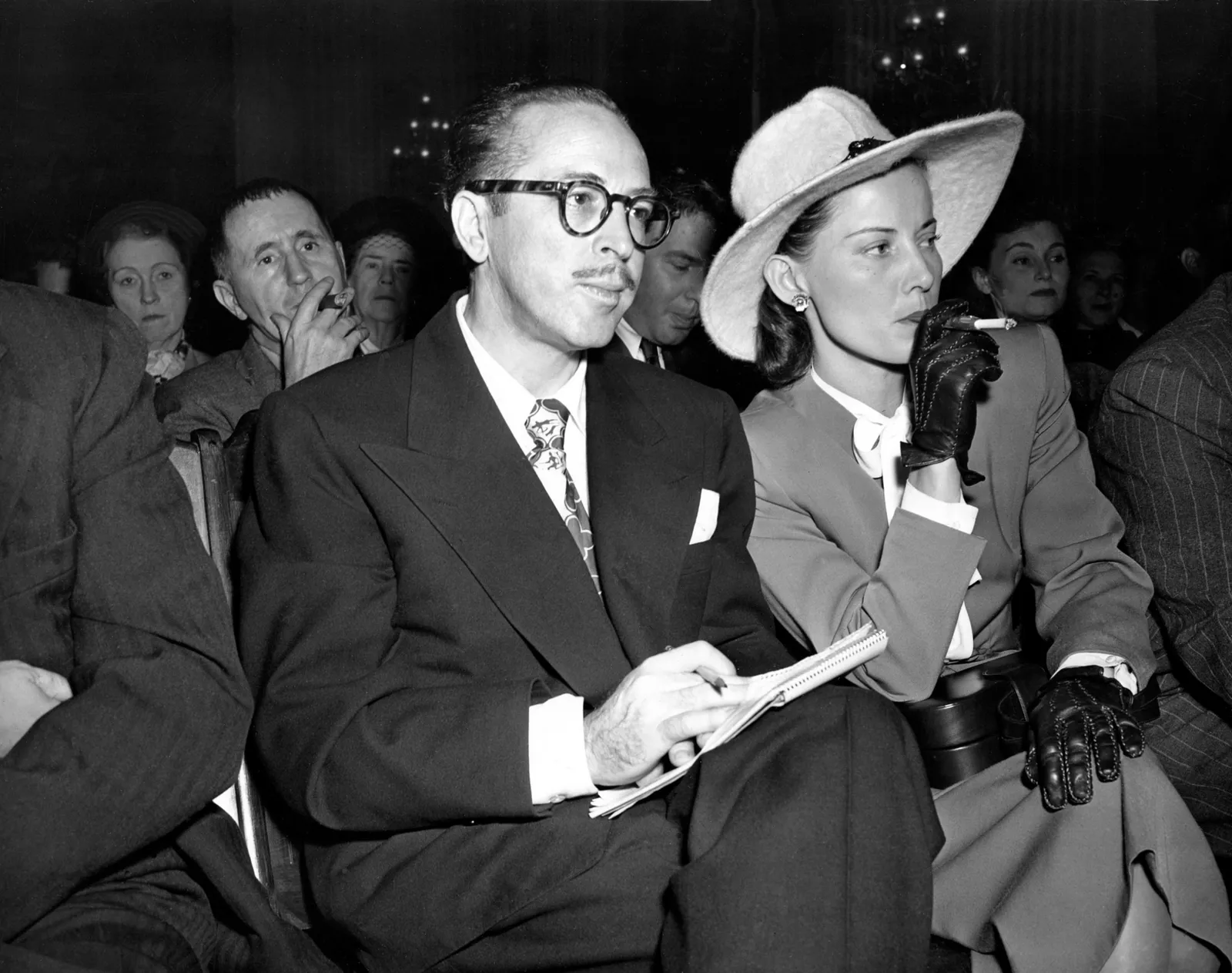
In October 1947, the House Un-American Activities Committee opened hearings in Washington on whether communists were inserting propaganda into American films. Ten witnesses, most of them screenwriters, refused to answer questions about their political associations. They became known as the Hollywood Ten: Alvah Bessie, Herbert Biberman, Lester Cole, Edward Dmytryk, Ring Lardner Jr., John Howard Lawson, Albert Maltz, Samuel Ornitz, Adrian Scott and Dalton Trumbo. All ten were convicted of contempt of Congress, fined $1,000 each and sentenced to between six months and a year in prison.
The industry did not wait for the appeals. On November 25, 1947, the day after the House voted the contempt citations, studio executives meeting in New York issued what became known as the Waldorf Statement, announcing that the ten would be fired or suspended without pay and that no one would be employed who was a communist or who refused to cooperate with the committee. That press release is the moment the blacklist stopped being an attitude and became a policy.
It had no formal end. The convention is to date its collapse to 1960, when Dalton Trumbo received screen credit for "Exodus" after more than a decade of working under fronts and pseudonyms. Some who were listed never worked in the industry again.
The curator's argument
Khoshbakht is explicit that he programmed this for the present. "I thought it was for now, because it's about what's happening right now," he said. "Even some of the terminology from back then is back in use."
That is his argument, and it belongs to him. It is worth reporting as an argument rather than as an established parallel, because historians disagree about analogies of this kind. The blacklist ran on particular machinery: a congressional committee with subpoena power, a small number of studios that controlled nearly all employment in the industry, and a Cold War in which party membership carried legal consequences. Whether the resemblance to any later period is structural or rhetorical is a real dispute, and one this newspaper is not going to settle in a festival preview.
What is not in dispute is that the films exist and are worth seeing. "Force of Evil" was written and directed by Abraham Polonsky, who was blacklisted the following year and did not direct again for two decades. "The Front" is a comedy about the practice of hiring someone to put their name on your script, made by people who had lived it. "High Noon" has been read as an allegory about the period almost since it opened, including by people who disliked the reading.
Why an LA paper should care about a festival in Switzerland
Because the archive keeps ending up elsewhere. European festivals have spent decades doing restoration and retrospective work on American film history that American institutions have been slower to fund, and the survivors whose accounts appear in one of the new documentaries are not getting younger.
The city where the Waldorf Statement did its damage will get to see these films whenever a repertory house here decides to book them. Locarno is showing them next week.