

Eleven months before the World Cup arrives in Inglewood, the sport's governing bodies are having the loudest fight in a generation, and it is about ownership.
All 55 of UEFA's member associations voted to boycott FIFA competitions until FIFA abandons a proposal to bring private investors into the entity that would hold the commercial rights to its tournaments. "Some things are simply too important to sell," UEFA said. "The FIFA World Cup belongs to football."
What FIFA is proposing
FIFA president Gianni Infantino has put forward a new entity, FIFA Forward Enterprises, and the sale of a stake in it at a valuation of roughly $20 billion. The buyer named in reporting is an investment firm run by Joshua Kushner, under a 12-year ownership arrangement. The pitch to FIFA's 211 member associations is money: payouts of more than $80 million each, running through 2037.
FIFA has pushed back on the characterization. In a statement, it said the entity was proposed "solely to ensure that all FIFA Member Associations have the opportunity to take meaningful ownership of the commercial opportunity of football in their respective countries," and added: "Nobody is selling football."
Member associations have until September 19 to accept.
Why Europe is threatening the one thing it can
UEFA's leverage is its players. A World Cup without Europe would be missing most of the sport's commercial value, which is exactly why the threat carries weight and exactly why it is a threat rather than an action. Nothing has been boycotted. UEFA has said its teams will not take part while the proposals remain live, and it has conditioned that on FIFA abandoning them entirely.
The objection is not only about money. UEFA's position is that FIFA does not own the World Cup in the sense required to sell a share of it, and that the governance of the sport should not answer to investors expecting a return.
Europe is not alone
Concacaf, the 41-member confederation that includes the 2026 hosts, the United States, Canada and Mexico, rejected the proposal too, citing a lack of due process, an artificially short deadline, and the absence of review by FIFA's own governance bodies. Concacaf did not threaten to withdraw from anything. Its argument was partly financial: it noted that the 2022 World Cup was the most profitable in FIFA's history and asked why an organization sitting on large reserves needs outside capital at all.
The president of the Asian Football Confederation warned that the plan lacks confederation support and threatens the confederations' own competitions. African football's governing body said it would convene its executive committee to review it.
FIFA's presidential cycle sits behind all of this: candidates must declare by November 18.
What it means for Los Angeles
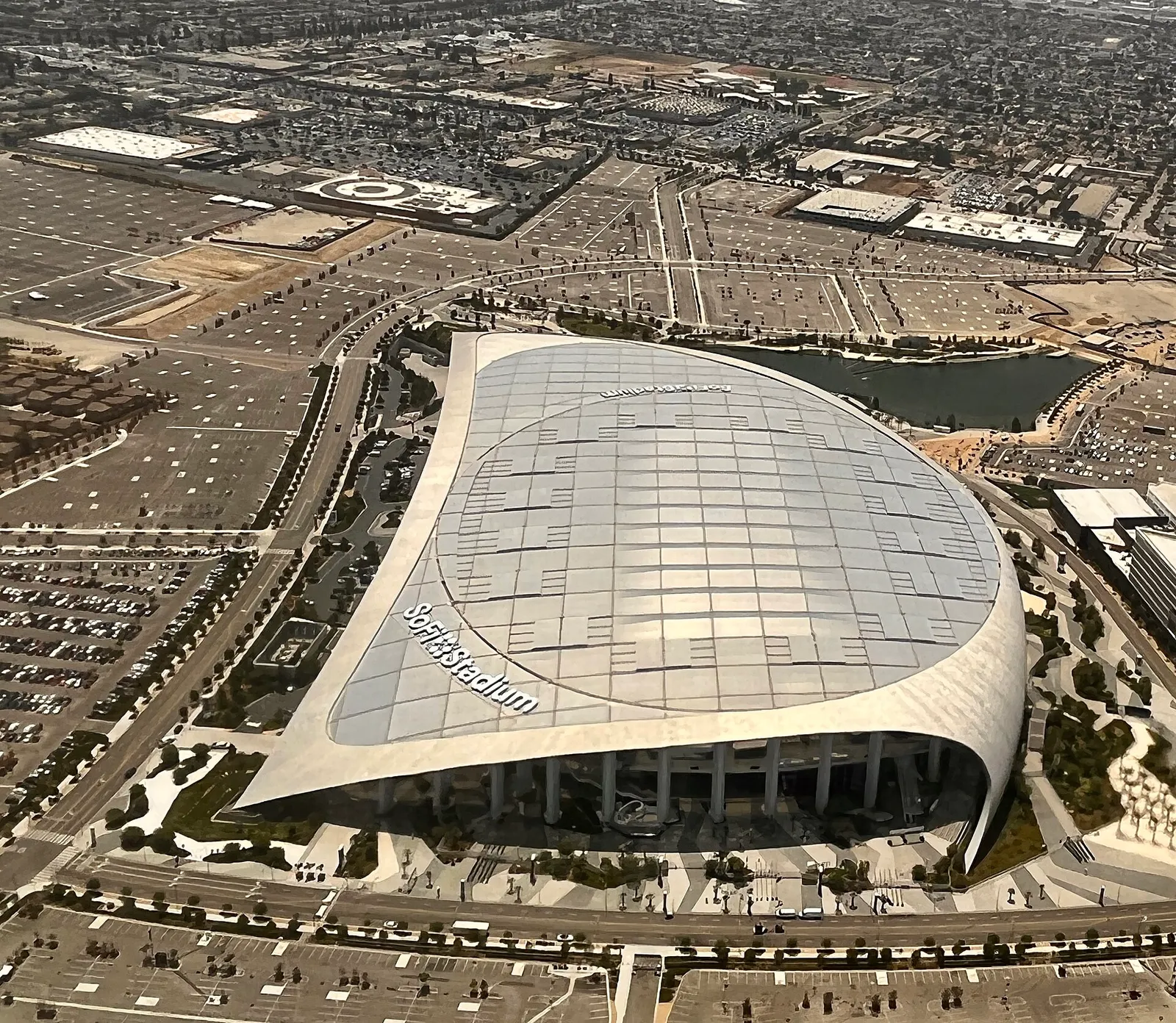
Nothing, for next summer. SoFi Stadium hosts eight matches in the 2026 World Cup: five in the group stage, two in the round of 32, and a quarter-final on July 10. That makes Los Angeles the only U.S. city with a quarter-final, and SoFi the only California venue in the tournament. The schedule opens there on June 12 with the United States against Paraguay.
That tournament is scheduled, sold and staffed. UEFA's threat is directed at competitions from here forward, which in practice means the 2030 World Cup and beyond. If this fight is still running a year from now, it will be a story unfolding in the background of the matches at SoFi, not one that disrupts them.