

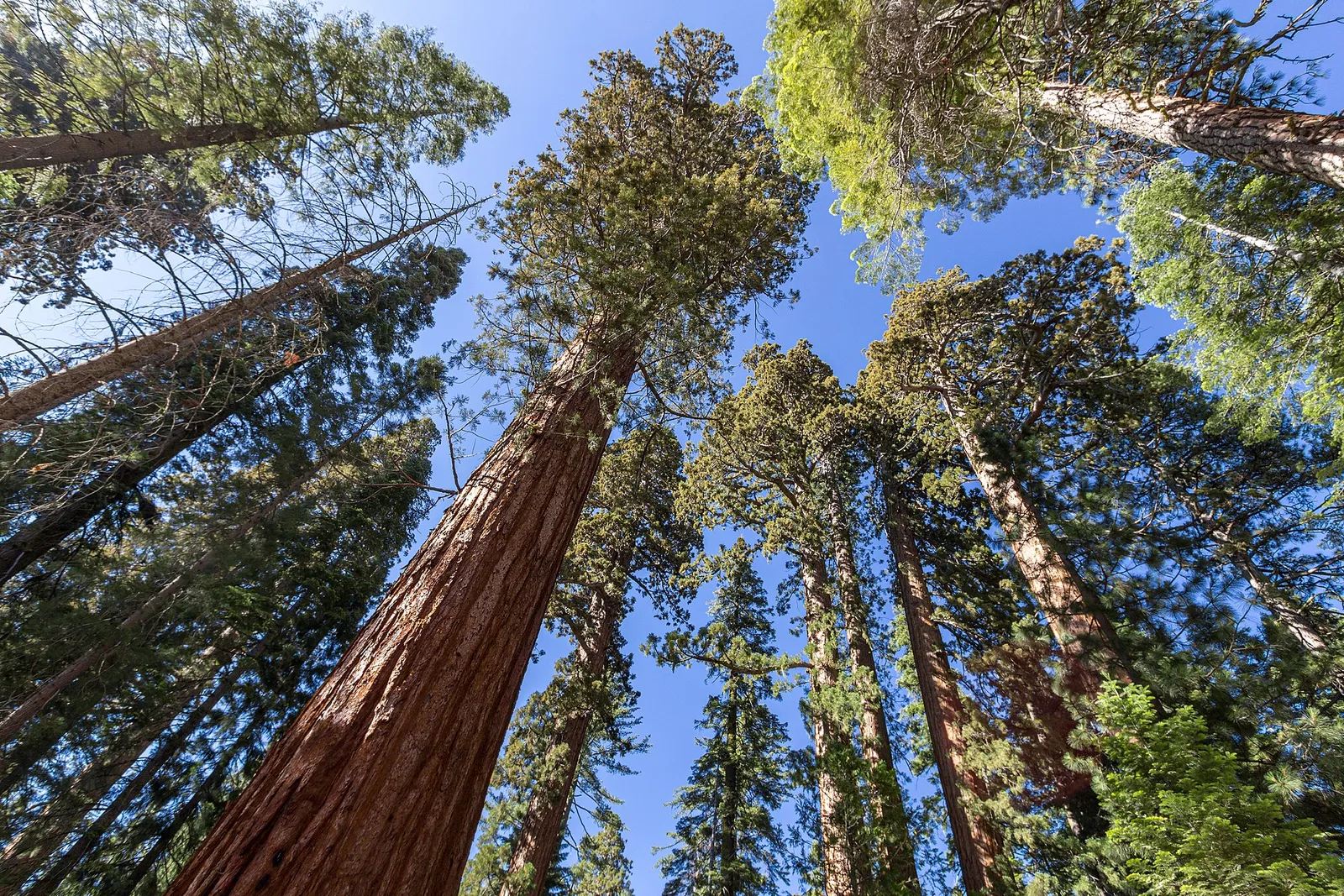
For decades the argument for setting deliberate fire in a sequoia grove has rested on ecology and on the judgment of the people who manage the groves. A study published in Nature Communications puts an arithmetic result next to it.
Researchers led by Dan Dixon, a postdoctoral researcher at UC Davis, tracked roughly 26,400 individual giant sequoias in Sequoia and Kings Canyon National Parks through the fires of 2020 and 2021, comparing trees in areas that had received prescribed burns with trees that had not. Sequoias in areas burned deliberately within the previous ten years were "about four times more likely to survive," Dixon said.
The two numbers that matter
Scaled across the study area, the researchers estimate that prescribed burning saved roughly 1,900 giant sequoias in those two fire years. The counterfactual is the harder number: had every acre in the study area been treated in the preceding decade, an estimated 3,900 additional trees would have lived.
That second figure is the policy argument. It says the constraint was not whether the technique works but how little of the landscape had been reached.
What was lost
The fires that prompted the study were not ordinary. The National Park Service estimated that the 2020 Castle Fire killed 7,500 to 10,600 large sequoias, between 31 and 42 percent of the mature giant sequoias inside its perimeter. The following year, the KNP Complex Fire killed or was expected to kill 1,330 to 2,380 large sequoias, and the Windy Fire 931 to 1,257. Taken together, the 2021 fires alone removed something on the order of 3 to 5 percent of all the large giant sequoias on earth, since the species grows naturally only in a strip of the western Sierra Nevada.
Giant sequoias are not merely fire-tolerant; they are fire-dependent. Their cones need heat to open, their bark is built to survive low-intensity burns, and mature trees historically shrugged off ground fire for two thousand years at a stretch. What killed them in 2020 and 2021 was flame that reached the crown, which requires a ladder of accumulated fuel that a century of fire suppression built.
Why it is not simply done
Sequoia and Kings Canyon have run prescribed fire programs since the 1960s, which is why the study had treated and untreated ground to compare in the first place. Expanding that work across the roughly 75 groves in the Sierra Nevada runs into obstacles that have little to do with whether the science is settled.
Burn windows are narrow: the weather has to be dry enough to carry fire and wet enough to hold it. Smoke from a prescribed burn lands on communities in the San Joaquin Valley that already carry some of the worst air quality in the country, and air districts limit when crews may light. Agencies compete for the same firefighters who are deployed to suppression through much of the year. And liability has long discouraged private landowners, though California created a claims fund in 2022 to absorb some of that risk.
None of those obstacles is imaginary, and none is answered by a study. What the study does is set a price on delay, in trees, for a species that cannot be replanted on any timescale that matters.