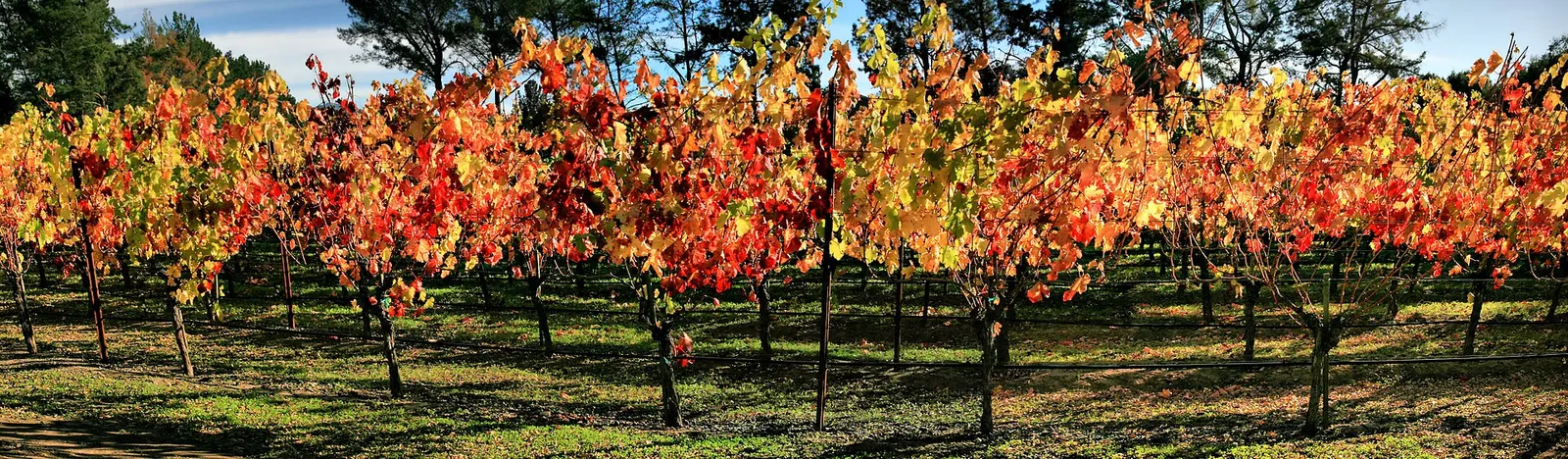
California's vineyards are shrinking, and the official numbers now put a scale on it. The California Grape Acreage Report, produced jointly by the state Department of Food and Agriculture and the U.S. Department of Agriculture's National Agricultural Statistics Service, estimates the state's wine grape acreage at 540,000 acres for 2025. That is down from 580,000 acres in 2024 and 610,000 acres in 2023: roughly a tenth of the state's vineyard footprint gone in two years.
Bearing acreage, the land actually producing fruit, fell to about 510,000 acres, a decline of 5.6 percent from the year before. Between October 2024 and August 2025 alone, growers pulled out 38,194 acres of wine grapes, according to the same report.
The varieties taking the hit
The removals are not evenly spread. Pinot noir, one of the varieties California spent two decades planting aggressively, dropped from 46,899 acres to 44,936. Growers in the interior valleys, where fruit sells by the ton into value-priced brands rather than by the bottle into a tasting room, have been the most exposed, and it is there that whole blocks have been bulldozed rather than replanted.
The arithmetic behind the decision is blunt. A vineyard costs money to farm whether or not the fruit finds a buyer, and a grower whose contract was not renewed faces a choice between farming at a loss and taking the vines out. Trade coverage of the past season put the industry's working estimate at around 40,000 acres removed in a single year.
Demand, not weather
This is not a drought story or a fire story. It is a demand story. Americans are drinking less wine, and the drinkers leaving the category are not being replaced at the younger end. Wine's share of a shrinking overall alcohol market has been eroding against spirits, ready-to-drink cocktails and non-alcoholic options.
The pain is also unevenly distributed among producers. Silicon Valley Bank's annual survey of the sector describes a widening gap between the top and bottom of the industry: wineries with strong direct-to-consumer channels and luxury positioning have kept growing, while those at the bottom have seen sales fall and operating margins turn negative. Brands that depend on grocery-shelf volume at moderate price points are cutting hardest.
What a smaller industry looks like
Analysts tracking North Coast winery and vineyard values describe the downturn as one of the most prolonged the modern industry has faced, with brand valuations well below the multiples buyers were paying in 2021 and 2022 and little expectation of a meaningful recovery before the end of the decade.
For California, the consequences are regional and concrete. Vineyard removal takes out the work that goes with it: pruning and harvest crews, custom crush capacity, trucking, and the hospitality economy layered on top of it in Napa, Sonoma, Paso Robles, Lodi and Mendocino. Counties whose property tax bases lean on planted acreage feel it next.
What replaces the vines is an open question. Some ground goes to almonds, pistachios or row crops; some sits fallow because water costs make replanting anything a poor bet. What the acreage report makes clear is that the adjustment is still under way, and that the industry's own forecasts put equilibrium well below where planting stands today.