

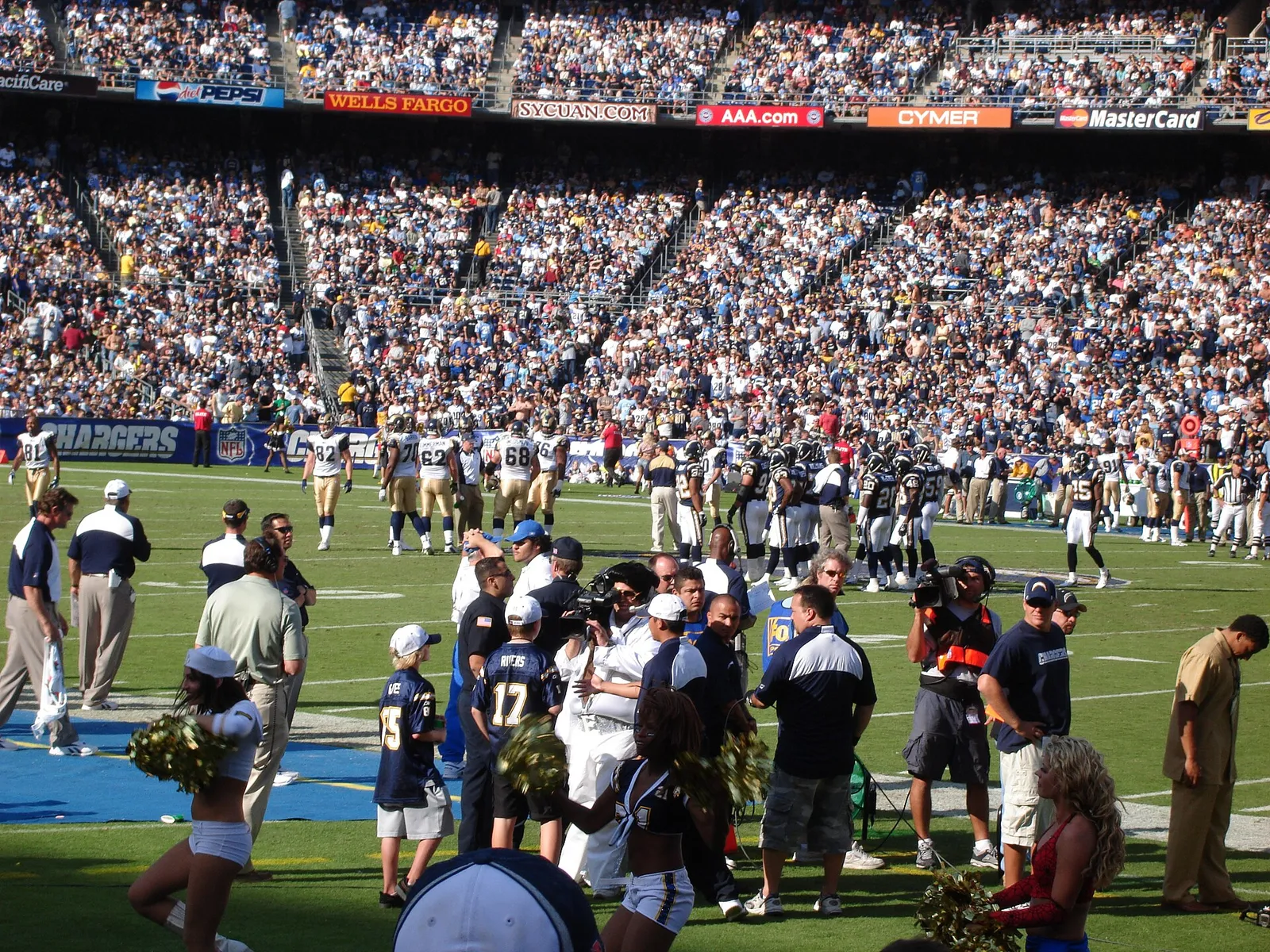
Billy Ray Smith Jr., who anchored the San Diego Chargers defense for a decade and then spent years as one of the most familiar sports voices in Southern California, has died at 64. His family announced the death on Thursday, saying in a statement that he "passed away peacefully surrounded by family" and that he had faced "his long journey with dementia caused by CTE with unmatched bravery, dignity, and strength."
A decade in San Diego
Smith arrived in the NFL as the fifth overall pick of the 1983 draft, out of Arkansas, where he had been a two-time All-American. He played all ten of his professional seasons with the Chargers, finishing with 15 interceptions, 14 fumble recoveries and 13 forced fumbles, and was later named to the franchise's 50th anniversary team. In 2000 he was inducted into the College Football Hall of Fame.
He stayed in San Diego afterward. Smith worked as a sports director at a local television station and spent years as a radio co-host, becoming a fixture of the city's sports conversation long after he stopped playing in it.
What the family said, and what can be known
Chronic traumatic encephalopathy is a degenerative brain disease associated with repeated head impacts. It cannot be diagnosed definitively in a living patient; confirmation requires examination of brain tissue after death. The attribution in Smith's case is his family's account of his illness, not a published neuropathological finding, and it should be read that way.
That caveat does not make the account unusual. Researchers at the Boston University CTE Center reported in 2023 that they had identified CTE in 345 of 376 former NFL players whose brains they examined. The center has consistently cautioned that its sample is drawn from families who chose to donate brains, often because they suspected a problem, and so cannot be read as a prevalence rate for former players generally. What the research has established more firmly is that the risk tracks with cumulative repetitive head impacts over a career, not solely with diagnosed concussions.
A recurring story in the sport
Smith played in an era whose defensive linebackers absorbed contact on nearly every snap and whose rules and return-to-play protocols bore little resemblance to today's. The NFL has since restricted certain hits, changed practice rules and settled a class action brought by former players over neurological injury, while continuing to face criticism that the changes came late and remain incomplete.
For San Diego, the loss is local before it is national. Smith was drafted by the city's team, stayed after the team left, and spent the second half of his life talking about the sport that had defined the first. He is survived by his family, who asked in their statement that he be remembered as "a devoted father, husband, son, and loyal friend."