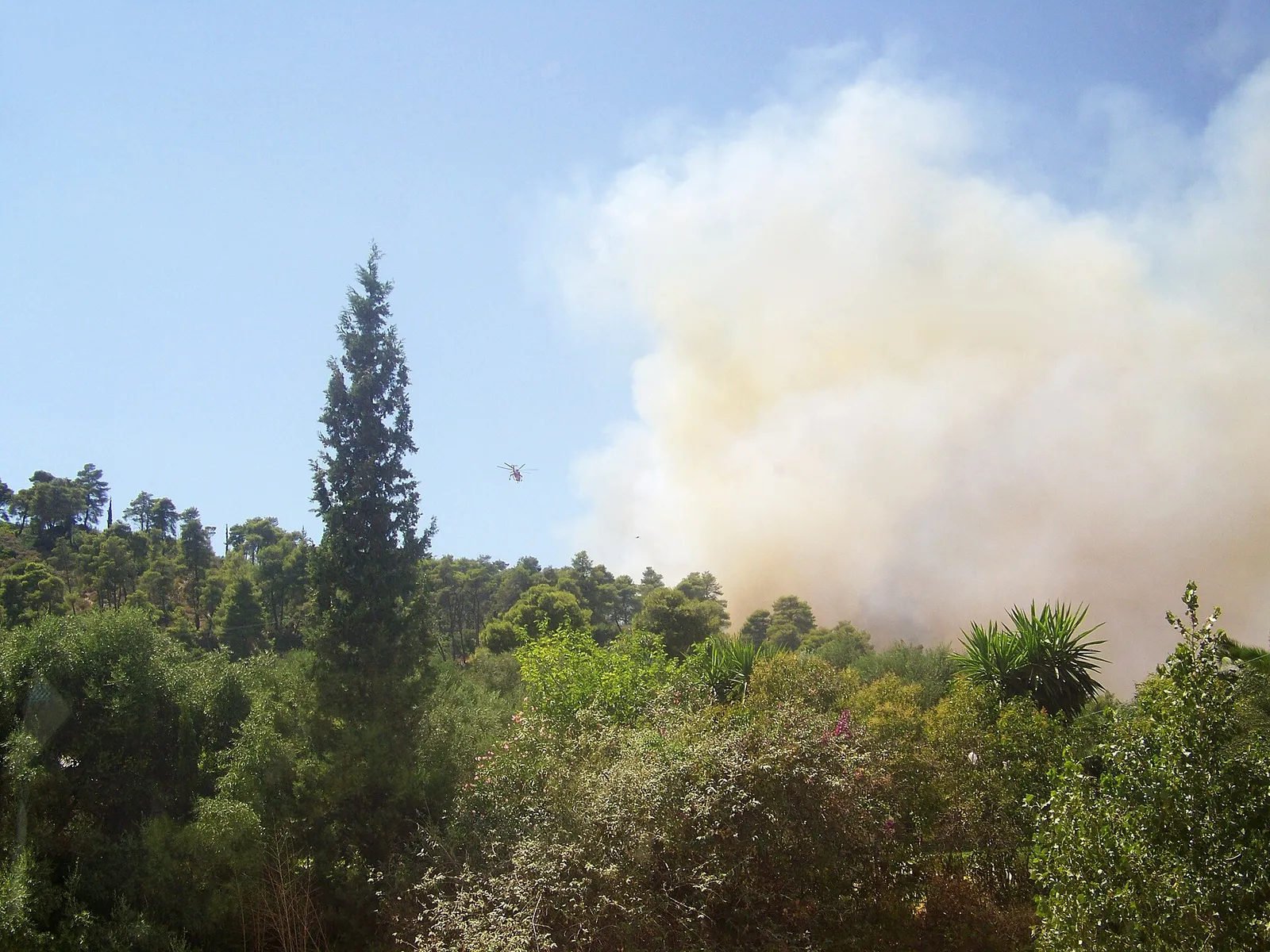
Three Greek firefighters were killed on Wednesday while fighting a wildfire near Rethymno, on the island of Crete. The fire service said in a statement that they "fell heroically in the line of duty," safeguarding lives, property and the natural environment.
The deaths came in the middle of a fire emergency that has spread across three countries on the northern rim of the Mediterranean, and that has forced evacuations on a scale Europe rarely sees outside a war.
Crete
The fire near Rethymno pushed toward the south coast of the island fast enough that evacuation moved from villages to the shoreline. Roughly 2,000 tourists were evacuated from Agia Galini. Six settlements were cleared: Krya Vrysi, Saktouria, Melampes, Agios Georgios, Agios Pavlos and Triopetra. The coastguard pulled 29 people out of the sea off Agios Pavlos.
Evangelia Glampedaki, deputy mayor for culture of the municipality of Agios Vasileios, described conditions as "out of control" and said the municipality had cancelled its cultural events to prioritize the safety of residents.
France
The larger fire, by area, is in southwestern France. A blaze in the Gironde, west of Bordeaux, has burned around 42,000 hectares, making it France's largest wildfire since 1949, running through communes on the Arcachon Basin coast including Lège-Cap-Ferret, Le Porge, Lacanau and Saumos. Around 250,000 people have been evacuated across the Gironde and Landes departments, with a complete evacuation ordered for some 40,000 people on the Cap Ferret peninsula.
By Thursday the Gironde fire was described as stabilized but not contained, with rain beginning to help crews. Across France as a whole, the interior minister put the year's burned area at 115,000 hectares, already the country's worst season since satellite monitoring began.
Spain
Spain has declared a national emergency, and more than 100,000 people have been evacuated there. Fires in the Ávila and Toledo areas west of Madrid account for a large share of the burned ground. Taken together with France, the two countries have displaced more than 300,000 people, and President Emmanuel Macron convened a crisis meeting in Paris.
Why this matters here
Southern Europe's fire season and California's are increasingly the same story told in two languages: longer dry seasons, fuel loads built up over decades, and fires that behave in ways crews trained a generation ago did not plan for. The Gironde blaze produced conditions French officials had not recorded there before, including a fire-generated storm cloud that made wind behavior near the front erratic and dangerous.
Los Angeles County has sent search-and-rescue teams abroad before, and California crews have worked fires in Australia and Canada under mutual-aid arrangements. Nothing of that kind has been announced for Europe, where the EU's own civil protection mechanism has been moving aircraft and personnel between member states instead. Fire officials in France warned that extreme danger is expected to persist into August.