

The numbers in this story are large enough to be worth stating carefully, one at a time.
Between Thursday and Friday, an estimated 50,000 to 60,000 people crossed from Morocco into Ceuta, Al Jazeera reported. At least 67 of them died. Some drowned. Others, in Al Jazeera's account, "were crushed while trying to climb the breakwater that holds the border fence."
By 6 p.m. Friday, Spanish authorities estimated that 48,300 had returned to Morocco voluntarily. Spain's foreign minister said that "virtually all those who entered have now returned to Morocco."
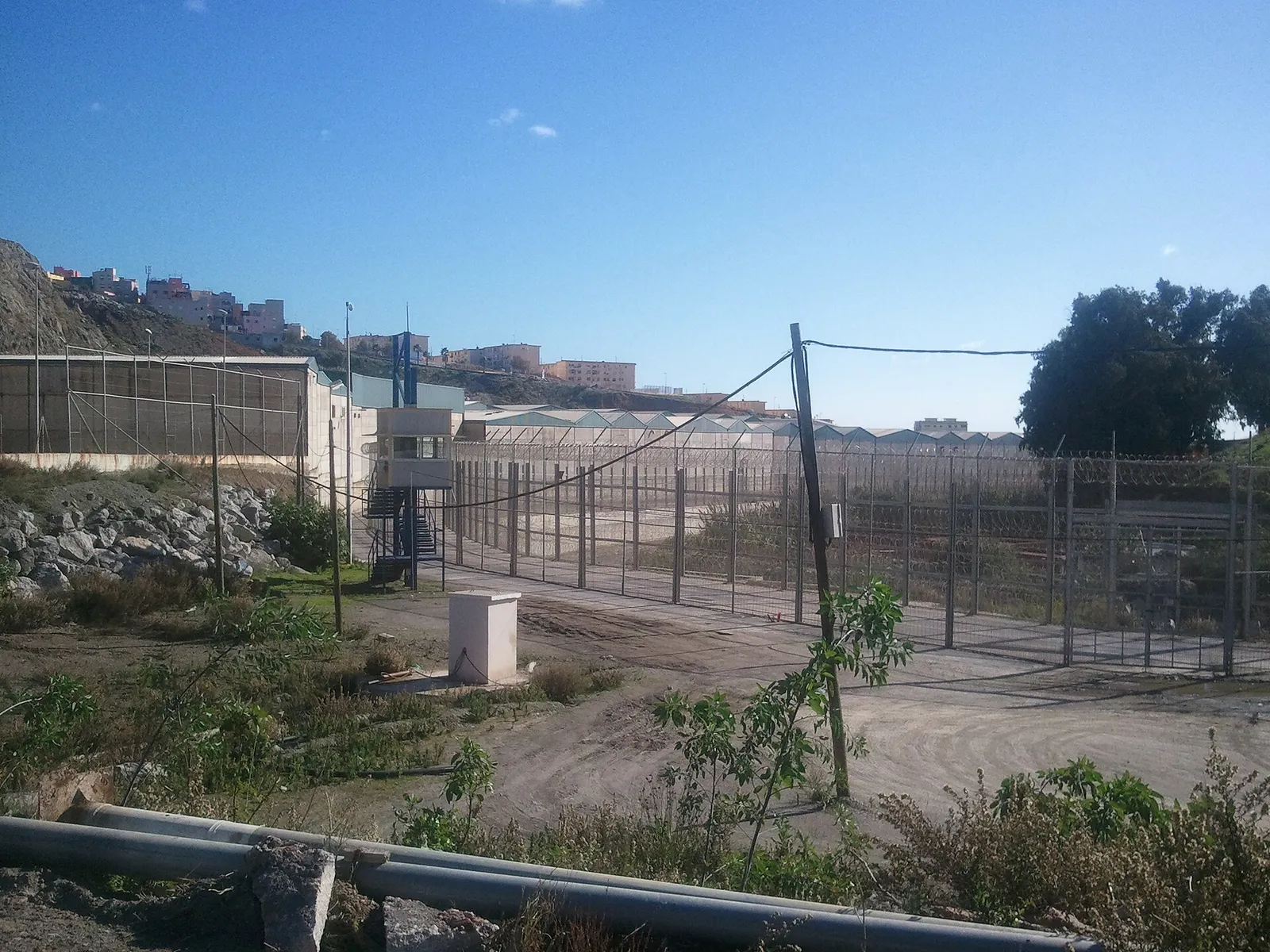
Early Saturday, Civil Guard officers began installing a 500-meter containment barrier along the sea border at the Tarajal breakwater.
Where this is
Ceuta is a Spanish city of about 84,000 people on the North African mainland, across the strait from the Iberian peninsula. Along with Melilla, further east, it gives the European Union its only land borders with Africa. Morocco claims both.
That geography is the whole reason this happens here. A person standing in Morocco at the Tarajal breakwater is a few meters from EU territory, and the barrier separating the two runs into the sea, which is why people go around it through the water and why the deaths this week were drownings and crush injuries rather than anything else.
What Spain has said
Prime Minister Pedro Sánchez called the crossing "a violation of Spain's territorial sovereignty."
Juan Jesús Vivas, who leads the city government in Ceuta, called for completing the returns and strengthening security, saying more personnel and technology are needed at the border.
We are reporting these as the Spanish government's characterizations. Al Jazeera's account does not include a Spanish explanation of why the crossing happened on this scale on these two days, and we found no verified official account of that.
What Morocco did
Moroccan police in riot gear used tear gas and water cannon at the border on Friday night to disperse people gathered near the fences, Al Jazeera reported.
Morocco's relationship to events at Ceuta has been contested before, with Spanish officials in past episodes suggesting Rabat regulated the flow as leverage in bilateral disputes. Nothing in the reporting we could verify establishes that here, and Morocco's own account of this week is not in it.
Europe's response
Twenty-two EU governments have demanded an emergency response.
Ursula von der Leyen, the European Commission president, called the images "unacceptable." Ireland, which holds the rotating EU presidency, has scheduled an urgent meeting for Tuesday. Italian Prime Minister Giorgia Meloni said defending external borders is "a shared responsibility of Europe." France announced it is tightening its border with Spain.
That last item is the one to watch. A member state hardening an internal Schengen border in response to arrivals in another member state is how a border event at the edge of the union becomes a problem inside it.
What we are not printing
Several accounts circulating attribute the surge to a recent Spanish Supreme Court ruling on deportations at sea, give precise dimensions for the barrier, quote opposition leader Alberto Núñez Feijóo criticizing it, and report that Italy suspended Schengen arrangements with Spain for a month.
We could not verify any of those against a source we trust, and the Schengen suspension claim in particular conflicts with what we could verify, which is that Italy's prime minister made a statement about shared responsibility and that it is France that announced border tightening. So those details are absent above.
This is a fast-moving story with an unusually wide spread in the reported numbers, and the death toll is described as a minimum. We will report confirmed developments as they are established.