

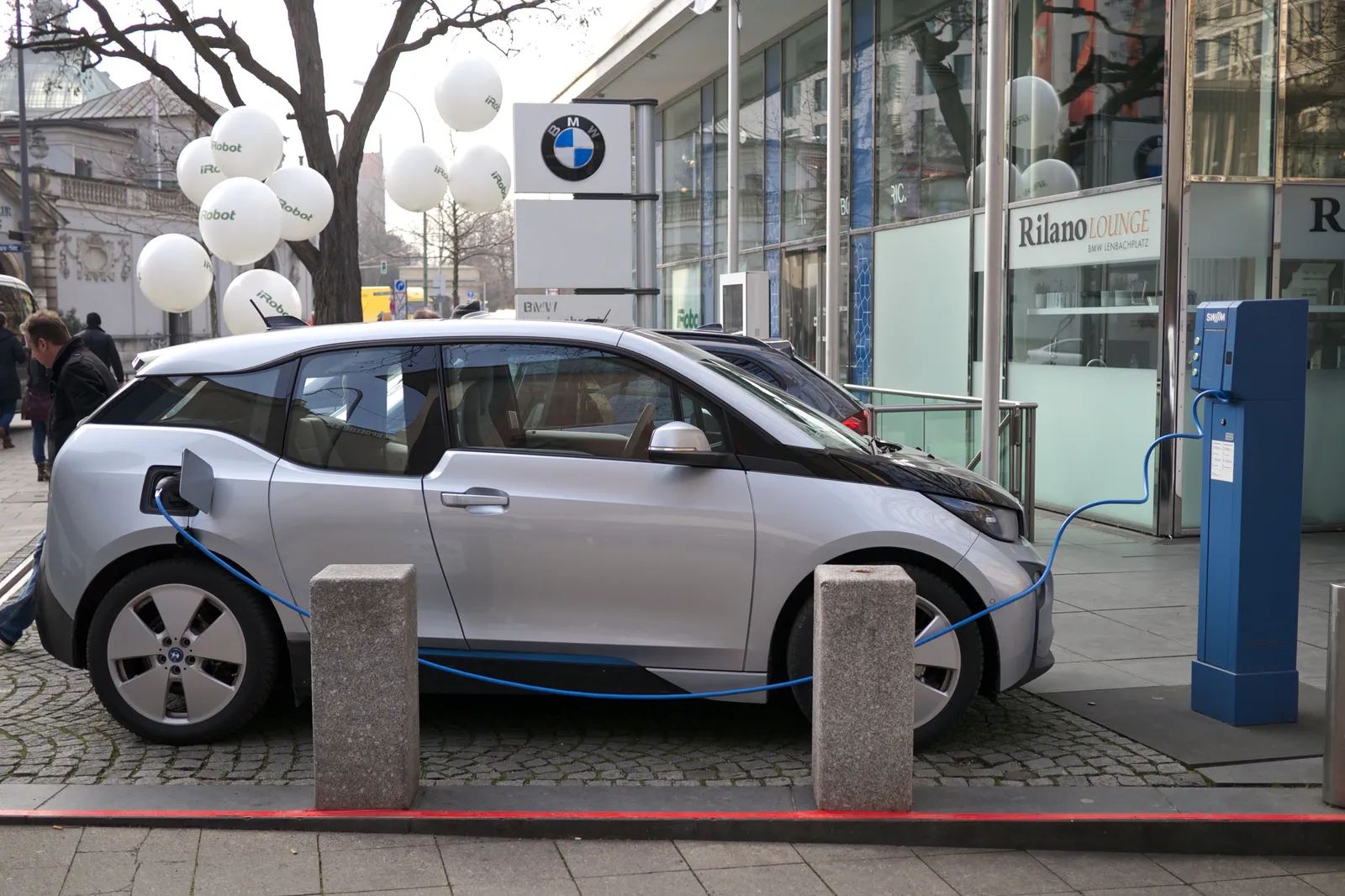
The car at the center of BMW's American future is one it has been building in South Carolina for a quarter century — now with a battery.
Made in America
BMW unveiled the new generation of its X5, including an all-electric iX5, and said the electric model will enter production at its Spartanburg plant later in 2026, WardsAuto reported. The iX5 is the first concrete product of a $1.7 billion plan BMW announced in 2022 to electrify its U.S. operations — about $1 billion to retool the Spartanburg factory for battery-electric vehicles and roughly $700 million for a new battery-assembly plant in nearby Woodruff, South Carolina, that the company says will add about 300 jobs, according to BMW. BMW plans to build several more electric X models in the U.S. by the end of the decade, including an iX7 and iX6.
Spartanburg's outsized role
The Spartanburg plant is BMW's largest in the world, employing more than 11,000 workers with capacity for some 450,000 vehicles a year, and it has long ranked among the biggest U.S. automotive exporters by value. It already builds the X3, X5 and other SUVs; adding electric versions on the same lines is meant to let BMW flex between gasoline, hybrid and electric output as demand shifts. The new X5 will be offered with a range of powertrains, the company said, part of a strategy of keeping multiple options open as EV adoption moves at different speeds in different markets.
The tariff calculus
The timing is inseparable from trade policy. The Trump administration's 25 percent tariff on imported cars from Europe has sharply raised the cost of vehicles BMW ships from Germany, while cars assembled in the U.S. are spared — a powerful incentive to move production stateside. The politics, though, cut both ways: White House trade adviser Peter Navarro publicly criticized BMW's South Carolina operation as "detrimental to the U.S. economy and national security," The Post and Courier reported, arguing that key components are still made in Europe before final assembly in Spartanburg. BMW countered that it is one of the state's largest employers and the nation's leading auto exporter by value.
A broader realignment
BMW's move mirrors a wider shift as foreign automakers recalculate their supply chains around U.S. tariffs, with several announcing or accelerating American factory plans. To feed its domestic EV lines, BMW has lined up battery supply from Envision AESC, which is building cell capacity in South Carolina. For BMW, the bet is straightforward: its single most valuable manufacturing asset is already on U.S. soil, and electrifying it is the surest way to shield its top-selling SUVs from import duties.