A rocket built to challenge SpaceX instead became a fireball — and now Blue Origin is rethinking how it gets New Glenn off the ground.
The explosion
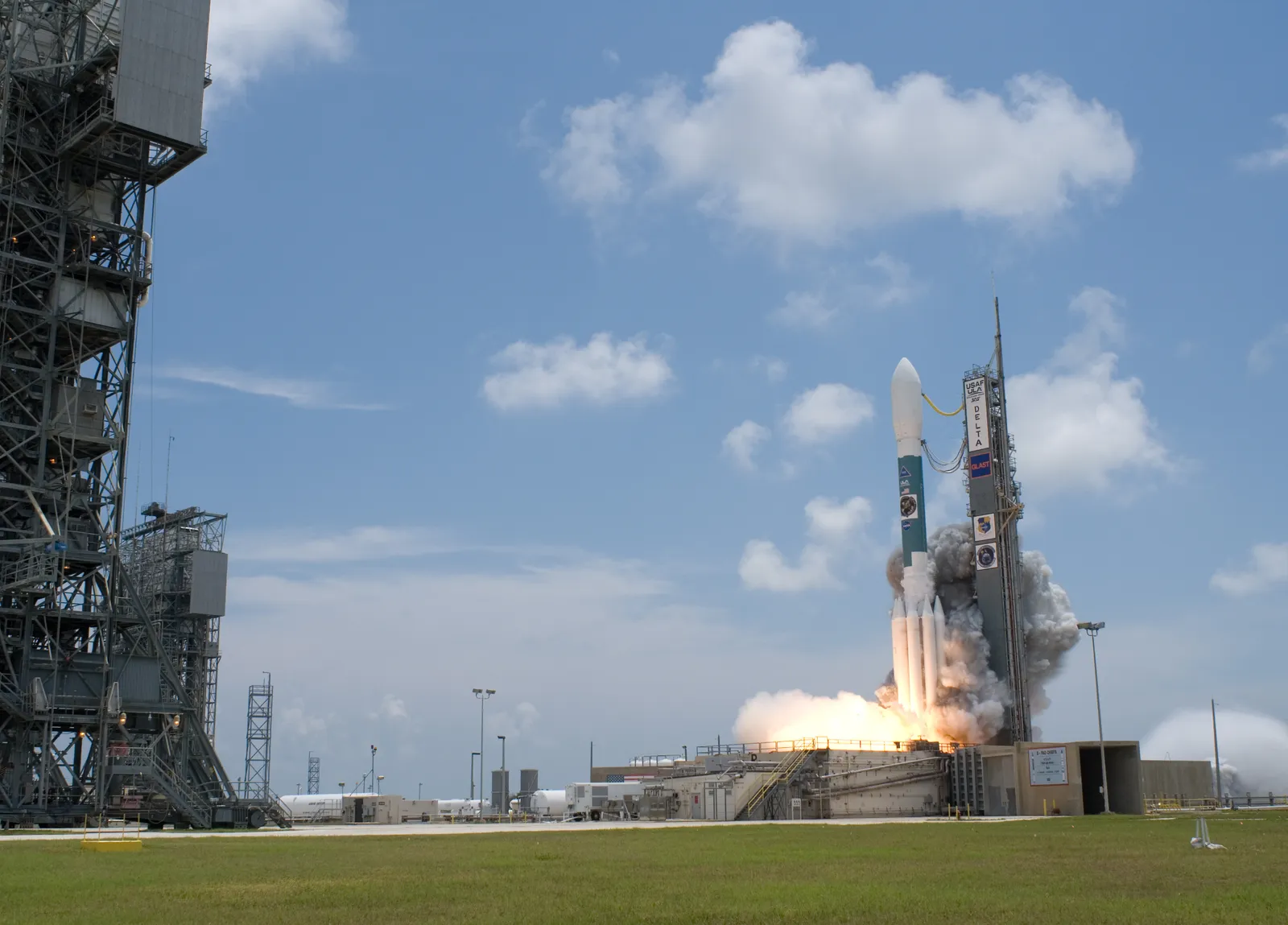
On the evening of May 28, a New Glenn rocket erupted in a massive fireball during a pre-launch static-fire test at Launch Complex 36 at Cape Canaveral, Space.com reported. The two-stage vehicle, loaded with propellant for the engine test, was destroyed, along with the large transporter-erector used to raise the rocket upright. No one was hurt. Satellite imagery within hours showed a scorched pad — one of the more dramatic launch-site failures of the commercial-space era.
The pivot
With the transporter-erector wrecked, Blue Origin said it would accelerate a redesign it had been weighing: moving to a "vertical integration" approach that assembles the rocket directly at the launch mount, broadly similar to how SpaceX stacks its Starship. The change eliminates the complexity of a large rolling erector. Chief Executive Dave Limp said the broader damage was less severe than feared — propellant tanks and the launch tower were largely intact and repairable — and that crews cleared the debris from the pad within days. Blue Origin has not detailed the engineering of the new system, and the root cause of the explosion has not been publicly identified.
A timeline in dispute
Limp said Blue Origin aims to return New Glenn to flight before the end of 2026, TechCrunch reported — a target outside observers called very aggressive. NASA Administrator Jared Isaacman struck a more cautious note, suggesting pad repairs might not be finished until 2028, a gap that would pressure the agency's Artemis moon program, which is counting on New Glenn. The Federal Aviation Administration opened a mishap investigation, a required step before any return to flight; the agency had already been examining an earlier New Glenn anomaly from April in which the upper stage failed to reach orbit, a probe that pointed to a cryogenic leak.
Fallout
The most immediate commercial casualty is Amazon's Project Kuiper, the broadband satellite network that had booked a large block of New Glenn launches; with the pad offline, that manifest is on hold, GeekWire reported, widening Amazon's gap with SpaceX's Starlink. Founder Jeff Bezos called the day "very rough" but pledged to rebuild. The episode underscores the distance between Blue Origin and SpaceX, whose Falcon 9 has become the industry's workhorse, even as Blue Origin says it will keep building New Glenn stages during the downtime so it can launch quickly once the pad is restored.