


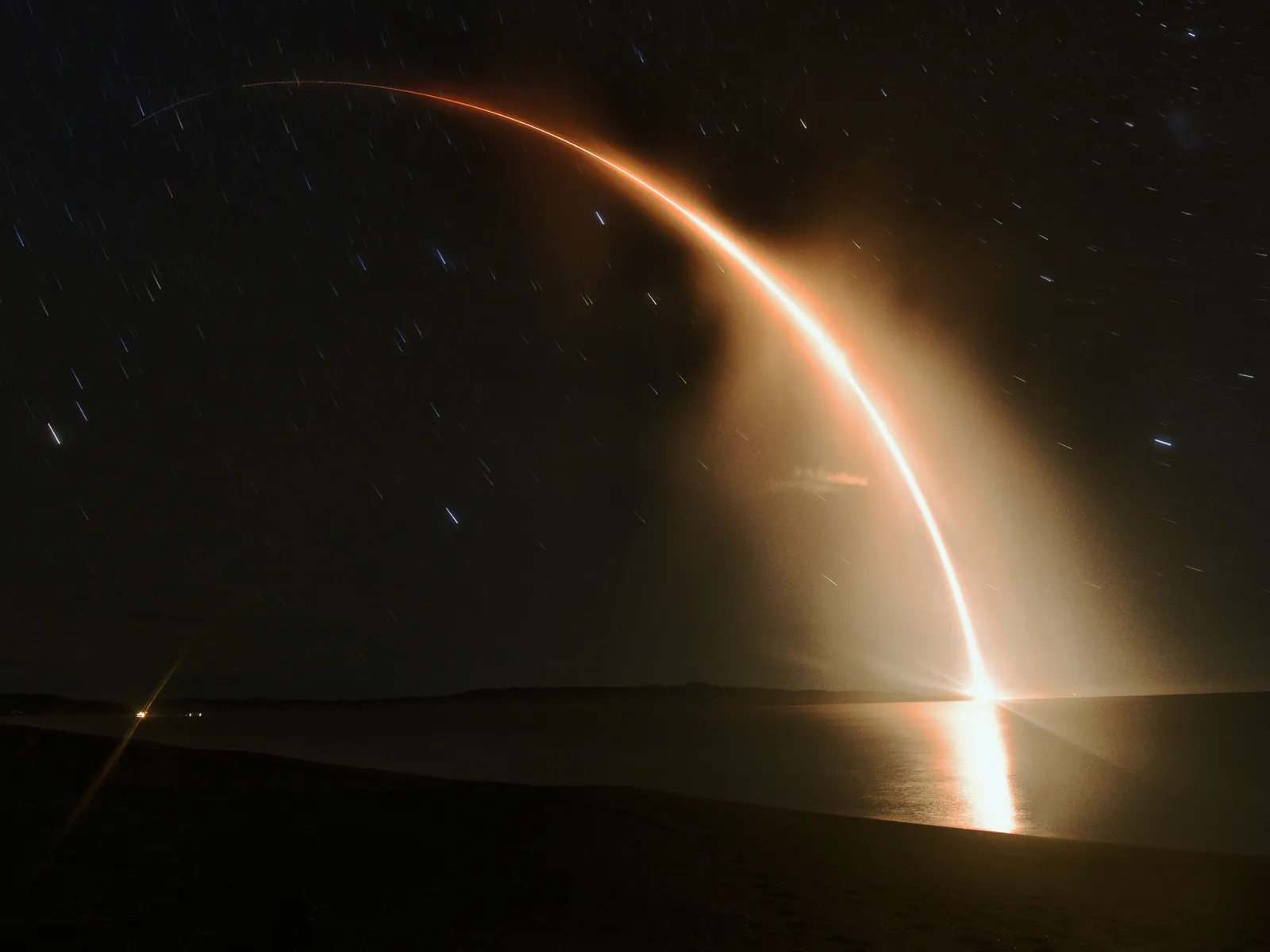
One of the biggest space-industry deals in years carries a Long Beach return address.
The deal
Rocket Lab and Iridium Communications announced a definitive merger agreement Monday, with Rocket Lab offering $54 per Iridium share — split between cash and Rocket Lab stock — valuing Iridium at roughly $8 billion and representing about a 24 percent premium to its prior close. Iridium shares jumped about 20 percent on the news and Rocket Lab climbed around 9 percent, CNBC reported. Rocket Lab lined up a multibillion-dollar bridge loan from Deutsche Bank and Wells Fargo to fund the cash portion.
What each side brings
Founded in New Zealand and now headquartered in Long Beach, Rocket Lab has grown from a small-satellite launch specialist — its Electron rocket is among the world's most frequently flown small launchers — into a broader space company developing the larger Neutron vehicle. It generated about $602 million in revenue in 2025 but is not yet profitable, SpaceNews reported.
Iridium, based in Virginia, operates a constellation of 66 active low-Earth-orbit satellites providing voice, data, aviation and maritime tracking and precise timing services to roughly 2.5 million subscribers worldwide — and, unlike Rocket Lab, it is solidly profitable. Crucially, it holds globally coordinated radio spectrum, a scarce and strategically valuable asset.
The strategic logic
The deal is a vertical-integration play: Rocket Lab, today a launch provider to satellite operators, would become both launcher and network operator. Chief Executive Sir Peter Beck has been candid that acquiring Iridium offers "a little bit of a shortcut" — obtaining harmonized global spectrum and a revenue-generating constellation that would otherwise take a decade to build. He called the combination "a defining moment for the space industry." Iridium chief Matt Desch said joining with Rocket Lab was "the best way for us to take our experience and success into the future."
The Southern California angle
The transaction anchors one of the decade's biggest space deals at a Long Beach address. Rocket Lab's headquarters already houses spacecraft manufacturing and a substantial engineering workforce across the region; an expanded, vertically integrated company would give Southern California a homegrown space anchor of a scale not seen since the Cold War aerospace era.
Both boards approved the deal unanimously. It still needs Iridium shareholder and regulatory approval, with closing expected around mid-2027 — and, if cleared, it would rank among the largest space-industry transactions on record.