


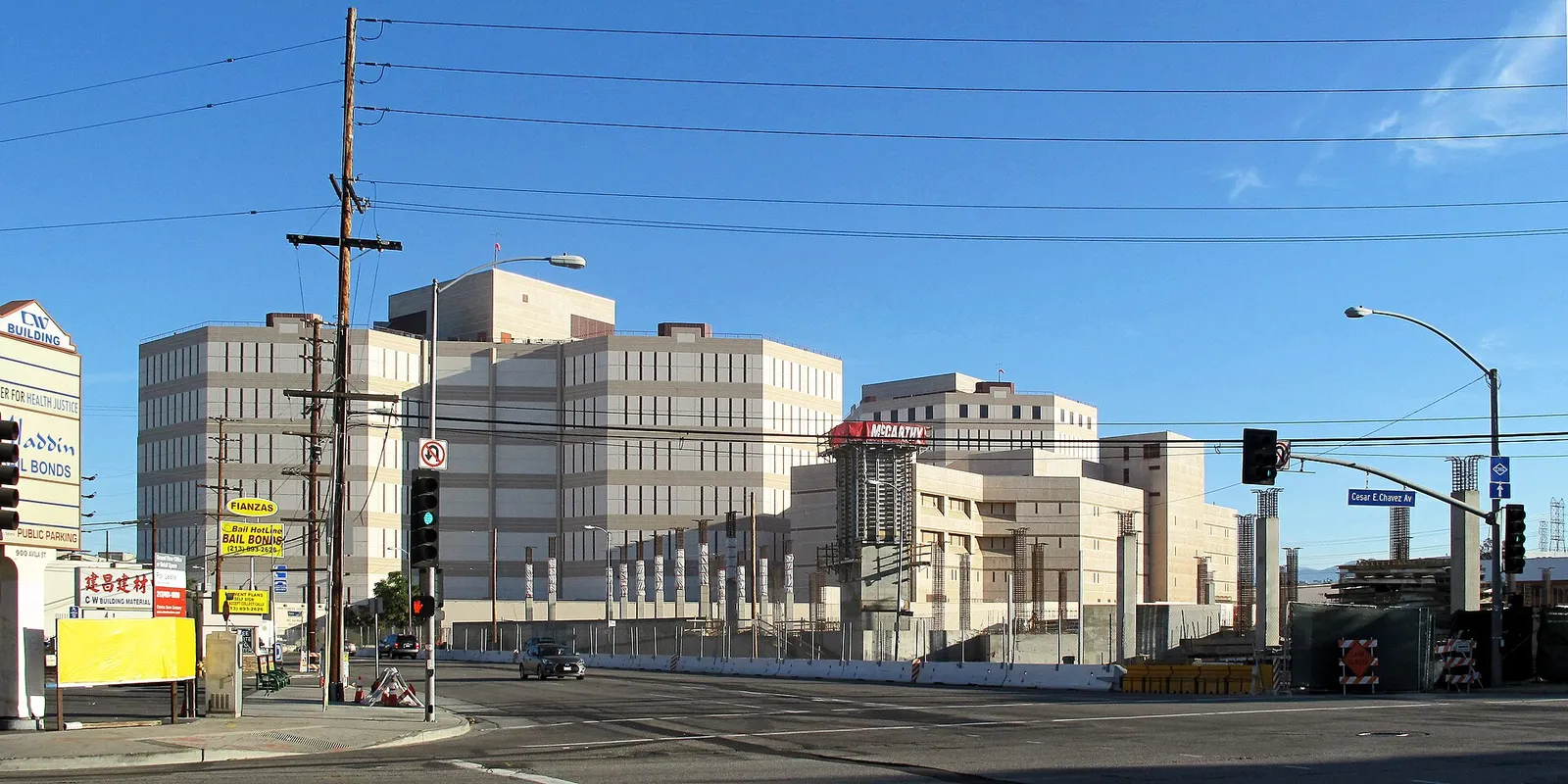
Six years ago, Los Angeles County committed to closing Men's Central Jail. A new report makes clear that the decrepit downtown lockup will still be open, and still holding thousands of people, well into the next decade, LAist reports.
A deadline that keeps moving
The timeline is the story. In July 2020, in the wake of that summer's protests over policing, the Board of Supervisors voted to close Men's Central Jail within one year. That became a two-year plan in 2021, then a five-year plan in 2024. This week, the county's Jail Closure Implementation Team reported that full closure within five years is not feasible either.
What is feasible, by the team's own account, is modest. Its executive director, Wilford Pinkney Jr., said the daily population could be cut by more than 800 people by 2031, moving roughly a quarter of the current 4,020 people held there to other facilities, enough to close a single floor over five years. That is the plan now: one floor, five years, a fraction of the population. A one-year closure has become, in effect, a decade-plus wind-down.
Why it matters that the building is still open
This is not a paperwork delay. Men's Central Jail is, by the county's own inspectors, a dangerous place to be held. Recent inspections documented contaminated drinking water fouled with rust and gnats, mold and vermin through the facility, inadequate food and hygiene supplies, delayed medical care, and grievances and medical requests that go unanswered.
The human cost is measurable. Since the start of the year, 23 people have died in Los Angeles County custody, six of them at Men's Central Jail. Every year the closure slips is another year people are held in conditions the county has repeatedly called unacceptable.
Supervisor Janice Hahn did not soften it: "Men's Central Jail is a decrepit, outdated facility inconsistent with human values and basic decency." That is an elected official describing a building her own government still runs.
The hard part nobody has solved
Fairness requires saying why this keeps happening, because it is not simply neglect. Closing a jail that holds 4,020 people is not a demolition decision; it is a question of where those people go. Sheriff Robert Luna supports closing Men's Central Jail but argues for a replacement facility, not simply fewer beds. Court officials cite capacity concerns and say the state would need to help pay. Justice advocates counter that the population can and must be reduced through diversion, mental-health treatment and pretrial release rather than a new jail.
That is the genuine impasse under the missed deadlines: the county agrees the building must close and cannot agree on what replaces it. The board approved $28 million this year for the closure team's work, but money for planning is not the same as a decision about beds, treatment and where thousands of incarcerated people, many with mental illness, will actually be held.
Until that is resolved, the deadline will keep moving, and the water will keep coming out of the taps at Men's Central Jail the color of rust. The Herald will track whether the 2031 markers in this report hold, or slip again like the ones before them.