Ask a farmer in Saskatchewan what's ripening right now and she'll say saskatoon. Ask a forager in the Appalachian foothills and he'll say serviceberry. Ask a kid plucking fruit from a park tree in the Midwest and she might say juneberry — or nothing at all, because no one told her it was edible.
A fruit that answers to many names
They are all describing the same plant: Amelanchier, a genus of shrubs and small trees in the rose family, native across nearly the whole of North America. The Potawatomi botanist Robin Wall Kimmerer has observed that the more names a plant carries, the more it has mattered to the people who lived alongside it — and by that measure, the juneberry is one of the most important fruits most Americans have never tasted.
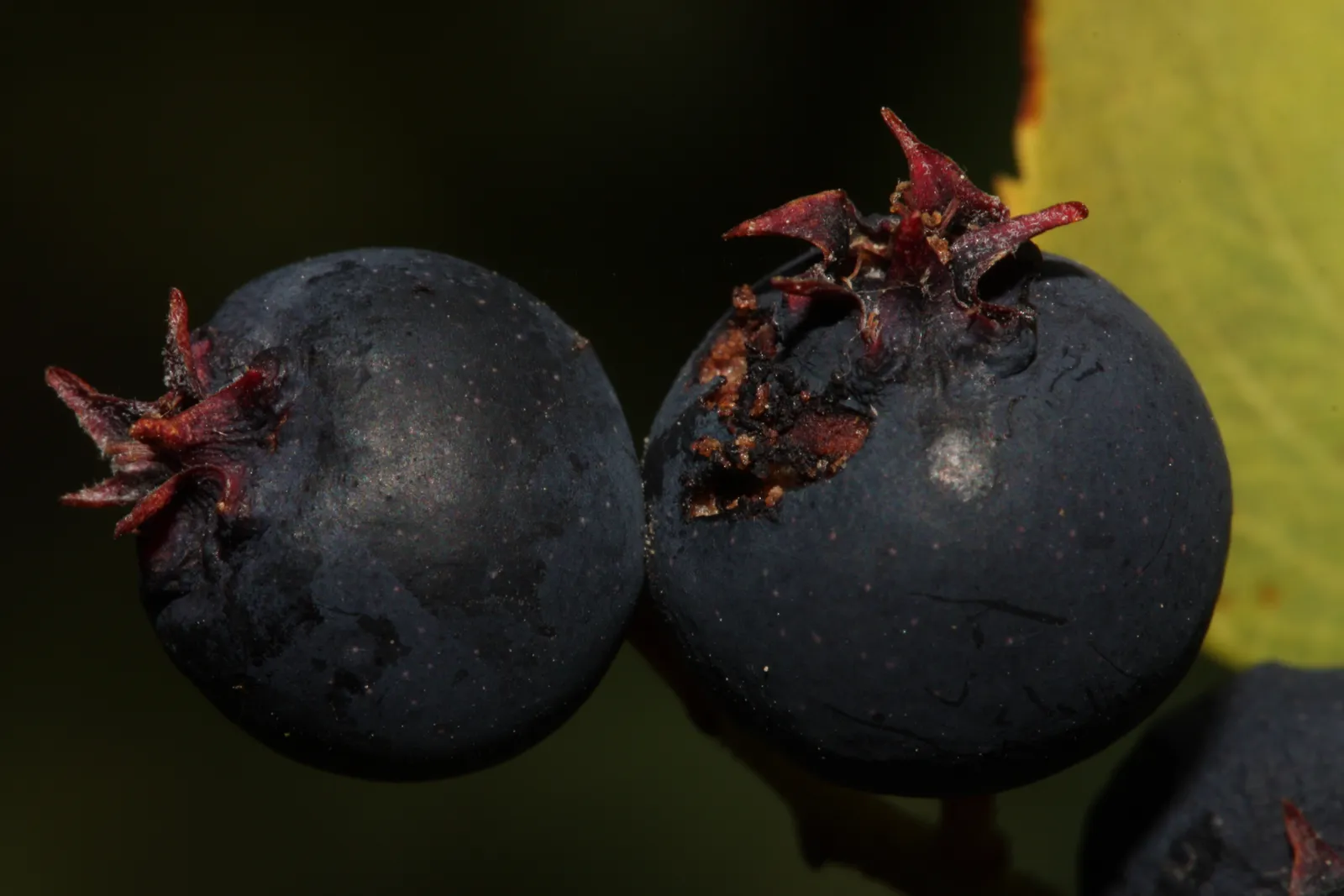
June is its moment. The small, deep-purple berries hang in loose clusters and ripen a few weeks after the tree's white spring blossoms — which, right now, means they are hitting their brief peak at orchards and farmers markets from the Midwest to the Canadian prairies.
What they taste like
The flavor is the draw. A ripe juneberry sits somewhere between blueberry and sweet cherry, with a faint, almost almond note underneath. The texture is soft and yielding. And there is real nutrition beneath the skin: serviceberries are a good source of fiber and carry the same family of antioxidant pigments — anthocyanins — that give blueberries their health-food reputation, according to nutrition researchers.
Thousands of years before the farmers market
Long before any orchard was planted, Indigenous peoples across the continent had built the berry into their food systems. For many Plains nations, it was among the most important plant foods of the year, harvested in the short summer window and dried, then pounded together with meat and fat to make pemmican — a dense, durable food that could sustain people through winter and long journeys.
The plant gave more than food: its straight branches were worked into arrow shafts, baskets and tools, and parts of it were used medicinally. The Cree name for the berry is the root of the name of the city of Saskatoon, Saskatchewan. The English word "serviceberry," by one common account, traces to communities where the tree's early bloom signaled that the ground had thawed enough for spring burials — a grim but practical marker on the calendar.
Why you can't find them at the store
For a fruit with this much going for it, its absence from supermarket shelves is striking — and the reason is almost entirely logistical. When the berry is picked, its skin tears slightly at the stem, and the clock on spoilage starts almost immediately. Fruit that tastes transcendent the afternoon it is picked can be dull two days later, long before it would reach a distribution center.
That keeps the juneberry a local crop. In Canada, where the saskatoon is grown commercially, farms work thousands of acres of it, much of it bound for jams, syrups, wines and frozen product. In the United States, commercial planting remains rare, though agricultural researchers at Cornell have described the crop as primed to grow from a minor berry into a higher-value one.
Farmers who have made the leap praise the plant's toughness. Unlike blueberries, which demand carefully acidified soil, juneberries tolerate a wide range of conditions and shrug off cold that would kill most fruit crops. The catch is patience: the first real harvest arrives a few years after planting.
How to find them
For most people, the path to a juneberry runs through a farmers market, a U-pick orchard or a friend with an ornamental serviceberry out back that they never realized was edible. Frozen saskatoons from Canadian growers turn up at some specialty grocers and are worth seeking out for baking.
If you find fresh ones, buy more than you think you need. They make exceptional pies and cobblers, pair well with stone fruit, and taste, on a warm afternoon in late June, exactly like what they are: something old and good that the land has been offering all along, waiting for someone to stop walking past.